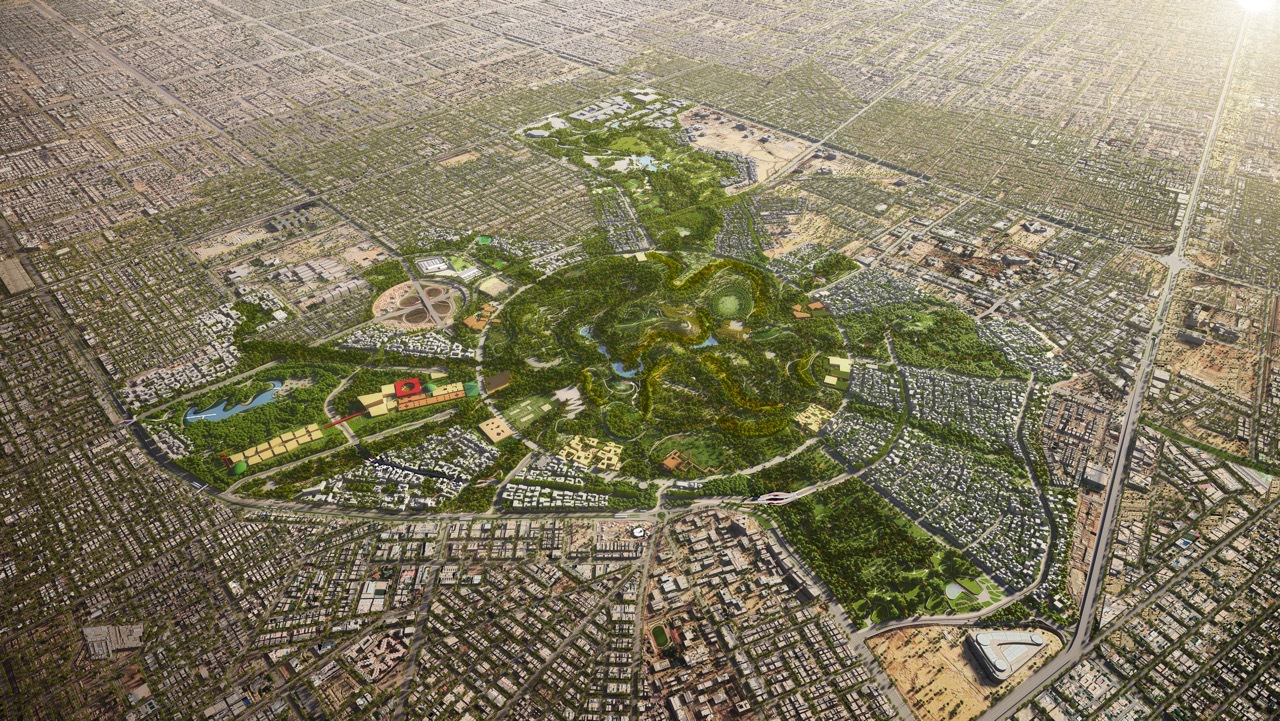
"Construction continues on King Salman Park in Riyadh, a 16.9-square-kilometre public landscape taking shape on the grounds of the city's former airport. Led by Omrania as lead design consultant, in collaboration with Henning Larsen for master planning and urban design, the project reimagines the centrally located site as a large-scale green and cultural district. Conceived as a new civic core for the capital, the park combines ecological restoration, public programming, and mixed-use development."
"First announced in 2019 by King Salman bin Abdulaziz Al Saud at the initiative of Mohammed bin Salman, and overseen by the King Salman Park Foundation, the project forms part of Riyadh's broader urban transformation agenda. With an estimated cost of SR 72 billion, the development aims to transform a vast, previously restricted airfield into a publicly accessible landscape integrated within the metropolitan fabric."
"The master plan organizes the park around a network of branching valleys inspired by regional wadi systems, converging toward a central open space. This topographical strategy structures circulation and distributes shaded pedestrian corridors, recreational spaces, and gathering areas throughout the park. Approximately one million trees are planned across the site, supported by environmental systems that include treated wastewater irrigation and soil regeneration layers designed to improve water retention."
King Salman Park in Riyadh occupies 16.9 square kilometres of former airport land and is being developed as a large-scale green and cultural civic core. Omrania leads design consulting with Henning Larsen on master planning and urban design. The park integrates ecological restoration, public programming, and mixed-use development, with phased openings beginning in late 2026 and substantial completion in 2027. Funded at an estimated SR 72 billion and overseen by the King Salman Park Foundation, the project emphasizes transit connectivity to metro and BRT lines. Its master plan uses wadi-inspired branching valleys, one million trees, and treated wastewater irrigation to enhance arid-site resilience.
Read at ArchDaily
Unable to calculate read time
Collection
[
|
...
]