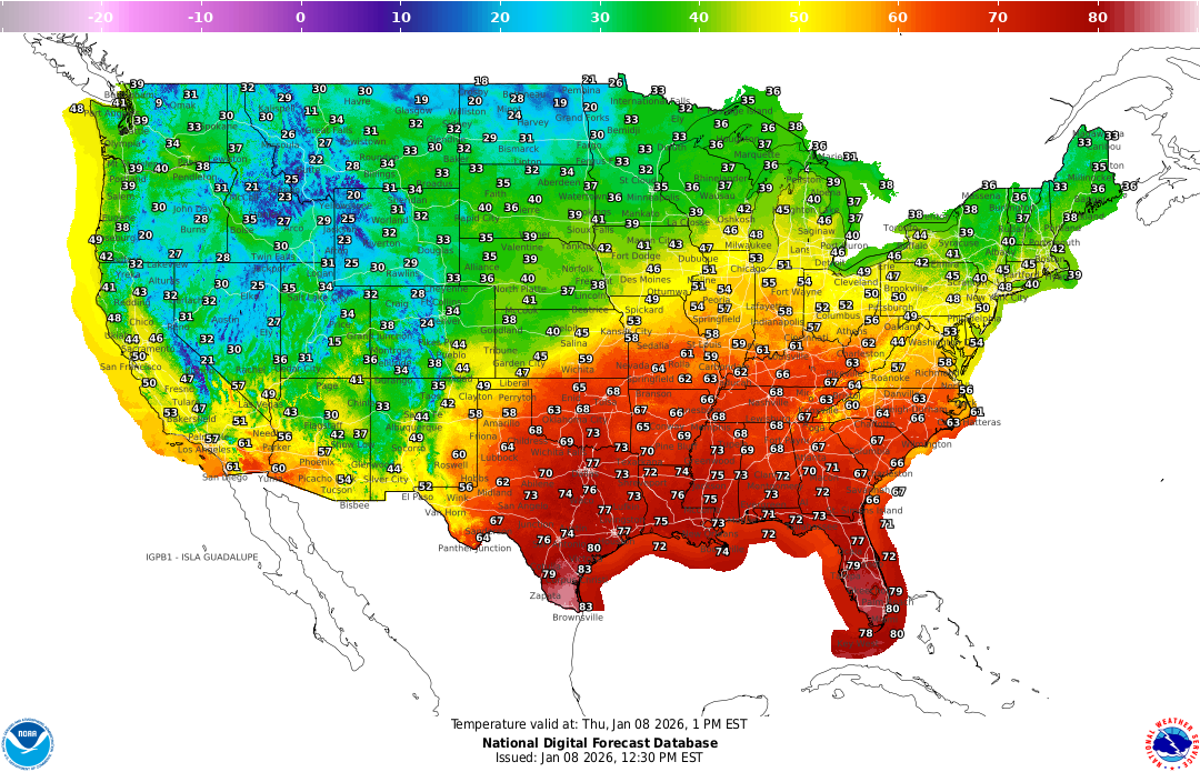
"It's January, which typically means heating bills go up as the temperature goes down. But for some people in the U.S. South, the demand will be for more air conditioning, as temperatures soar 20 to 35 degrees Fahrenheit above averageand even to record-breaking heights in some spots. The unseasonal heat stems from an area of high pressure moving across the eastern U.S., pulling in warm air from the south and the record-breaking warm waters of the Gulf of Mexico."
"In the Rio Grande Valley of Texas, temperatures could even reach into the 90s F. Brian Hurley, a meteorologist with the country's National Weather Service's Weather Prediction Center, says that 31 stations across that area could set records or come close. That's significant, he says. The nights will be particularly hotter than normala hallmark of global warming. Overnight lows are rising twice as fast as daytime highs, according to Climate Central, a nonprofit research and news organization."
An area of high pressure across the eastern U.S. is pulling warm air from the south and from unusually warm Gulf of Mexico waters, producing unseasonal winter heat. Temperatures are expected to run 20 to 35 degrees Fahrenheit above average in parts of the South and East, with some locations reaching record highs. Cities already recording anomalous winter highs include Houston (82 F), Tulsa (74 F), and Baton Rouge (81 F), and the Rio Grande Valley could see temperatures in the 90s F. Thirty-one stations across the affected area could set records or come close. Nights will be particularly warmer than normal, with overnight lows rising roughly twice as fast as daytime highs, a hallmark of global warming.
Read at www.scientificamerican.com
Unable to calculate read time
Collection
[
|
...
]