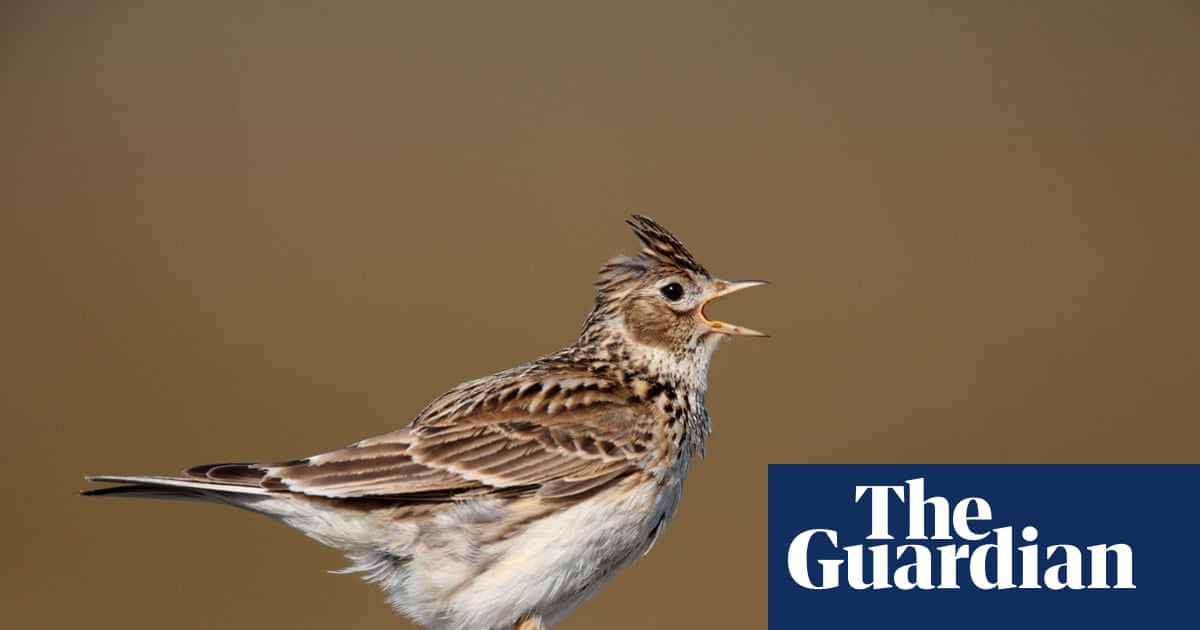
"December is not noted for birdsong in the UK, as most species are more concerned with finding food during the short hours of daylight than preparing for the breeding season to come. Yet during spells of unseasonably mild winter weather some will practice their sweet refrains. Over the past few weeks I've heard several species singing: not quite as forcefully as in the spring, but enough for me to take notice."
"Robins hold autumn and winter territories, so they are well known for brightening dull December days with their delicate, rather plaintive song. Wrens, too, often sing during mild winters though this is a relatively recent custom I don't recall hearing as a child. In Somerset in recent mild Decembers, this duo have been joined by the song thrush, whose loud and cheery phrases are always a delight to hear, but its cousin the blackbird rarely sings in winter."
"So far I have not broken my December record, set on an unexpectedly warm and sunny afternoon in late 2015. That day, no fewer than seven species were singing, the usual trio being accompanied by dunnock, goldcrest, chiffchaff and the explosively loud Cetti's warbler. But were these birds heralding the distant coming of spring or warning us of the dangers of the climate crisis?"
Most bird species in the UK prioritize foraging over singing in December because of short daylight and preparation for breeding. Unseasonably mild winter spells prompt some species to sing, although less forcefully than in spring. Robins maintain autumn and winter territories and commonly sing in December; wrens also sing, increasingly in recent mild winters. In recent mild Decembers in Somerset, song thrushes have joined robins and wrens, while blackbirds rarely sing. Coastal overwintering skylarks produce brief song bursts. An unusually warm day in late 2015 recorded seven species singing, raising questions about links to climate change.
Read at www.theguardian.com
Unable to calculate read time
Collection
[
|
...
]