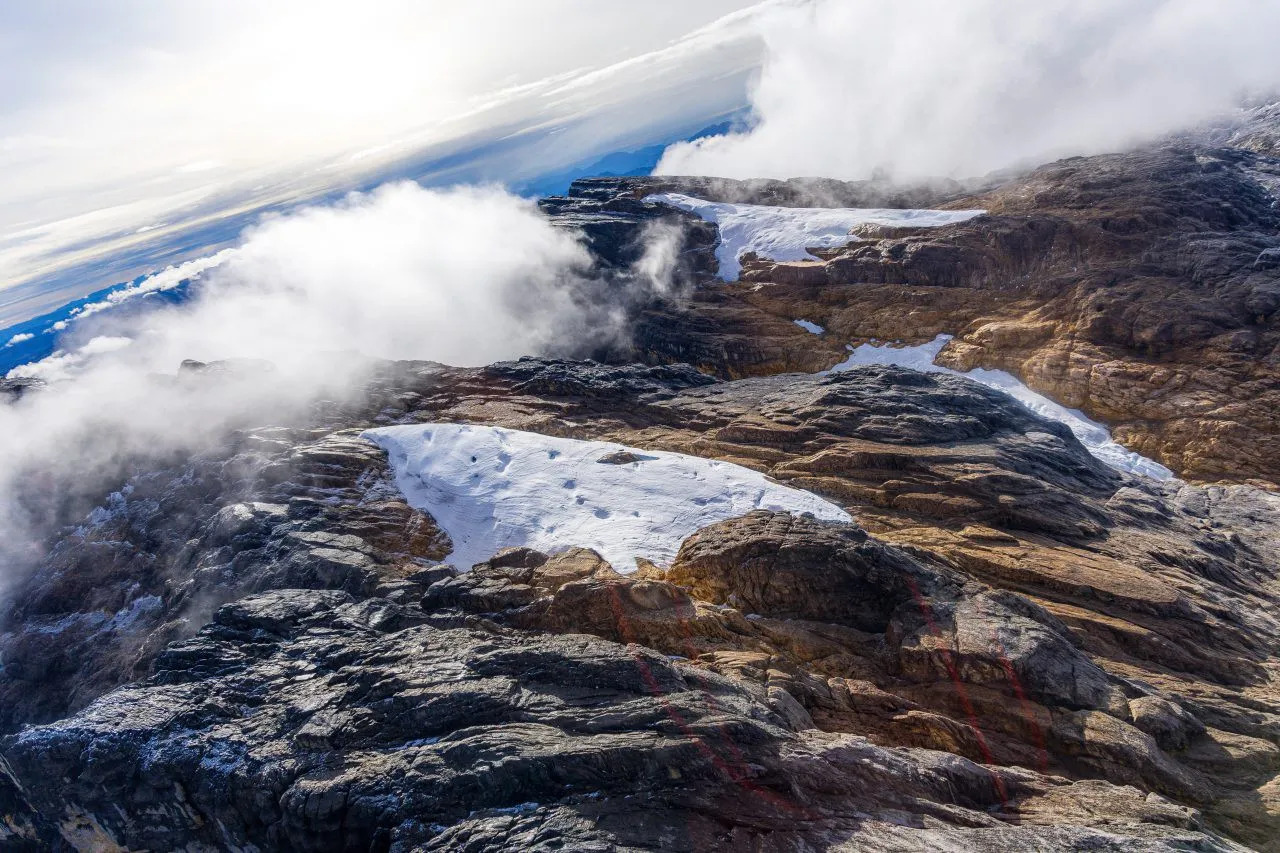
"Asia’s last tropical glaciers can be found near Puncak Jaya, Papua, the highest peak in Southeast Asia. But it is unlikely that they will survive until the end of this decade. Over the past 44 years, the peak has lost 97% of its ice and four of its glaciers. Its remaining two glaciers, Carstensz and the East Northwall Firn glacier, are expected to disappear by 2030, adding Indonesia (alongside Venezuela and Slovenia) to the list of countries that have lost all of their glaciers."
"For Papua, it becomes dry and warm during El Niño, which means less snow at high elevations and more melting. Both can be a death knell, especially to a small glacier. Warming causes the freezing level altitude to rise, meaning more precipitation falls as rain rather than snow, which accelerates melting instead of nourishing the glacier."
"The El Niño Southern Oscillation ( ENSO) is a global climate phenomenon characterized by weather patterns that alternate between La Niña and El Niño conditions that affect each region of the planet in different ways. In Indonesia, El Niño conditions have dramatically increased glacier melt. During the recent El Niño event between 2015 and 2016, Indonesia's glaciers took a big hit."
"In an interview with GlacierHub, Permana explained how the vertical thinning rate increased from around 1.0m/year to 5.3m during the 2015-16 El Niño event-an nearly five-fold increase. Permana and his team used ice cores recove"
Puncak Jaya in Papua holds Asia’s last tropical glaciers, but most ice has already been lost. Over 44 years, the peak lost 97% of its ice and four glaciers, leaving two glaciers that are expected to disappear by 2030. Rising global temperatures drive glacier melt, and El Niño events intensify the loss in Indonesia. During El Niño, Papua becomes drier and warmer, producing less snow at high elevations and increasing melting. Warming also raises the freezing level altitude, shifting precipitation from snow to rain, which accelerates melting rather than replenishing ice. During the 2015–2016 El Niño, vertical thinning increased from about 1.0 m/year to 5.3 m/year.
Read at State of the Planet
Unable to calculate read time
Collection
[
|
...
]