"Tadeo Ramirez-Parada studied the timing of plant flowering for his PhD - but he didn't touch a single petal. Instead, he developed a machine-learning algorithm to analyse the digitized captions of one million herbarium specimens, which showed him how flowering times are changing with rising temperatures. Ramirez-Parada's work has helped to solve an important mystery in ecology - showing that as temperatures change, plants shift their flowering times to cope with the heat, rather than adapting through natural selection."
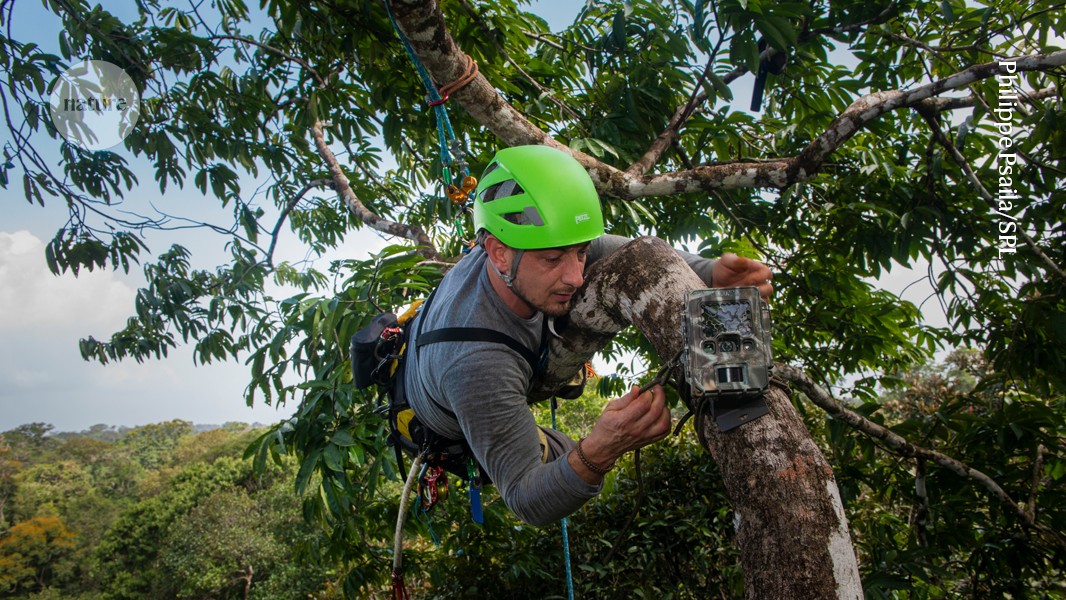
"The technologies are creating a world that can be monitored at times, places and scales that were previously unimaginable. We are moving towards the "fully automated monitoring of ecological communities", wrote Marc Besson, a marine scientist at the Sorbonne University Ocean Observatory in Banyuls-sur-Mer, France, in a 2022 paper. Many ecologists say this revolution offers huge potential for understanding the biodiversity crisis and discerning patterns of global change. But some ecologists are dismayed."
"They feel that the discipline is losing intimacy with its subject matter. They argue that field experience is in decline, and that this loss could lead to error, bias and oversimplification of results. "If it becomes a world where you don't actually have to go out in order to become an ecologist, we kind of lose sight of what the actual world is like," says Bill Sutherland, who studies conservation biology at the University of Cambridge, UK."
Tadeo Ramirez-Parada developed a machine-learning algorithm to analyse digitized captions of one million herbarium specimens to study flowering timing. The algorithm detected shifts in flowering times correlated with rising temperatures. The shifts indicate phenological plasticity rather than adaptation via natural selection. The research has required minimal experimental or field work. Ecology is increasingly analysing digitized specimens, images, DNA, and sensor data indoors and moving toward fully automated monitoring of ecological communities. This technological shift enables monitoring at unprecedented times, places, and scales and offers potential to understand biodiversity loss and global change patterns. Some ecologists warn that declining field experience could produce error, bias, and oversimplified conclusions and weaken researchers' intimacy with nature.
Read at Nature
Unable to calculate read time
Collection
[
|
...
]