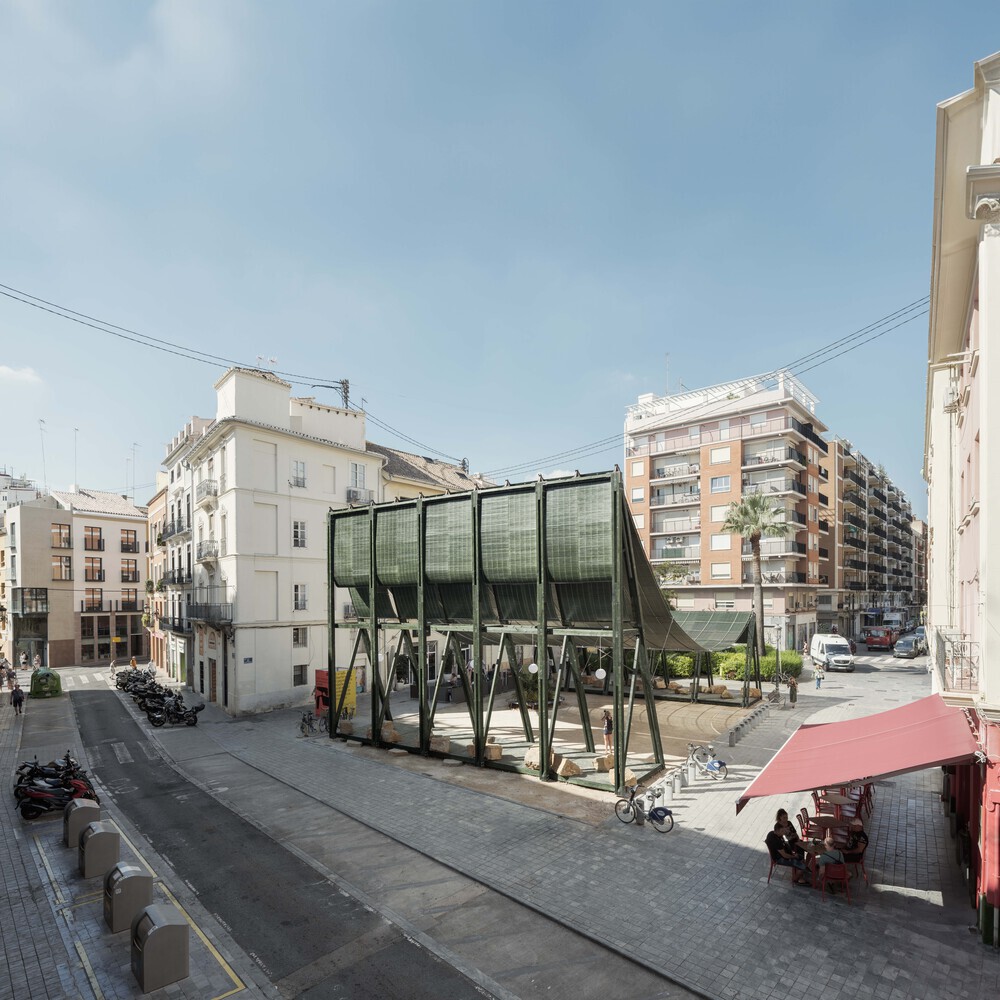
"While rising temperatures are reshaping daily life worldwide, some towns and neighborhoods, often the most vulnerable and least resourced, are warming more than others. The reason comes down to the urban environment. Built infrastructure, such as roads, buildings, sidewalks, and public spaces, determines how heat moves through a city, where it accumulates, and how long it remains trapped. No matter the climate zone or geographical location, shade remains the most effective and immediate way to cool pedestrians and relieve the built environment."
"Urban designers increasingly argue for a connected network of shaded surfaces distributed across the public realm. Shade can be cast by any vertical surface, from buildings to trees, canopies, and overhangs. In cities like Los Angeles, where building granularity remains low and large parcels dominate the urban fabric, shade strategies often prioritize trees and freestanding canopy structures. In cities like Singapore, where building density is high and buildings are tall, the public realm can rely more heavily on covered sidewalks, building overhangs."
Cities are warming at roughly twice the global rate due to rapid urbanization and built infrastructure. Built elements—roads, buildings, sidewalks, and public spaces—control how heat moves, accumulates, and remains trapped in urban areas. Vulnerable and under-resourced neighborhoods often warm more because of local urban form. Shade provides the most immediate cooling benefit for pedestrians and the built environment. Shade can originate from buildings, trees, canopies, and overhangs and is most effective when deployed as a connected network across the public realm. Municipal investment in shade enhances public comfort, health, and urban resilience.
Read at ArchDaily
Unable to calculate read time
Collection
[
|
...
]