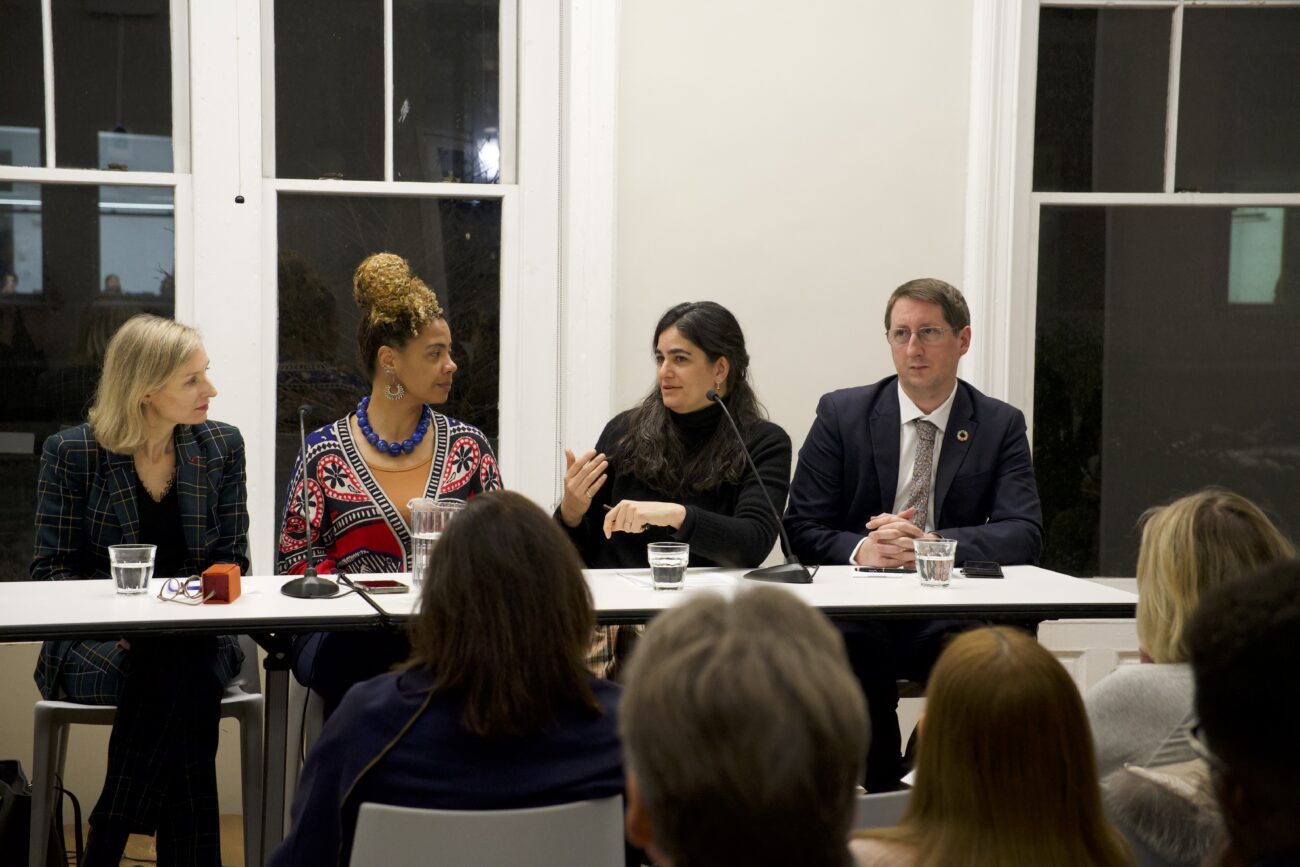
"How are human beings, animals and plants interconnected? What does the decline of biodiversity mean for these relationships and how we understand them? How can we transform or reconsider existing narratives in a changing world? These questions were the subject of a recent interdisciplinary panel titled " Mending the Living World," hosted by the Columbia Climate School, the Columbia Maison Française, Alliance Program and Villa Albertine."
"Understanding any present‑day landscape and its physical, social or ecological features requires tracing the many layered histories that formed it, said Douglass. All these interactions have created this "palimpsest," she explained, or a surface written over many times, where past events still shape the present. Having recently visited the ancient Maya city of Caracol in modern-day Belize, Douglass presented the Maya as an example of how narratives about the past may be reevaluated."
Interdisciplinary perspectives examine the interdependence of humans, animals, and plants and the implications of biodiversity loss for those relationships. Present-day landscapes reflect layered histories that shape ecological, social, and physical features, forming a palimpsest where past events continue to influence the present. Historical examples such as the ancient Maya invite reconsideration of collapse narratives and resource-use interpretations. Questions about transition probe what is ending, what is revealed, and what might begin. Reimagining responses requires integrating ecological science, ethics, archaeology, and policy to transform narratives and pursue reparative, resilient approaches.
Read at State of the Planet
Unable to calculate read time
Collection
[
|
...
]