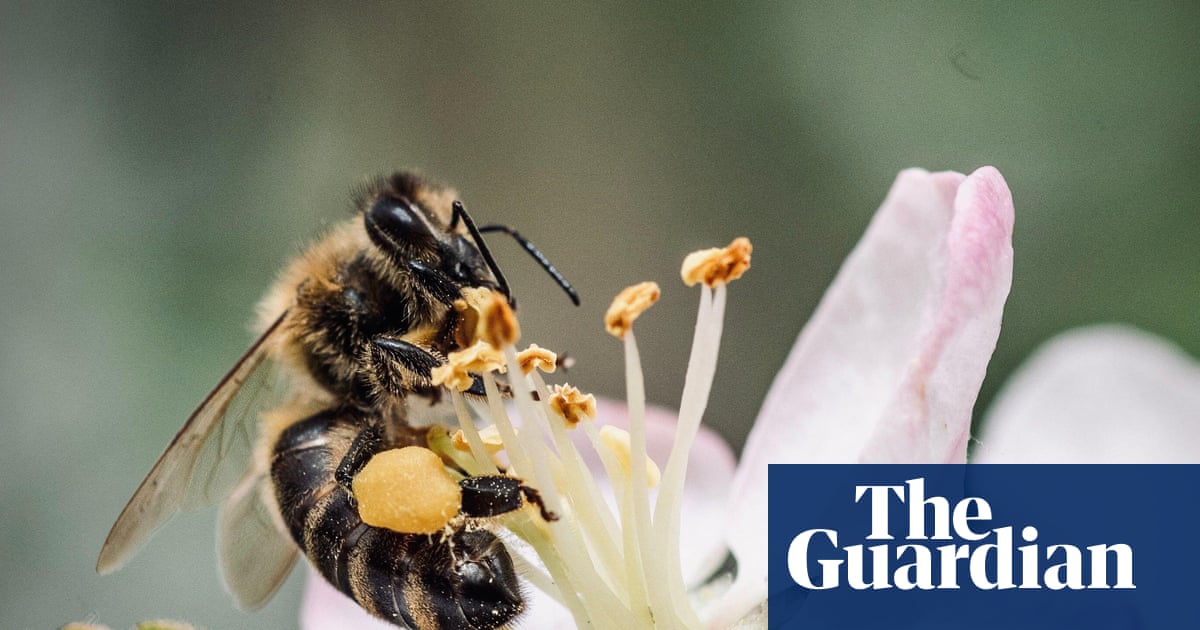
"Every summer, 1,000 virgin queens descend on the Belgian town of Chimay. During the wedding flight, a male attaches to the female. His endophallus (penis equivalent) is torn off and he falls to the ground and dies. Mission accomplished. Beekeepers come and pick up their fertilised queens in small colourful hives, driving them back home, sometimes more than 300km away."
"They will use the genetic material gathered in south Belgium to build new colonies in the Netherlands, France and Germany. The point of this annual pilgrimage which started in 2000 is to spread the genes of the endangered European dark bee (Apis mellifera mellifera), the native subspecies of the honeybee (Apis mellifera), which evolved to live alongside the flowers and climate of this region."
"The difference between farming dark bees and hybrid, or cross-bred, honeybees is like looking after a Scottish highland cow versus an intensive dairy cow, says Hubert Guerriat, a Belgian beekeeper and biologist who has been working with dark bees for 40 years and has been pivotal in driving the species' return. They are not the same animal. Nature is like a high-precision watch. You can't swap in one bee for another. Pollinators are not interchangeable Hubert Guerriat"
Every summer about 1,000 virgin queens gather in Chimay, Belgium, for mass mating flights in which males die after mating and fertilised queens are collected by beekeepers. Beekeepers transport fertilised queens up to 300 km to establish new colonies in the Netherlands, France and Germany. The event began in 2000 to preserve and spread the genes of the endangered European dark bee (Apis mellifera mellifera), the native subspecies adapted to the region. Beekeepers reserve spots at the Maison de l'Abeille Noire; queens mate with up to 20 males, storing millions of sperm in an abdominal pouch that can last several years.
Read at www.theguardian.com
Unable to calculate read time
Collection
[
|
...
]