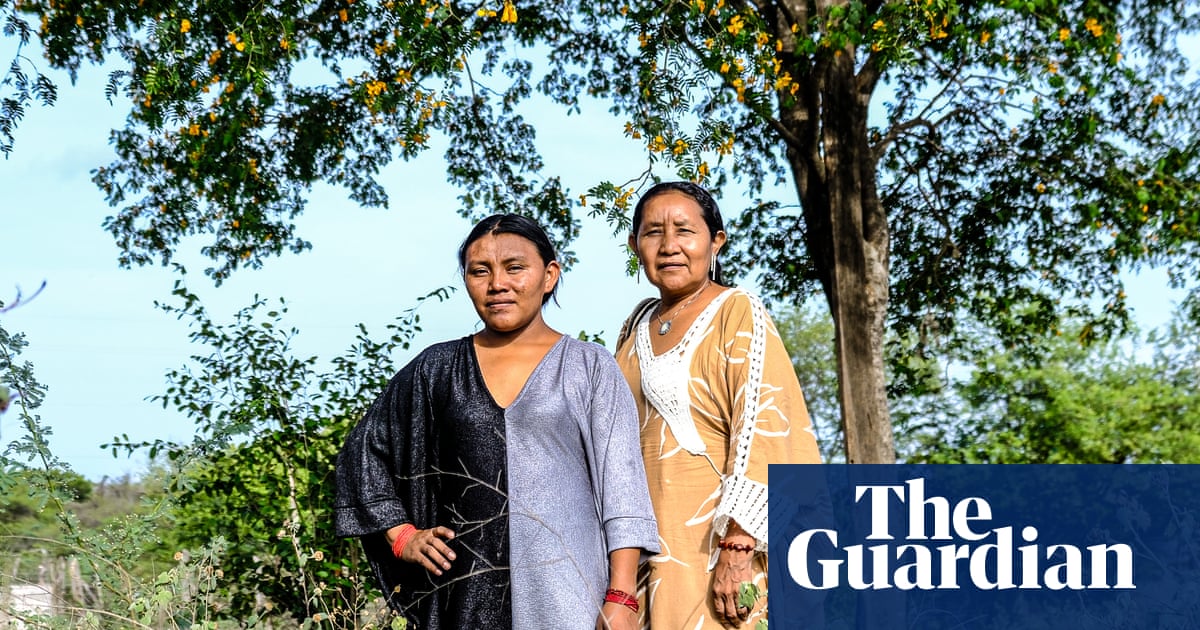
Maria Elena Aguilar Uriana walks through a dry tropical landscape in La Guajira, pointing to a former watering hole now reduced to dust. She links children’s malnutrition and deaths to mining that has destroyed the environment and daily life. In Colombia’s far north-eastern region, energy projects are expanding amid long-running extractive conflict. The Wayuu, the largest Indigenous group in the country, describe their territory as repeatedly shaped by outside interests, first through coal mining and now through renewable energy development. Leaders say the energy transition follows the same pattern: national and corporate priorities advance while consent and control over land and water are ignored. Health and environmental impacts include increased malnutrition, respiratory problems, and coal dust contaminating land and herds.
"In the heart of the dry tropical forest, Maria Elena Aguilar Uriana walks past towering cacti, her ancestors' graves, and patterned clothes blowing in the wind. Her brow is furrowed, her hands fixed on her hips. She points to a former watering hole, now nothing but dust. Our children are malnourished and dying, she says. It's all because of the mining. It has destroyed our landscape, our homes, our lives. Now Uriana fears history is repeating itself."
"In Colombia's far north-eastern corner, ambitious energy projects are colliding with decades of extractive conflict. The Wayuu, the country's largest Indigenous group, say their territory in the arid La Guajira has long been shaped by outside interests first by coal mining and now through renewable energy development. Leaders say the energy transition is repeating an old pattern: advancing national and corporate priorities while sidelining consent and control over land and water."
"Towering over Wayuu territory is Cerrejon, one of the world's largest open-pit coalmines. Operating for decades, the mine has transformed vast stretches of land. Campaigners have long raised concerns about its environmental and social impacts, including water pollution and the displacement of communities. The community has faced increased malnutrition and respiratory issues in recent years, which they blame on mining."
"Coal dust from the mine, Duarte says, settles over the land and on to the Wayuu's herds. When our people slaughter an animal, they find coal dust in its lungs, he says, blaming a"
Read at www.theguardian.com
Unable to calculate read time
Collection
[
|
...
]