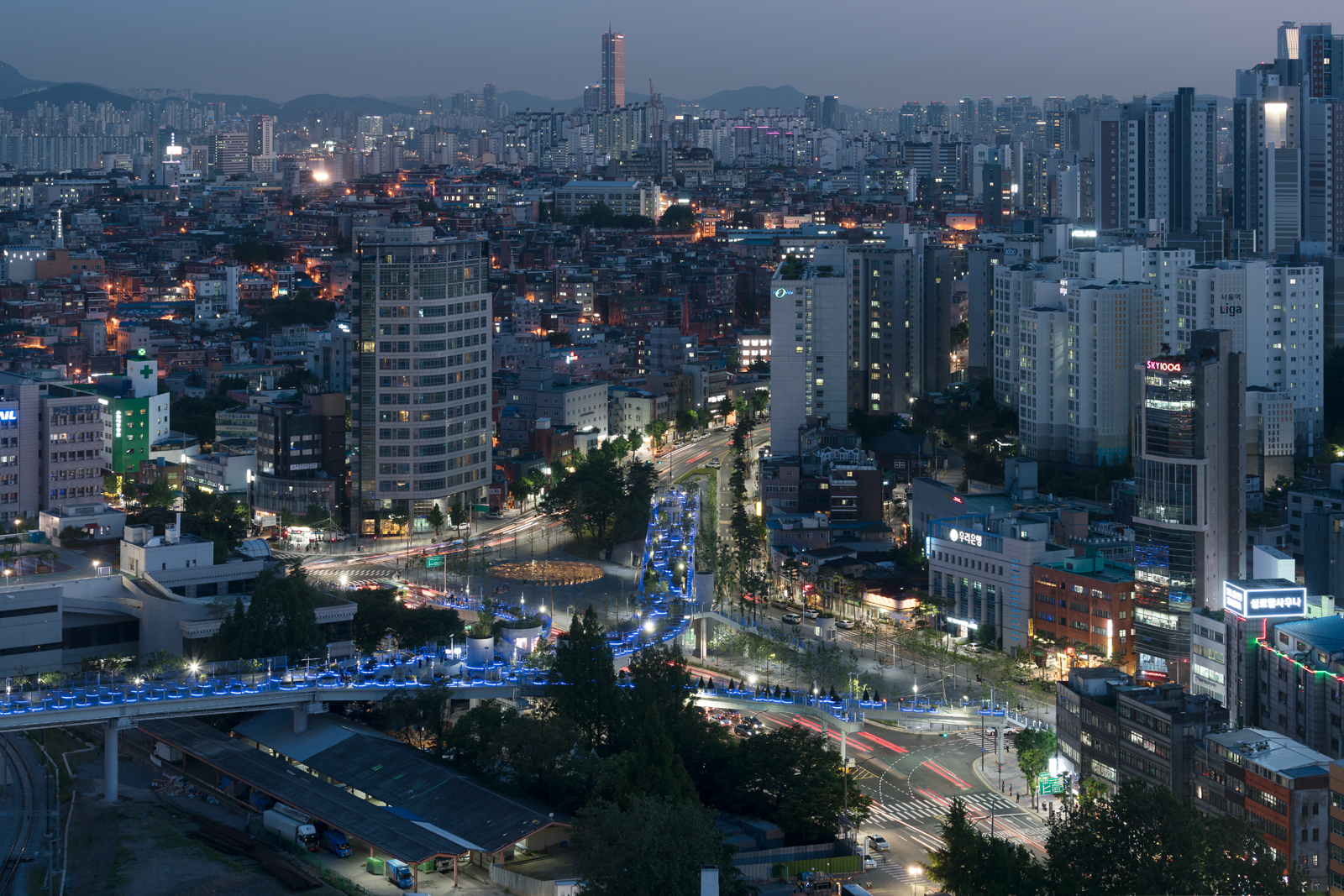
"For most of human history, night arrived as a planetary certainty. Darkness spread across landscapes, and the sky revealed thousands of stars. Today, that sky is disappearing. Artificial light spills upward from cities, scattering through the atmosphere and turning night into a permanent haze. Research mapping global sky brightness shows that more than 80 percent of humanity now lives under light-polluted skies, and the Milky Way has vanished from view for over a third of the world's population."
"The disappearance of dark skies is usually discussed within astronomy, but the sources of that change are deeply embedded in the built environment. Buildings emit light, reflect it through glass facades, and extend illumination far beyond their walls. In the technosphere, the vast system of infrastructures and materials humans have constructed, architecture now shapes both physical space and the sensory conditions surrounding it."
"Urban illumination has expanded rapidly with the adoption of LED lighting, illuminated facades, and large reflective surfaces. Short-wavelength blue light scatters strongly in the atmosphere, amplifying skyglow and erasing the contrast between night and day. What appears locally as a bright street or glowing tower accumulates into a regional atmospheric phenomenon. Satellite imagery now shows entire continents glowing after dark."
Artificial light pollution has transformed night into a permanent atmospheric haze, with over 80 percent of humanity now living under light-polluted skies and the Milky Way invisible to a third of the global population. This phenomenon extends beyond astronomy into architecture and urban design, as buildings emit and reflect light through glass facades, extending illumination far beyond their physical boundaries. Cities continuously produce sensory emissions including light, noise, and electronic signals through interconnected infrastructures. LED adoption, illuminated facades, and reflective surfaces amplify this effect, with short-wavelength blue light scattering strongly in the atmosphere to create regional skyglow visible from satellite imagery across entire continents.
Read at ArchDaily
Unable to calculate read time
Collection
[
|
...
]