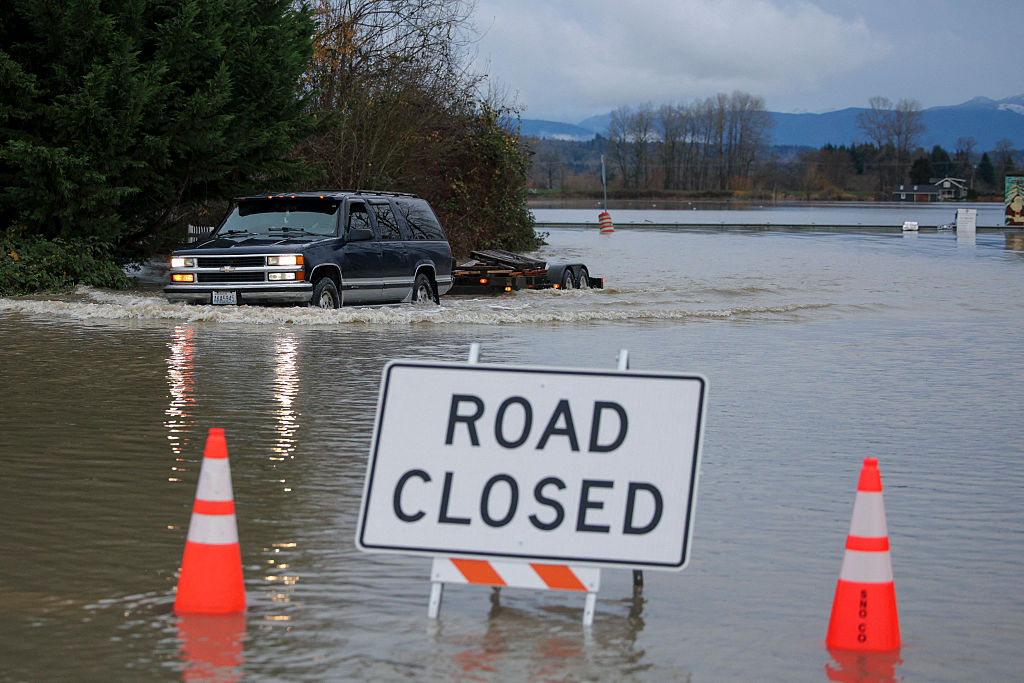
Powerful atmospheric-river storms swept parts of the U.S. West, unloading enormous rain that caused rivers to surge and overtop or breach multiple levees. Levees often go unnoticed until extreme weather makes them decisive in whether neighborhoods flood. Many existing levees began as simple earthen embankments built by farmers, lacking modern engineering standards and consistent maintenance. Across the country, levees are aging while weather extremes intensify, increasing vulnerability. Engineering research shows levee failures disproportionately affect certain populations and that resilience requires updated design, maintenance, and equity-focused planning.
"In recent weeks, powerful atmospheric river storms have swept across Washington, Oregon and California, unloading enormous amounts of rain. As rivers surged, they overtopped or breached multiple levees - those long, often unnoticed barriers holding floodwaters back from homes and towns. Most of the time, levees don't demand attention. They quietly do their job, year after year. But when storms intensify, levees suddenly matter in a very personal way. They can determine whether a neighborhood stays dry or ends up underwater."
"The damage in the West reflects a nationwide problem that has been building for decades. Across the U.S., levees are getting older while weather is getting more extreme. Many of these structures were never designed for the enormous responsibility they now carry. As a civil engineer at Tufts University, I study water infrastructure, including the vulnerability of levees and strategies for making them more resilient. My research also shows that when levees fail, the consequences don't fall evenly on the population."
"Many people assume levees were built as part of modern, carefully engineered flood-control systems. In reality, many of the levees still in use today began much more humbly. Decades ago, farmers built simple earthen embankments to protect their fields and livestock from seasonal flooding. These early levees were practical solutions, shaped by experience rather than formal engineering. They were not constructed using rigorous design standards, and they did not follow consistent construction or maintenance guidelines."
Read at Truthout
Unable to calculate read time
Collection
[
|
...
]