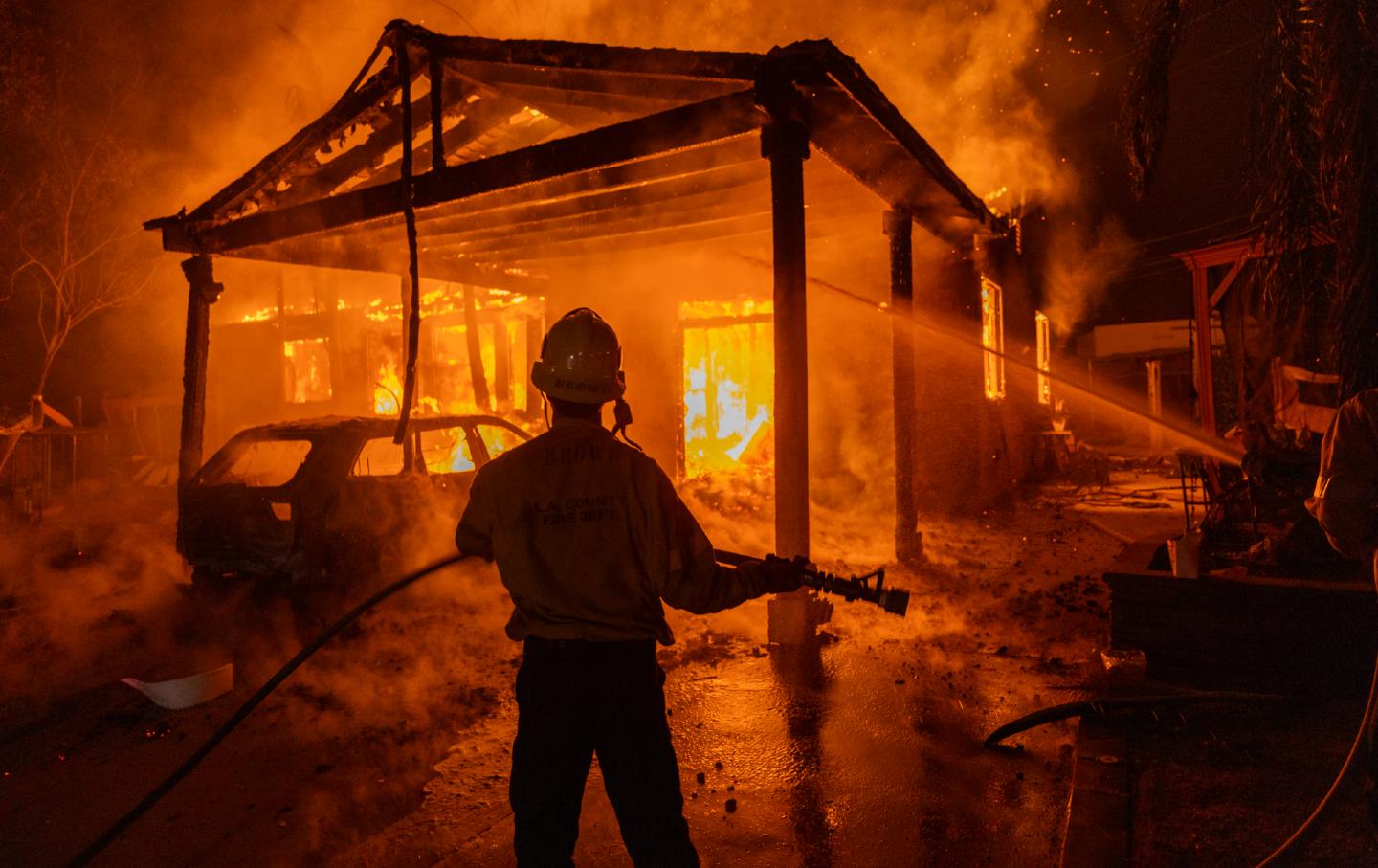
""Let's be realistic." That's the advice coming from a growing number of voices in climate circles in the United States. In October, billionaire Bill Gates argued that a global temperature rise of 2 degrees Celsius is unavoidable and not a " super bad outcome"-a view unlikely to be shared by the millions of people whose homes would be destroyed by the resulting killer storms and rising seas."
"In November, The Washington Post analyzed social media posts and public appearances to document how Democrats across the country were " going quiet on climate" to focus on affordability-as if one can't talk about both. In December, one New York Times opinion article applauded abandoning goals that supposedly were " never attainable" anyway, such as cutting global emissions to zero. A second asserted that Democrats must " support America's oil and gas industry " if they're to win the presidency in 2028."
"Proponents of this strategic shift fashion themselves as paragons of realism at a time when President Donald Trump is attacking any form of environmental progress. But "climate hushing," as the practice is known, rests on a fundamental flaw: It focuses on only one form of climate realism-the political-while ignoring a more important one, the scientific. Hushers may or may not be right about what's realistic to expect from current leaders and political configurations. But gaming out the politics of climate change must be weighed against what thousands of alarmed scientists have been saying for years:"
A growing cadre of political strategists advocates "climate hushing"—downplaying climate messaging to prioritize short-term political goals and affordability. Proponents argue that focusing on economic concerns and supporting fossil-fuel industries improves electoral prospects. That approach emphasizes political realism while sidelining the scientific urgency articulated by thousands of alarmed scientists. The scientific consensus warns of accelerating, potentially irreversible catastrophe unless emissions fall rapidly. Political calculus must be weighed against physical limits, because retreating from strong climate messaging risks insufficient action and far greater harm from storms, sea-level rise, and other climate impacts. Immediate, aggressive emission reductions remain necessary.
Read at The Nation
Unable to calculate read time
Collection
[
|
...
]