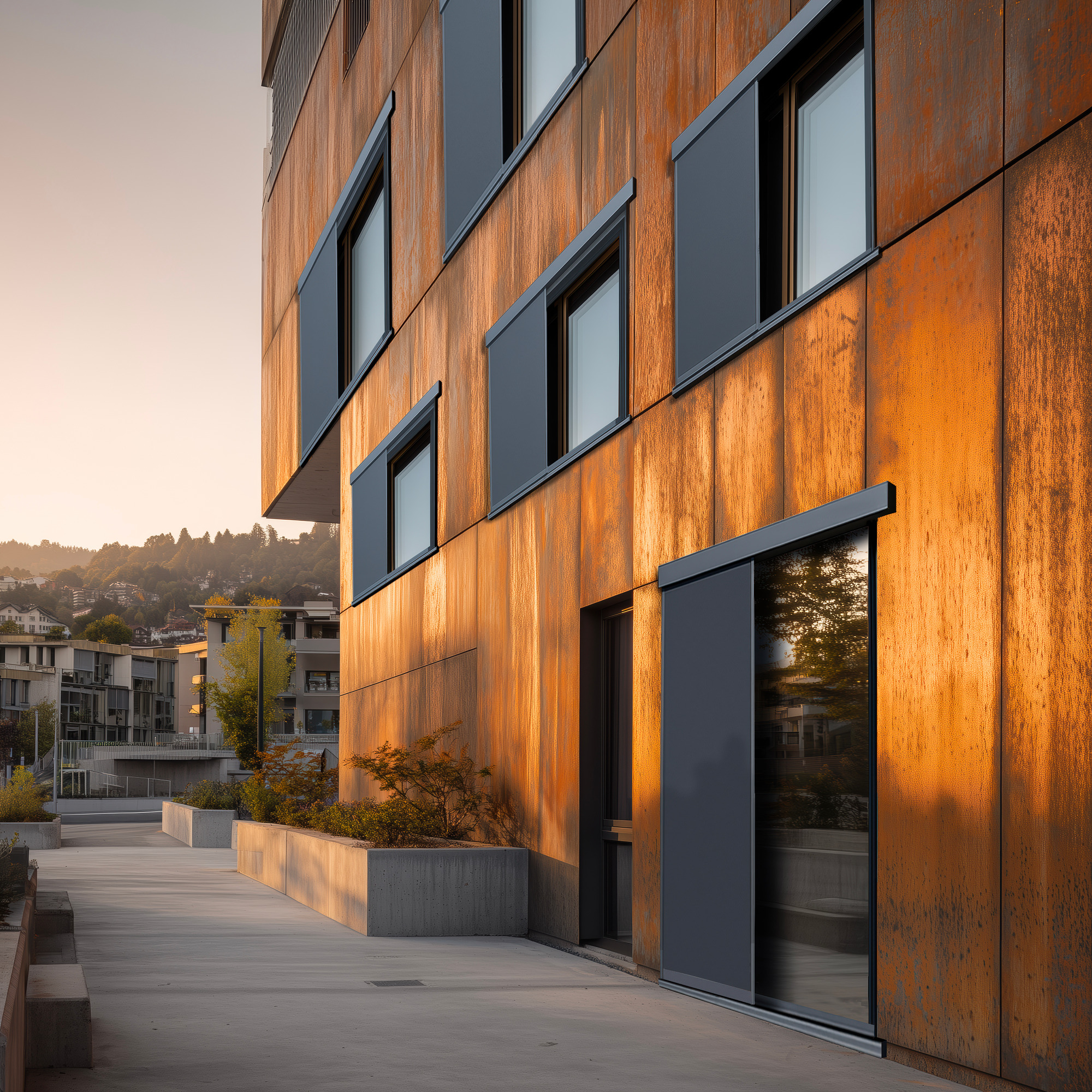
"As the primary interface between interior spaces and the external environment, facades play a central role in both the performance and architectural expression of buildings. Increasingly, they are no longer seen as static envelopes, but as active mediators between climate, energy, use, and aesthetic. In dense urban contexts, however, they are also gaining relevance for another reason: while roof surfaces are often limited, fragmented, or already occupied by technical equipment, vertical envelopes remain largely underutilized in terms of energy production."
"Such systems are evolving from strictly technical solutions toward design-driven systems that embed energy production within the constructive and compositional logic of architecture. Within this framework, colored photovoltaic shutters represent a significant step forward. By integrating solar cells into movable shading elements, systems such as SolarSlide by EHRET combine daylight control, solar protection, and energy generation within a single façade component, producing electricity without adding extra layers to the envelope."
Facades function as active mediators between interior spaces and the external environment, influencing performance, energy, climate, use, and aesthetics. Vertical envelopes in dense urban contexts often exceed roof area and remain underused for energy production, creating opportunities for building-integrated photovoltaics. Colored photovoltaic shutters integrate solar cells into movable external shading, enabling daylight control, solar protection, natural ventilation, visual privacy, and on-site electricity generation within a single component. Dynamic positioning allows continuous adjustment of shading while capturing solar energy when exposed. Design-driven photovoltaic systems embed energy production into the constructive and compositional logic of architecture, enhancing both function and expression.
Read at ArchDaily
Unable to calculate read time
Collection
[
|
...
]