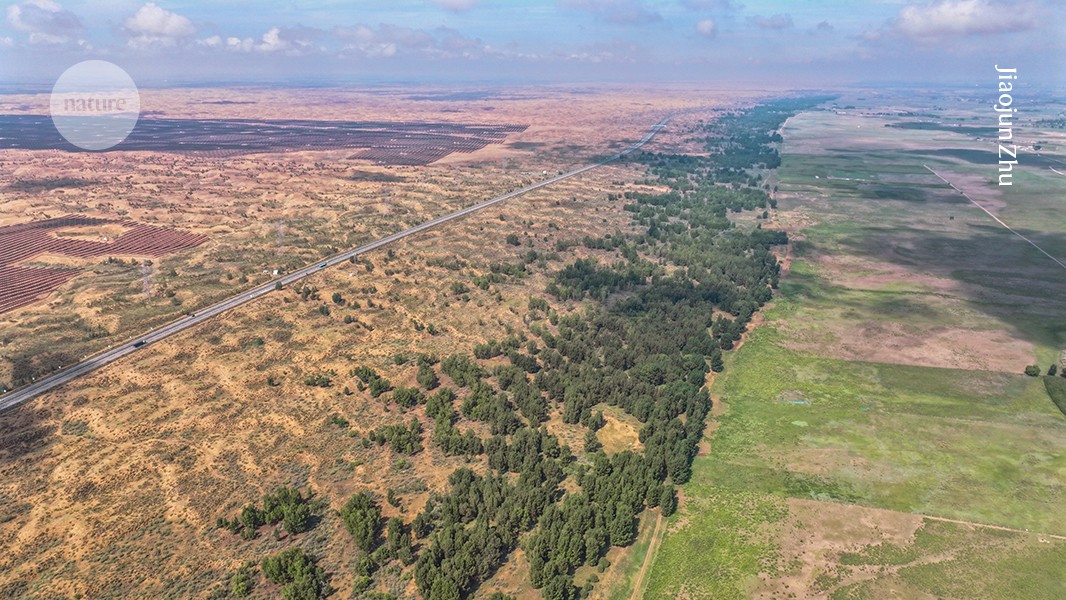
"By 2100, half of Earth's land area is expected to be dryland, with five billion inhabitants. Human activities such as agriculture are exacerbating problems by removing protective vegetation, compacting and degrading soil and reducing the land's capacity to retain water."
"The Great Green Wall of China, begun in 1978, involves creating a huge patchwork of forests across northern China to stabilize the movement of sand and protect farms, villages, and infrastructure from desert encroachment."
"Forest cover in the region has nearly tripled, from about 5% in 1978 to just under 14% in 2023. The area affected by soil erosion has declined by two-thirds, and the intensity and frequency of dust storms have fallen."
"In 2024, about 27% of China's territory was still classed as desert - a decline of only 1.5% since 2014, indicating ongoing challenges in combating desertification despite efforts."
Approximately 40% of the world's land is classified as drylands, impacting over two billion people. Global warming is causing arid regions to expand, with projections indicating that by 2100, half of Earth's land will be dryland. Human activities worsen the situation by degrading soil and reducing water retention. Countries are implementing programs to combat desertification, such as China's Great Green Wall, which aims to create forests across northern China. While forest cover has increased, challenges remain in maintaining these areas and combating ongoing desertification.
Read at Nature
Unable to calculate read time
Collection
[
|
...
]