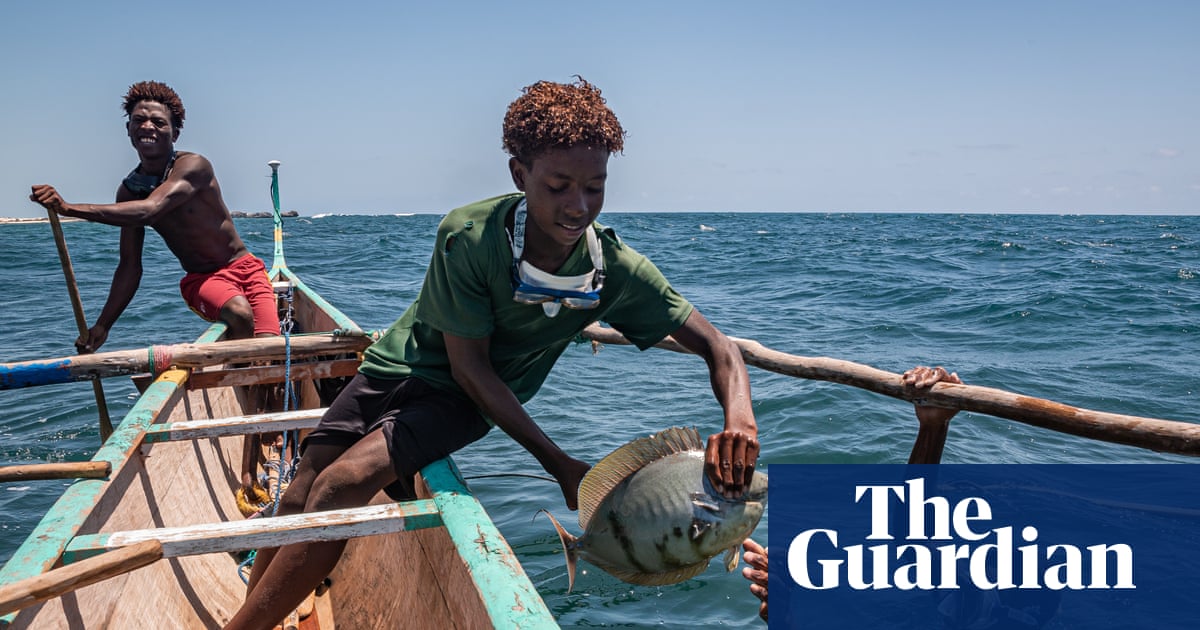
"Coastal villages around Toliara, a city in southern Madagascar, host tens of thousands of the semi-nomadic Vezo people, who make a living from small-scale fishing on the ocean. For centuries, they have launched pirogues, small boats carved from single tree trunks, every day into the turquoise shallows to catch tuna, barracuda and grouper. We rely solely on the ocean, says Soa Nomeny, a woman from a small island off the south-west coast called Nosy Ve."
"That dependence is becoming precarious for the 600 or so residents of Nosy Ve. Michel Goff Strogoff, a former shark hunter turned conservationist from the Vezo hamlet of Andavadoaka, says fish populations began collapsing in the 1990s and have declined sharply over the past decade. Rising sea temperatures, coral bleaching and reef degradation have destroyed breeding grounds, while erratic weather linked to warming oceans has shortened fishing seasons. There's no abundance near shore any more, he says. We're forced to paddle farther."
"Soa Nomeny, wearing traditional sunblock, prepares the family's main meal of rice and fish or octopus. The Vezo only eat that day's catch, ensuring their meals are connected to the sea's bounty In Nosy Ve, fish are often cooked with tomato, onion and garlic; salted sardines are laid out to dry before being sold in Andavadoaka; Soa Nomeny applies tabake, traditional sunblock made from ground taolo, a fragrant bark; and the catch is taken to market from Bevohitse v"
Along Madagascar's southwest coast, semi-nomadic Vezo communities around Toliara rely on daily small-scale fishing from pirogues carved from single tree trunks. Food and income depend on the day's catch, with salted sardines sold in nearby markets and seaweed becoming an alternative income source. Fish populations began collapsing in the 1990s and declined sharply over the past decade. Rising sea temperatures, coral bleaching and reef degradation have destroyed breeding grounds, while erratic weather has shortened fishing seasons. Coastal residents, including about 600 on Nosy Ve, are forced to paddle farther and adapt livelihoods as industrial exploitation and warming oceans intensify resource scarcity.
Read at www.theguardian.com
Unable to calculate read time
Collection
[
|
...
]