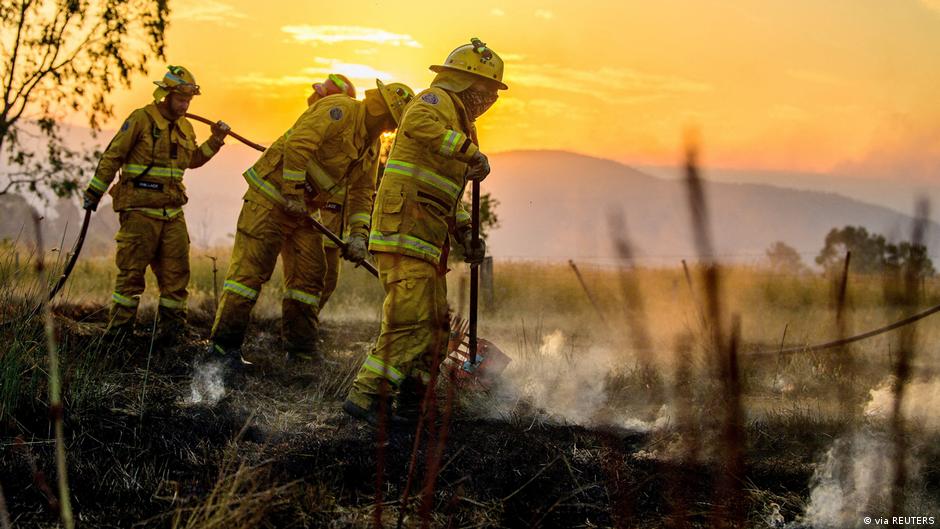
"Pastures and bushland were fuelling a widening fire-front about 90 kilometers to the north of our mountain home on the edge of Melbourne. In between, endless valleys of fire-prone Eucalyptus forest, dried out over hot summer weeks, were a tinderbox ready to explode. I'm lucky to live in one of the most beautiful places on earth. But with just a single road out, it can also be very dangerous."
"The next day, heatwave temperatures were forecast to reach 46 degrees Celsius (115 degrees Fahrenheit) in parts of the southern Australian state of Victoria. Powerful winds would multiply existing blazes as a "catastrophic" fire danger warning came into effect. These would be the worst conditions since 2019-2020 when fires engulfed much of southeastern Australia an area the size of the United Kingdom. Those so-called "Black Summer" fires burnt for months destroying more than 3,000 buildings and claiming 33 lives."
"During those fires, we were based in Germany. But this time, we are in the same house we lived in when the devastating 2009 "Black Saturday" fires swept through the region, killing 173 people many in the valleys just beyond our forest cabin. Back then, we were very naive. We only left the property at the last minute as ash fell from the sky and cyclonic winds turned hundreds"
At 1 a.m. wind howled through the forest canopy and smoke from distant fires filled the air, while pastures and bushland fuelled a widening fire-front about 90 kilometers north of a mountain home near Melbourne. Heatwave forecasts predicted 46°C with powerful winds and a catastrophic fire danger warning, creating the worst conditions since the 2019–2020 Black Summer blazes that destroyed thousands of buildings, killed dozens, and displaced billions of animals. The household faced a single evacuation road and earlier fire experience from the 2009 Black Saturday fires prompted urgent evacuation planning as friends and neighbors left properties.
Read at www.dw.com
Unable to calculate read time
Collection
[
|
...
]