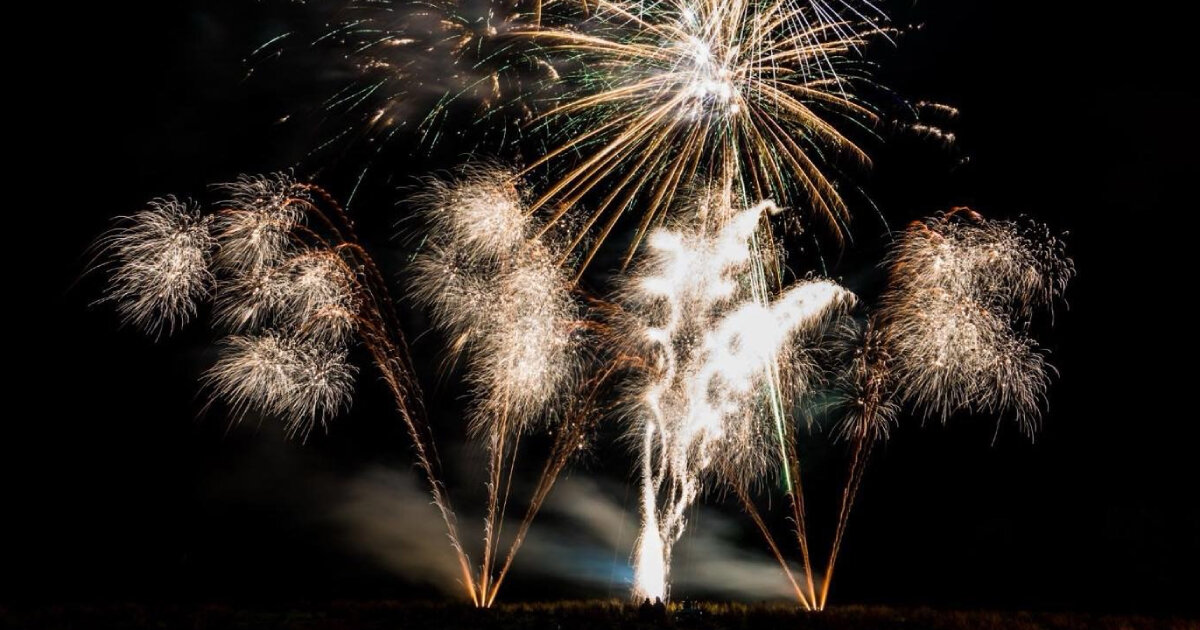
Traditional fireworks use metal salts—strontium for red, barium for green, and copper for blue—to create colors, and those metals form airborne particles when burned. Those particles persist in the air and pose inhalation risks, particularly for people with respiratory conditions. Modern fireworks often employ plastic casings that shatter and become microplastics, contaminating parks, rivers, oceans, and fields. Fireworks can exceed 120 decibels, disturbing pets and wildlife and causing lasting behavioral changes. Biodegradable fireworks made from cardboard, starch-bonded paper, and clay plugs, together with drone and light shows, offer cleaner alternatives that reduce emissions, waste, and noise impacts.
"Chemically, traditional fireworks get their colors from metals: red from strontium, green from barium, and blue from copper. When these metals burn, they don't disappear but turn into tiny metal particles that float in the air, making it dangerous to inhale, especially for those who suffer health problems and asthma. While old fireworks were wrapped in paper, the modern ones often use plastic casings because they are cheaper and can hold the chemicals better."
"Not to mention that since a single firework can be louder than 120 decibels, or as loud as a jet engine, the furry pets and other animals find the noise terrifying and threatening, even encouraging animals to change where they live and nest long after the shows are over, as seen in the case of Chinese artist Cai Guo-Qiang and Arc'teryx's large-scale fireworks event in the Tibetan Himalayas."
Read at designboom | architecture & design magazine
Unable to calculate read time
Collection
[
|
...
]