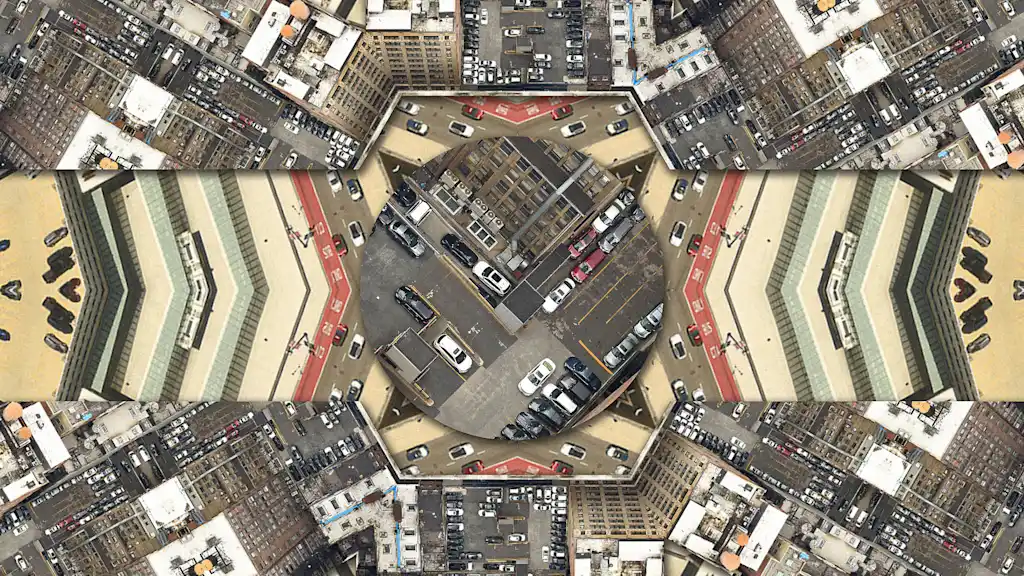
"To a certain point, cars are fantastic inventions making it easy to get to far-flung places, opening doors for new places to live or work or play. But there's a tipping point when the built environment and our lives are arranged around motor vehicles where the benefits start to come undone. Building to prioritize space-hogging cars brings a long list of negative externalities."
"In Greek mythology, the god Dionysus granted King Midas his wish for the power to turn everything he touched to gold. Midas revels in the effortless wealth-objects, furniture, and even the ground beneath him turn to gold. The Midas touch was great right up until he wanted to eat or drink or just hug his daughter. There's a King Midas aspect to motor vehicles, this technological gift that promised and delivered abundance until it became a curse."
"Personal cars expanded opportunities like never before. Post-World War II America saw vehicle ownership explode from 25 million in 1945 to over 100 million by 1970. Having access to a family car made far-flung places viable for living, working, and playing, fueling a middle-class expansion across previously rural areas. An entire car-oriented ecosystem emerged. The promise of freedom and wealth held until cities and suburbs began optimizing for vehicle throughput instead of local access and mobility."
Cars transformed mobility and enabled widespread suburbanization, dramatically increasing vehicle ownership from about 25 million in 1945 to over 100 million by 1970. Access to family cars made distant living, working, and recreation feasible and spawned a car-oriented ecosystem. Over time, urban and suburban planning prioritized vehicle throughput, parking, and wide streets, dedicating between one-third and one-half of urban land to pavement and garages. That land use shift produced negative externalities: isolation, reduced local access, and obligations to drive. The technological benefits that produced abundance can become harmful when environments are organized primarily for cars.
Read at Fast Company
Unable to calculate read time
Collection
[
|
...
]