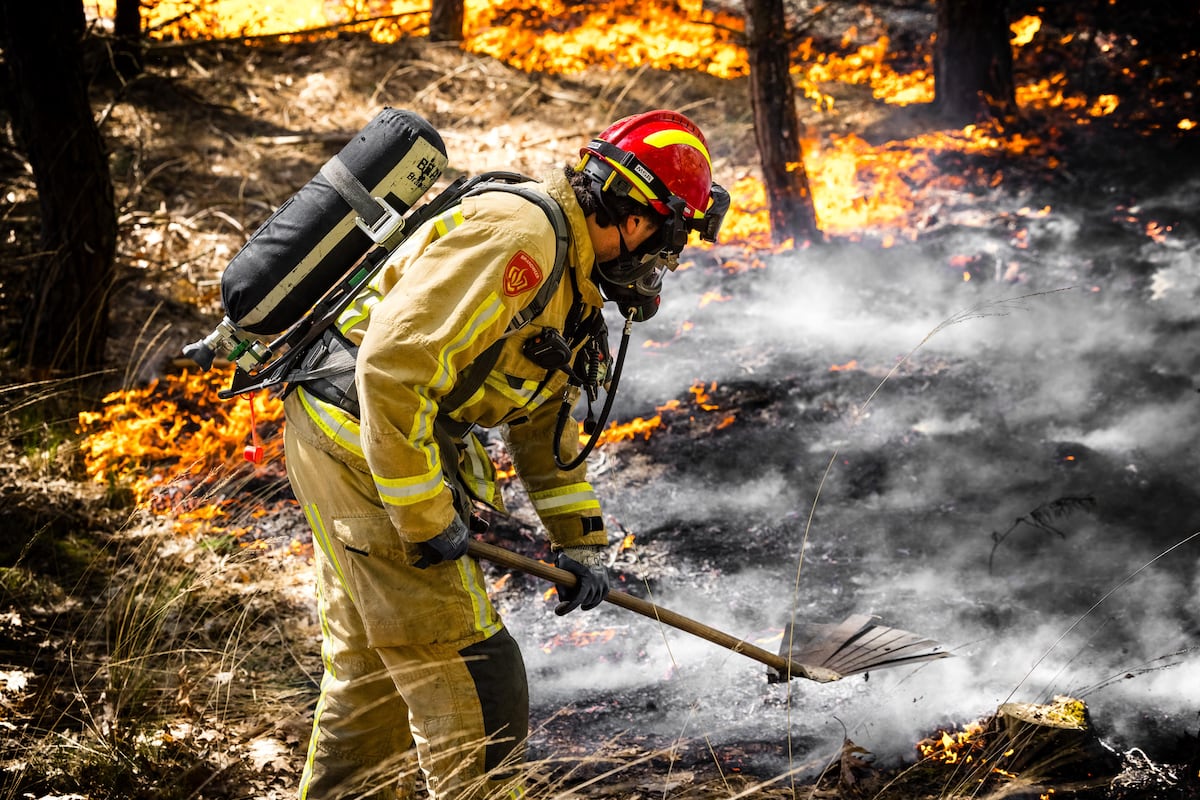
"The first half of 2026 has already provided clues that this will be another record-breaking year linked to global warming, according to scientists and meteorological organizations. These signs range from wildfires across the planet to high ocean surface temperatures and record-low levels of Arctic sea ice. Scientists anticipate a second half of the year with even higher than normal temperatures due to the onset of El Nino, a natural climate pattern that increases surface water temperatures in the tropical Pacific, ultimately impacting the entire globe."
"Several experts are already pointing to a high probability that 2026 will end as the second-warmest year on record, or even exceed the previous mark set in 2024. But, as Friederike Otto, professor of climate science at Imperial College London's Centre for Environmental Policy, explains, El Nino is a natural phenomenon that comes and goes. The problem is that it occurs on a dangerous foundation: increasing global warming that will continue to worsen as long as we don't stop burning fossil fuels."
"This is precisely where Otto focuses her attention, because, as this expert warns, many governments are backtracking on their climate goals despite the devastating impacts of climate change that are already being experienced. Fires are one facet of the problem. The Netherlands has experienced an unusual wave of fires this month, prompting the Dutch government to request assistance last week from the European Emergency Aid Coordination Centre, which ultimately deployed firefighting personnel from France and Germany."
"What has happened in the heart of Europe at an unusual time of year is just a small snapshot of what has occurred in the first months of 2026 in many parts of the world. Between January 1 and May 6, more than 160 million hectares have been affected by fires worldwide, the highest figure for that period since at least 2012, when data collection began for the Global Forest Fire Information System, a tool managed by Cop"
The first half of 2026 shows signs of another record-breaking year tied to global warming. Wildfires occur across many regions, ocean surface temperatures remain unusually high, and Arctic sea ice reaches record-low levels. Scientists expect the second half to bring even higher temperatures as El Niño develops, raising tropical Pacific water temperatures and influencing global weather. Many experts anticipate 2026 will finish as the second-warmest year on record or possibly surpass 2024. El Niño is natural and temporary, but it builds on a dangerous baseline created by ongoing warming from fossil-fuel burning. Governments are rolling back climate goals despite already visible impacts. Fire activity is severe, including an unusual wave of fires in the Netherlands that required international firefighting support. Between January 1 and May 6, more than 160 million hectares burned worldwide, the highest figure for that period since at least 2012.
Read at english.elpais.com
Unable to calculate read time
Collection
[
|
...
]