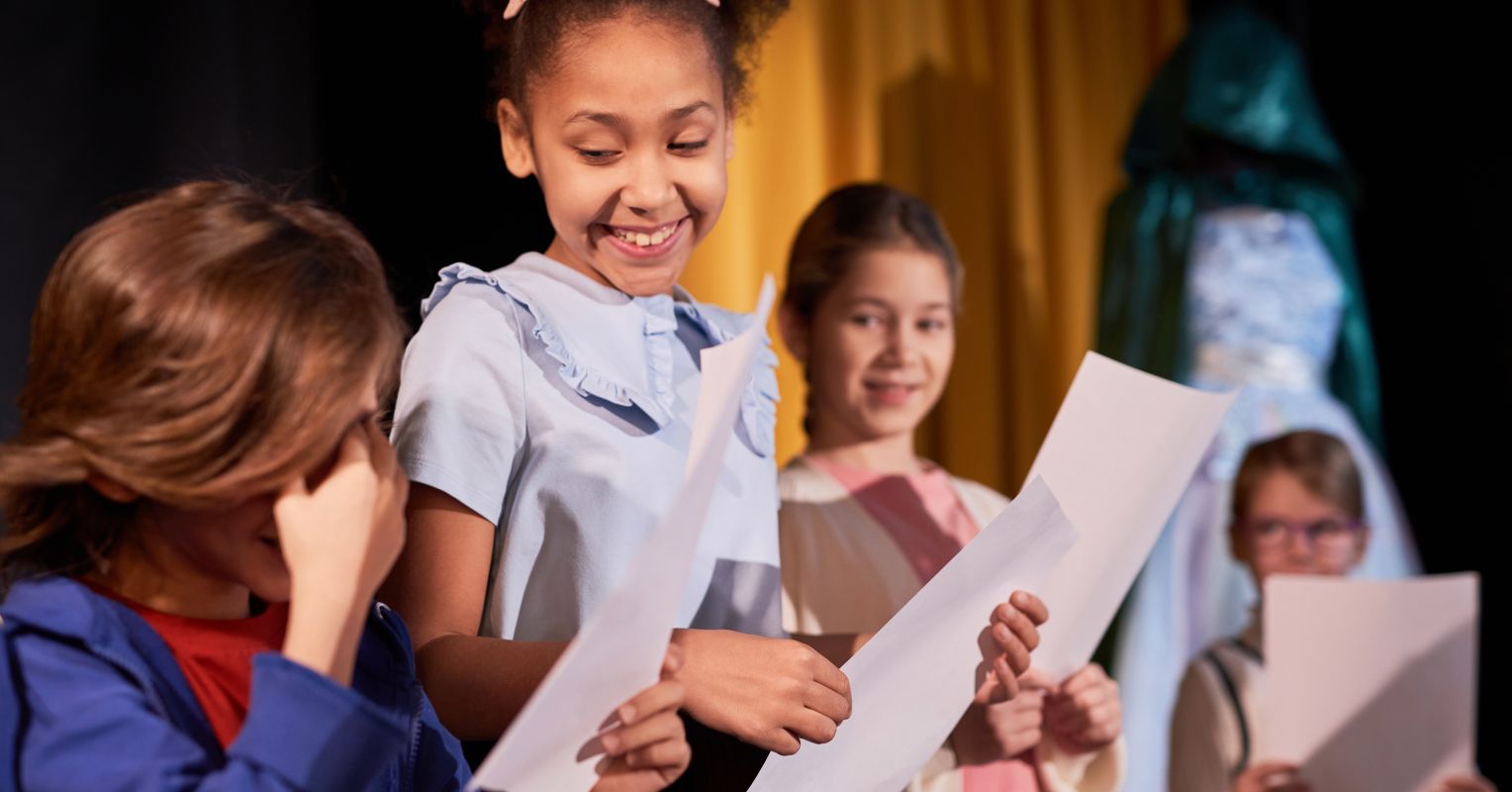
The BANI framework defines future society as Brittle, Anxious, Nonlinear, and Incomprehensible, signaling systemic fragility, pervasive unease, disrupted cause-and-effect, and unclear problem-solving. Recent global events—pandemics, inflation, digital transformation, and demographic shifts—exemplify these traits. K-12 education shows brittleness when facing large-scale crises and struggles to modify pedagogy and assessment for rapid, nonlinear change. Theatre education builds resilience, empathy, embodied learning, adaptability, and collaborative problem-solving through role-play, improvisation, and reflective practice. Future theatre pedagogy should incorporate sustainability, mental health support, interdisciplinary collaboration, process-based assessment, and appropriate technology to prepare students for complexity and uncertainty.
"The concept of the BANI World was proposed by Jamais Cascio in 2018 and further refined in 2020 to describe four major characteristics of future society: Brittle, Anxious, Nonlinear, and Incomprehensible. Compared to the previous VUCA ( Volatility, Uncertainty, Complexity, and A mbiguity) World, the BANI World more accurately depicts the increasingly complex and volatile global situation and trends. "Brittle" refers to social systems being more susceptible to shocks and damage, often accompanied by the risk of sudden collapse."
"With the arrival of the BANI World, K-12 education faces significant challenges. Current educational methods struggle to adapt to the changes in societal development, mainly evident in the following aspects: First, the education system is brittle. While current education has made some progress in adapting to change, it has exposed its brittle side when facing large-scale emergencies, such as pandemics or natural disasters. The global COVID-19 pandemic served as a stark stress test."
Read at Psychology Today
Unable to calculate read time
Collection
[
|
...
]