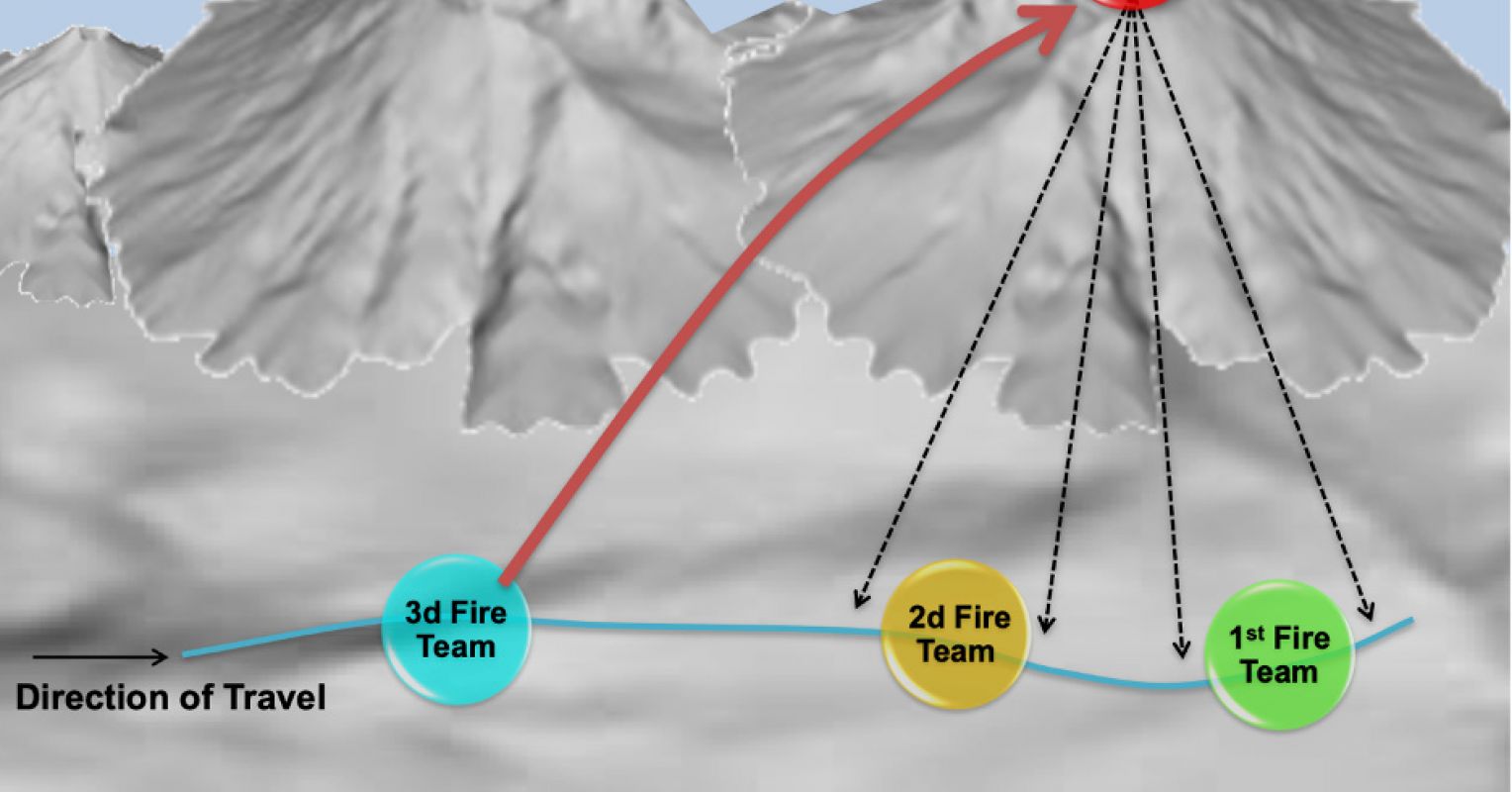
"It was a simple scenario set at twilight. A squad is moving west to east on a path through hilly terrain when suddenly it is ambushed by the enemy. The first two fire teams are pinned down. You are the leader of the third fire team, and your unit is not pinned down. You can see that the fire is coming from a hill to the north of the path, just ahead. What do you do?"
"I posed this TDG to a class of U.S. Marine Corps NCOs (noncommissioned officers), and one of them, a tall, burly sergeant, immediately volunteered his answer: "I'd tell my men to follow me, and we would go charging up the hill to attack the force that was attacking us." I have never been in the military, and have minimal expertise, but even so, this tactic seemed very risky."
Tactical Decision Games use realistic combat scenarios to sharpen decision-making and reshape mental models, producing durable lessons. One scenario, the Twilight Ambush, places a squad moving west to east into a sudden ambush from a northern hill with the first two fire teams pinned and the third unpinned. A sergeant proposed an immediate frontal assault, while an alternative used the neighboring western hill to flank and drive off the enemy. The flanking solution demonstrated safer, more effective tactics and highlighted that older doctrines favoring immediate assault reflected obsolete weapons and conditions.
Read at Psychology Today
Unable to calculate read time
Collection
[
|
...
]