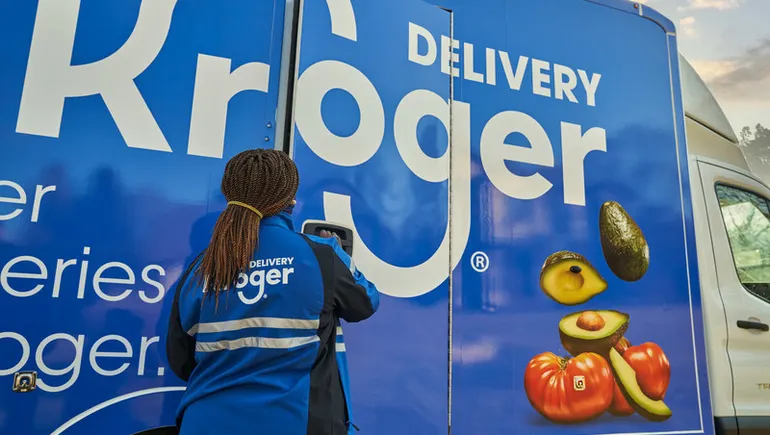
"Kroger emphasized that it expects to generate a profit from e-commerce in 2026 because it is closing multiple automated facilities, relying more heavily on individual stores to fulfill orders and stepping up partnerships with third-party providers. But the company's CFO disclosed that it also takes sales from its retail media business into account when calculating its e-commerce profitability. In addition, Kroger noted that its arrangements with Instacart, DoorDash and Uber are helping to power its digital advertising operations."
"Kroger's decision to fold its booming retail media business into its definition of e-commerce profitability stands in stark contrast to how Albertsons - which, like Kroger and other grocers, has struggled to make money online - is approaching the challenge. Albertsons' CEO said in July that the chain is getting close to breaking even on its digital business, but made clear that the company does not include sales from its retail media business when determining the profitability of its e-commerce operations."
Kroger expects to generate a profit from e-commerce in 2026 by closing multiple automated facilities, relying more heavily on individual stores to fulfill orders, and increasing partnerships with third-party providers. The company's CFO counts sales from Kroger's retail media business when calculating e-commerce profitability and says arrangements with Instacart, DoorDash and Uber help power digital advertising operations. Albertsons, by contrast, reports that it is nearing break-even on digital sales but does not include retail media revenue in its e-commerce profitability calculations. High fulfillment costs—picking, packing, storage, app development and delivery—have long hindered grocery e-commerce margins.
Read at Grocery Dive
Unable to calculate read time
Collection
[
|
...
]