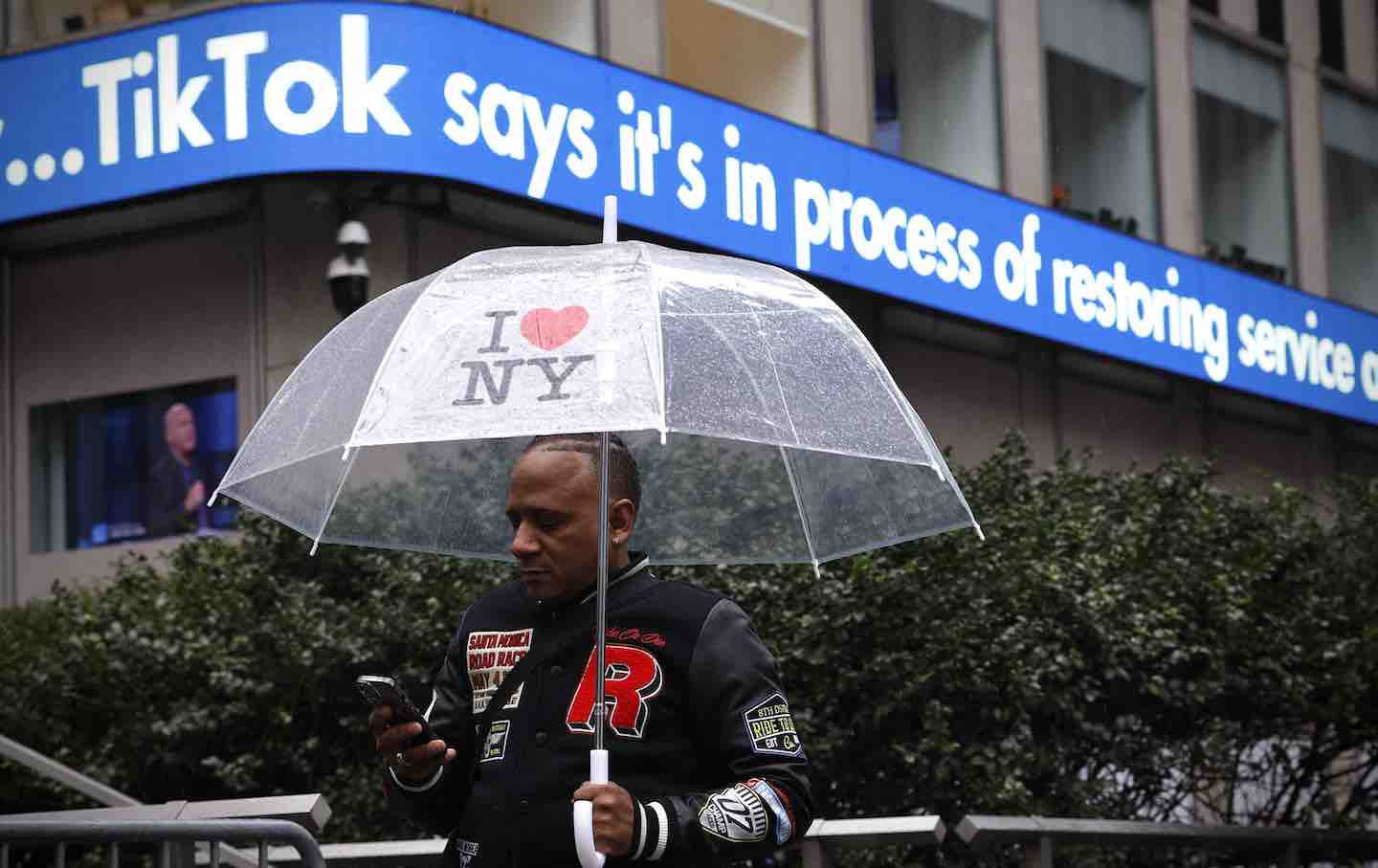
Rapid TikTok adoption in the United States around 2018 produced a visual cultural shift from messy, self-conscious early videos to snappier, lush on-screen aesthetics. Users learned to think in images and to self-produce and self-promote with greater sophistication, sharing dances, crafts, music, unsettling beauty practices, extreme mono-diets, and niche schools of magical thinking; every niche found an audience. The app grew indispensable while remaining politically precarious, caught between incompatible United States and Chinese interests. That instability amid cultural influence signals tensions between a humane Internet and current economic and geopolitical structures. ByteDance was cofounded in 2012 by Zhang Yiming.
"TikTok's adoption in the United States in 2018 marked a vibe shift in American culture. In the app's early days, everyone's house looked terrible-piles of laundry in the background, glaring light overhead-and it was common practice to scrunch your hoodie over your face and wear a pair of sunglasses to avoid the mortification of seeing yourself online. Seven years later, the world as it appears on-screen has changed-it's become snappier, more lush."
"TikTok was instrumental in this shift; it was the only big social media platform that didn't give you a prickly misanthropic hangover after using it for too many hours, so users acclimated. They learned to think in images, to self-produce and self-promote with a new level of sophistication. Users shared their dances, crafts, music, unsettling beauty hacks (mouth tape, beef-tallow facials), dangerous mono-diets (bananas; only organ meat), niche schools of magical thinking (reality-shifting, the manosphere)."
Read at The Nation
Unable to calculate read time
Collection
[
|
...
]