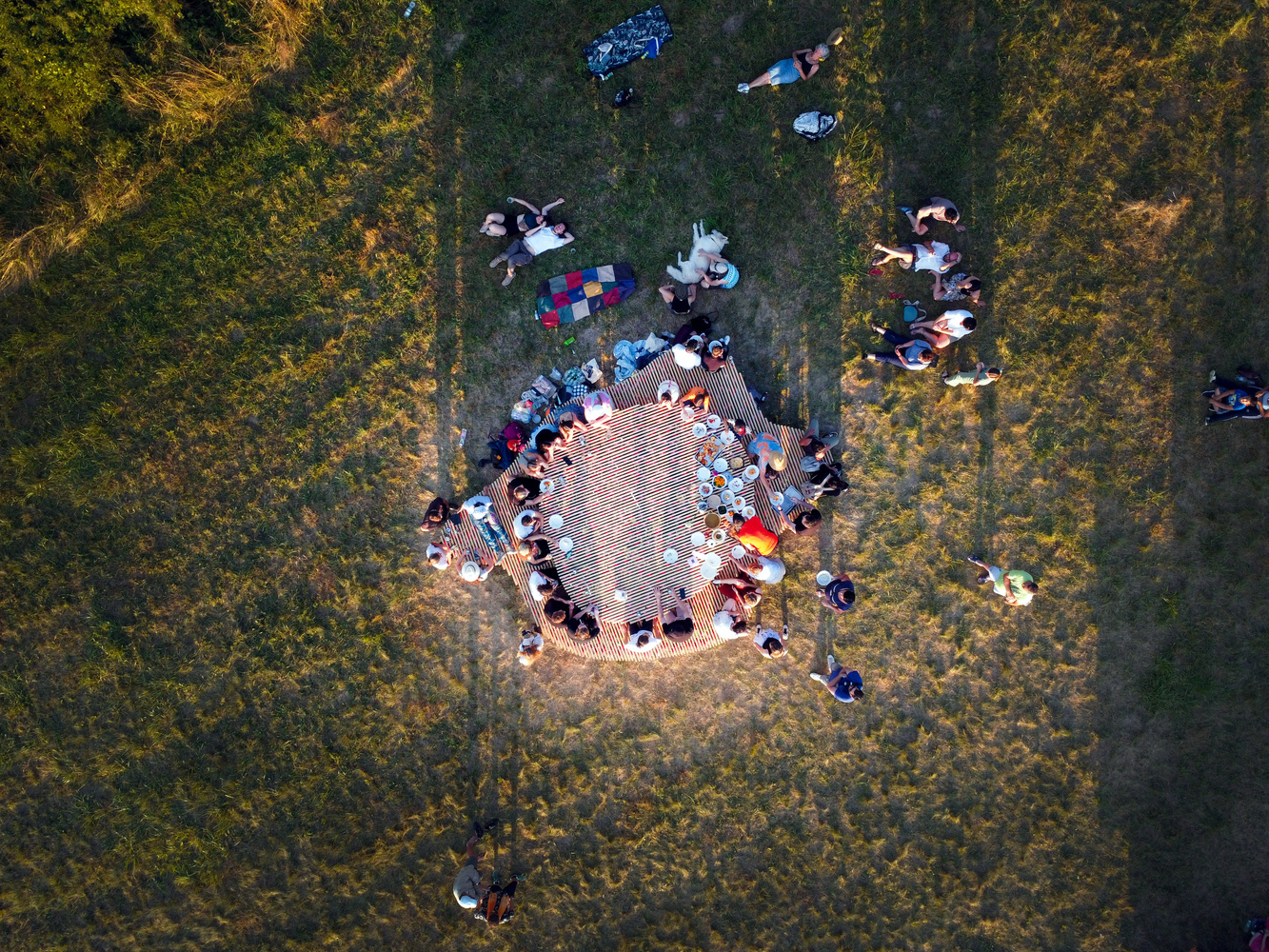
"In recent years, food has taken on a renewed role within architecture, not simply as a program or typology, but as a shared spatial practice. Beyond restaurants or dining design, communal eating spaces are increasingly understood as environments where presence, ritual, and time intersect, allowing people to gather, stay, and coexist. In these settings, eating does not just happen within space; it actively shapes it, temporarily transforming ordinary, borrowed, or improvised environments into places of exchange."
"This shift is visible across a wide range of built projects, installations, and community spaces that use shared meals as a way of bringing people together. Initiatives such as Fondo Supper Club frame dining as a social platform, using food to connect artists, designers, and local communities through conversation and collaboration. Similarly, sit.feast, presented during Milan Design Week 2024, approached the table as a spatial installation, one where sitting and eating together became the primary means of collectively producing space."
"Rather than relying on fixed programs or defined interactions, these spaces operate through simple, recognizable gestures: sitting, waiting, sharing, and staying. Tables, kitchens, markets, and shared surfaces become points of convergence where collective life unfolds through everyday use. The following selection brings together projects that explore how architecture supports communal eating across different contexts, revealing how shared meals continue to shape social relations and togetherness in the built environment."
Food functions as a shared spatial practice that actively shapes environments through presence, ritual, and time rather than merely fitting programmatic categories. Communal eating practices transform ordinary, borrowed, or improvised spaces into sites of exchange where people gather, stay, and coexist. Projects and installations frame dining as a social platform, connecting artists, designers, and communities through conversation, collaboration, and collective production of space. Simple gestures—sitting, waiting, sharing, and staying—organize use, with tables, kitchens, markets, and shared surfaces becoming convergence points that structure proximity, duration, and everyday social relations in the built environment.
Read at ArchDaily
Unable to calculate read time
Collection
[
|
...
]