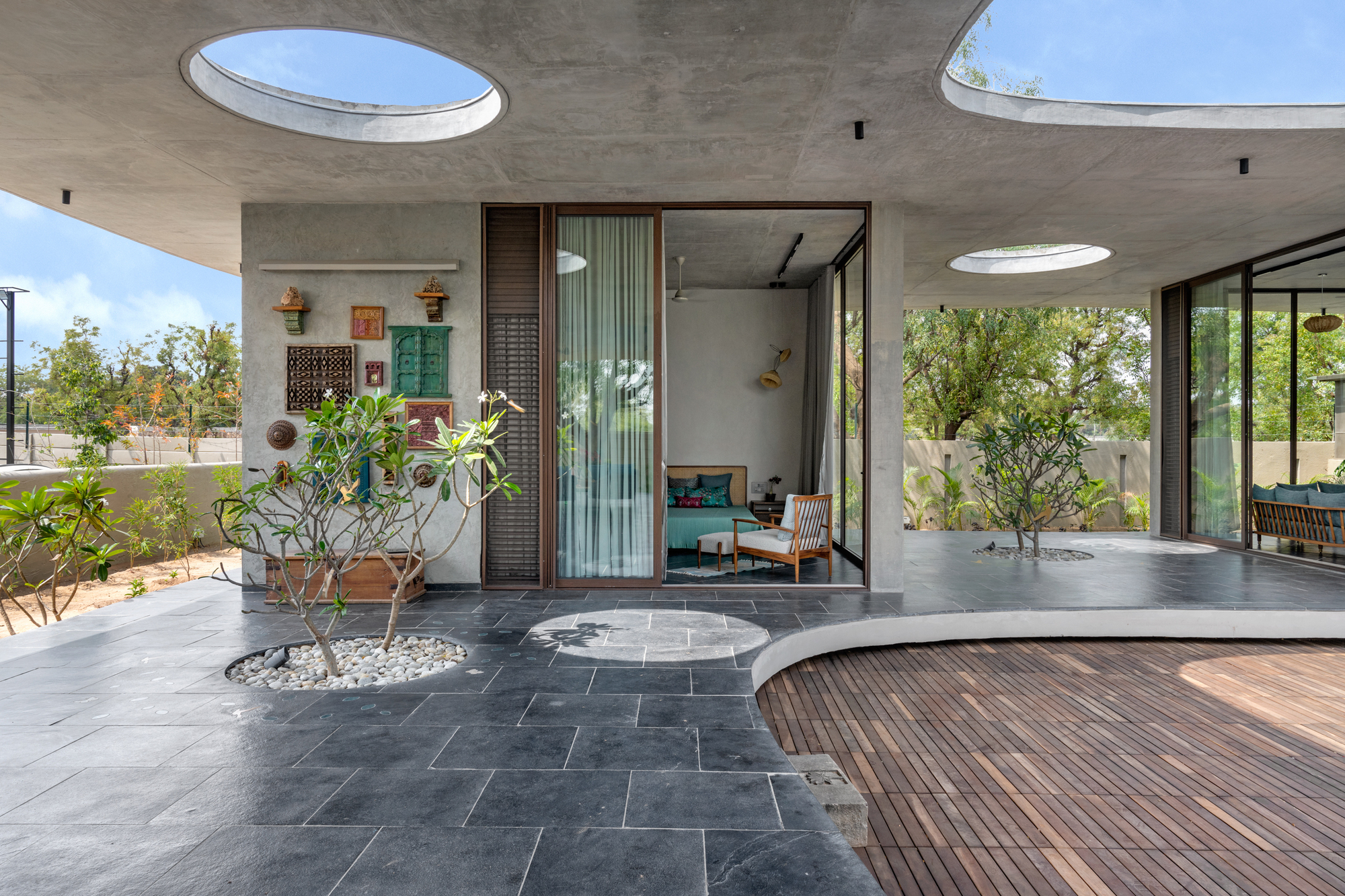
"Tropical modernism emerges as a set of situated practices where climate, labor, and power are negotiated differently across contexts, rather than merely a visual language of shade and porosity."
"Shading devices are calibrated according to solar angles, orientation, and seasonal variation, demonstrating that the language of tropical modernism is performative and integral to environmental systems."
"The veranda operates simultaneously as a climatic buffer and a spatial filter, mediating between exterior heat and interior comfort, as well as between public and private spaces."
Tropical modernism is characterized by architectural strategies that mediate light, heat, and air in hot climates. It involves precise design elements like brise-soleil and overhangs, which are not merely decorative but functional in regulating temperature and airflow. These architectural features also influence spatial dynamics, affecting how spaces are accessed and occupied. The veranda exemplifies this dual role, serving as both a climatic buffer and a social filter, highlighting the interplay between environmental design and social structures in architecture.
Read at ArchDaily
Unable to calculate read time
Collection
[
|
...
]