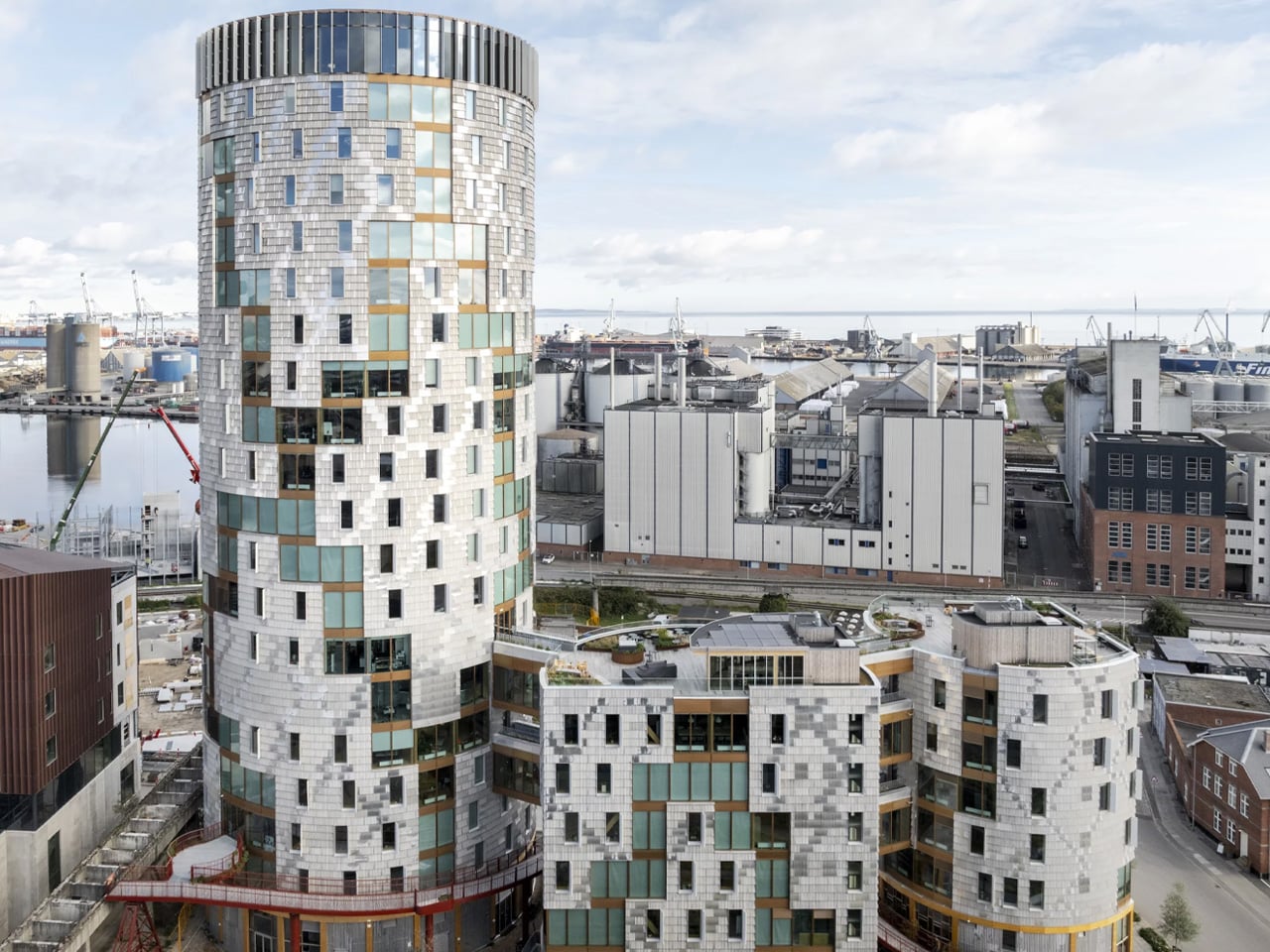
TRÆ is a 78-meter timber tower in Aarhus built from three interconnected volumes and designed to function as both a biogenic and circular material system. Mass timber columns, cross bracing, and CLT floor slabs form the primary structure, while low-carbon concrete is limited to cores for fire safety and stability. Salvaged aluminium sheets create facades with a birch-bark-like texture, and retired wind turbine blades are repurposed as solar shading on south-facing elevations. Estimated carbon footprint for the reused solar screens is far lower than conventional aluminium screens. Compared with a conventional concrete benchmark, TRÆ achieves a 26% CO₂ reduction, with most savings from the timber-led design and additional savings from reused materials.
"TRÆ stands 78 meters tall across three interconnected volumes, earning its place as Denmark's tallest timber tower and the world's first upcycle timber tower. The ambition behind it is disarmingly simple: prove that a tower can be built from waste and wood without sacrificing safety, economy, or quality. What makes TRÆ remarkable isn't just the height, it's the conviction. The building operates within two material ecosystems simultaneously: the biogenic and the circular."
"Mass timber columns, cross bracing, and CLT floor slabs form the primary structure, with low-carbon concrete used only in the cores for fire safety and stability. Everything else is drawn from what already exists. The façades are the project's most striking argument. Salvaged aluminium sheets, arranged to evoke the texture of birch bark, mottled, imperfect, alive, clad the exterior in industrial leftovers that feel entirely intentional."
"Retired wind turbine blades, repurposed as solar shading, line the building's south-facing elevations. A comparative analysis showed their estimated carbon footprint to be 27 times lower than conventional aluminium solar screens. The math is compelling. The aesthetic is better. Measured against a conventional concrete benchmark, TRÆ achieved a 26 percent reduction in CO₂ emissions, 21 percent from the timber-led design and 5 percent from integrated reused materials."
"The project doesn't chase certification checklists. Instead, it follows a value-driven framework that prioritises measurable outcomes from the ground up. It's a number that reshapes the conversation around tower construction, a typology long associated with emissions-heavy concrete and steel. TRÆ refuses to be just one thing, and its material choices reflect that refusal."
Read at Yanko Design - Modern Industrial Design News
Unable to calculate read time
Collection
[
|
...
]