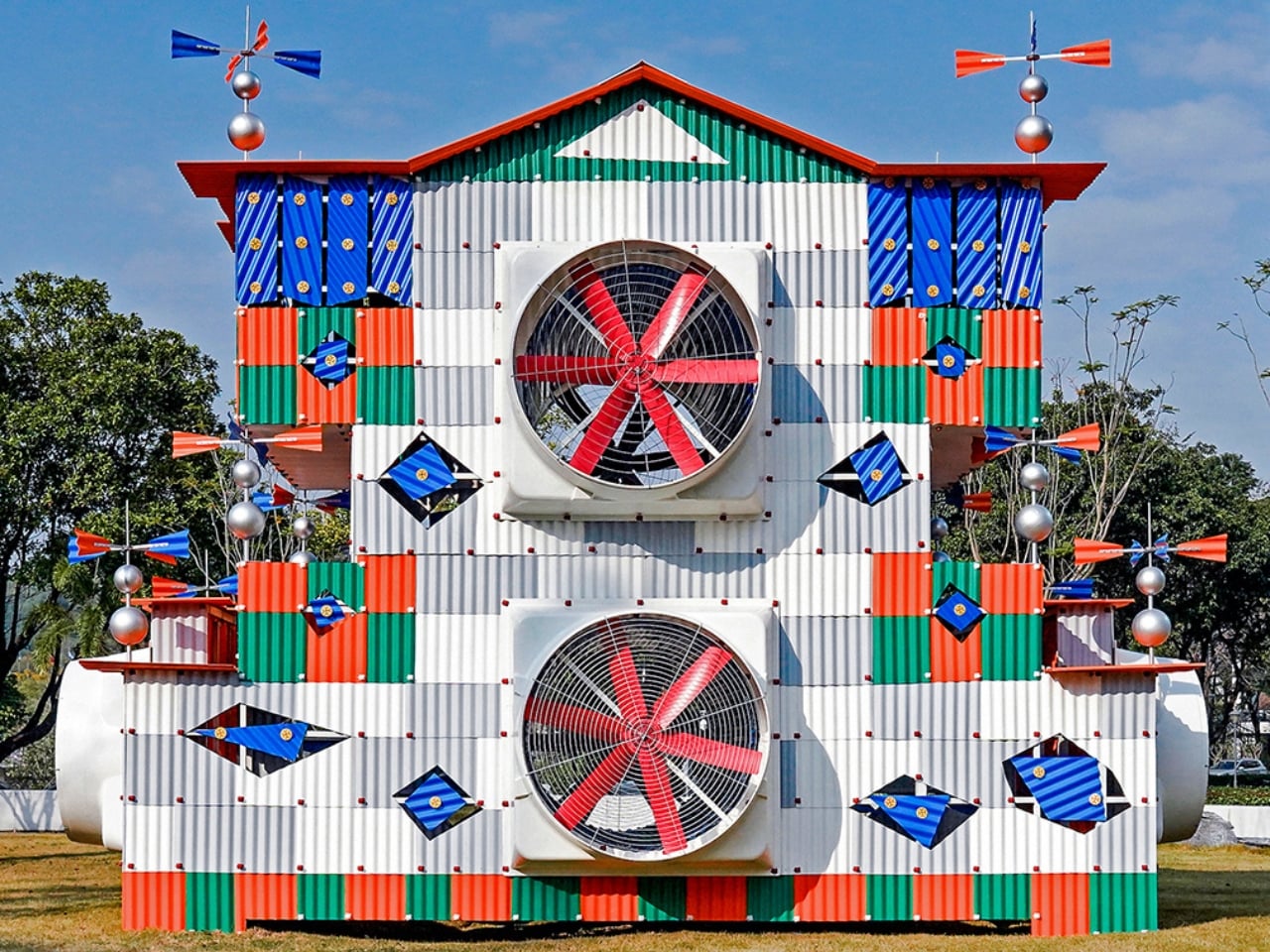
"Clock House No. 2, a public art installation by Drawing Architecture Studio, does exactly that. Every fifteen minutes, it chimes and glows, turning timekeeping into something you can walk around, peer into, and experience with your whole body. The Beijing-based practice created this piece for the 7th Shenzhen Bay Public Art Season in China, where it's on view until April 19th, 2026."
"During the late Ming and early Qing dynasties, Western missionaries brought automaton clocks to China as diplomatic gifts. These weren't just timepieces. They were theatrical objects, intricate mechanical wonders that moved and chimed with precision. The Chinese called them Zì Míng Zhōng, which translates to "the clock that rings automatically". These devices started in the imperial court but eventually found their way into domestic life, becoming both functional tools and symbols of cultural exchange."
"Clock House No. 2 revisits that exchange, but through a contemporary lens. Instead of brass gears and delicate springs, the studio used low-cost industrial components. The structure references the layered facades and tiled roofs typical of everyday dwellings in Guangdong Province, blending local vernacular architecture with the ornamental logic of those historical automaton clocks. The result is something that feels familiar and foreign at the same time."
Clock House No. 2 is a walk-in public installation that marks time every fifteen minutes with light and sound. The piece scales a mantel-clock form to house size, inviting visitors to walk around, peer inside, and experience timed performance. The work draws on late Ming and early Qing automaton clocks brought to China by Western missionaries, known as Zì Míng Zhōng, which combined mechanics and theatricality. The installation uses low-cost industrial components rather than intricate gears, and references layered facades and tiled roofs of Guangdong dwellings. The result combines familiar domestic cues with theatrical timekeeping mechanisms.
Read at Yanko Design - Modern Industrial Design News
Unable to calculate read time
Collection
[
|
...
]