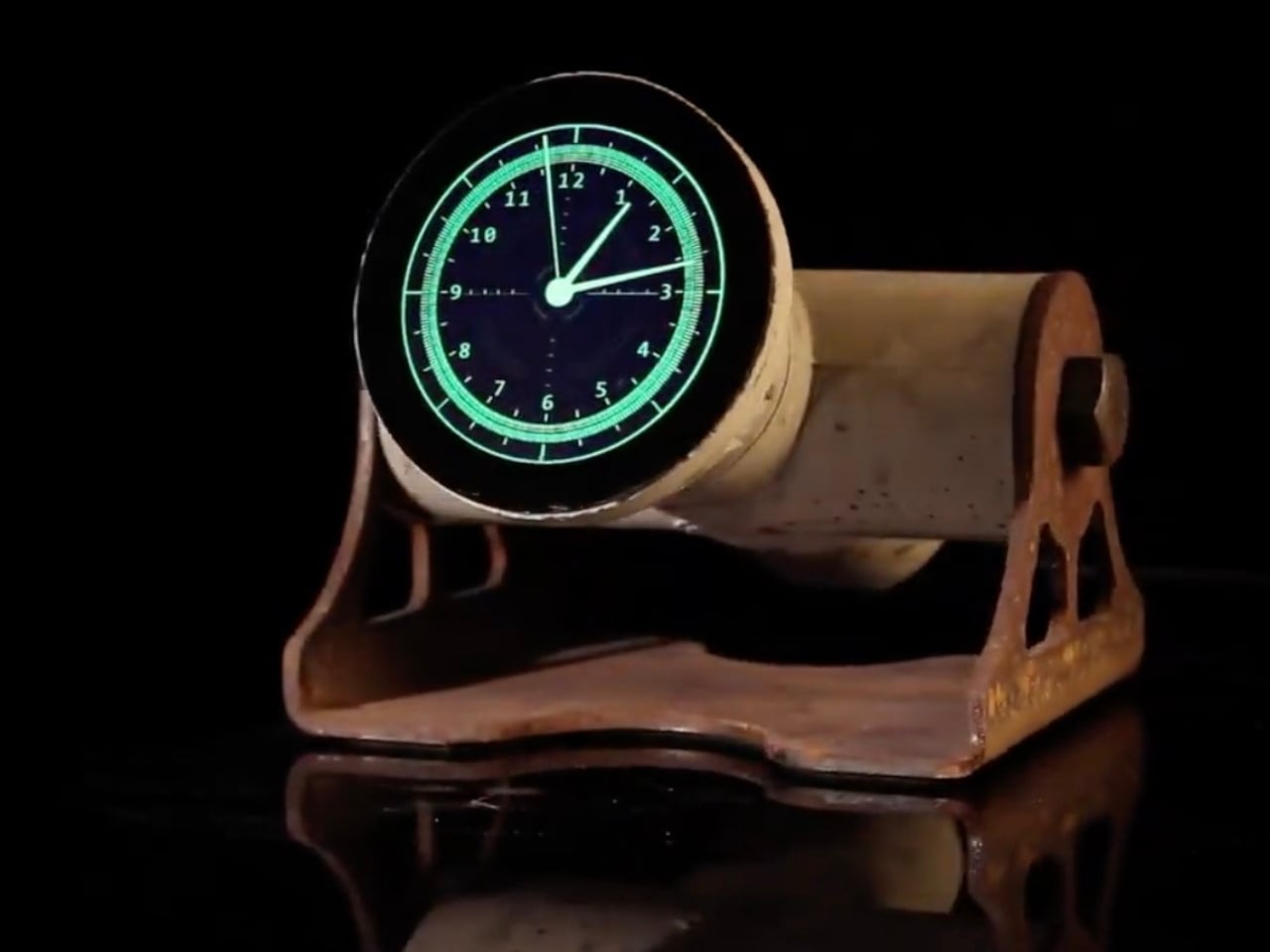
"There's a particular kind of design intelligence that knows when to slow down. The Crydal Phantom Clock, designed by Daniel van der Liet, is one of those rare objects that rejects the frantic pace of modern consumer tech in favor of something more deliberate. It's a desk clock, yes, but calling it just a clock misses the point entirely."
"The Phantom reinterprets the visual language of cathode-ray tube displays from early computing. Not in a nostalgic way, but as a translation exercise. Van der Liet took the geometry, the mass, and the physical presence of those old CRT monitors and rebuilt them using cast concrete and raw steel. The result is something that feels both familiar and completely new, a dense, tactile object that sits on your desk with real weight and intention."
"What makes the Phantom genuinely interesting is how it handles the intersection of analog and digital. The clock displays time through a traditional analog dial, the kind with actual hour and minute hands moving around a circular face. But here's where it gets clever: that dial appears on a round capacitive display integrated flush with the concrete surface. You can switch between three chromatic modes, green, orange, or red, each one shifting the character of the clock without altering its physical form."
The Crydal Phantom Clock, designed by Daniel van der Liet, translates the visual language of cathode-ray tube displays into a dense sculptural desk object made from cast concrete and raw steel. The design preserves recognizable CRT geometry—curved screen, cylindrical body, industrial stand—while abandoning plastic and glass for heavy, tactile materials that shift the reference toward sculpture. Time is shown via a traditional analog dial with moving hour and minute hands rendered on a round capacitive display integrated flush with the concrete surface. Three chromatic modes—green, orange, or red—alter the clock's character without changing its physical form. The circular touchscreen handles all interaction.
Read at Yanko Design - Modern Industrial Design News
Unable to calculate read time
Collection
[
|
...
]