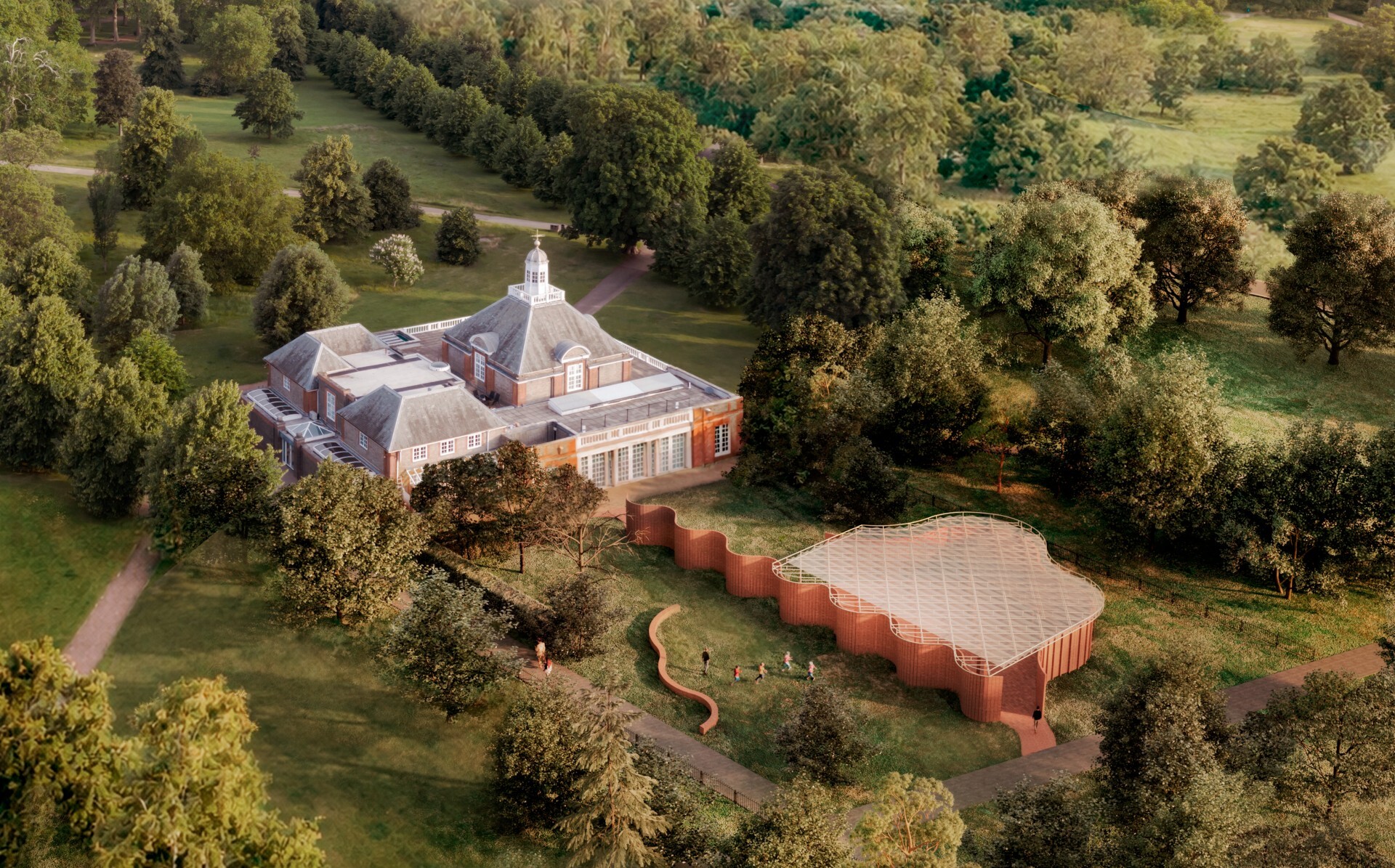
"The duo's design takes inspiration from an English architecture feature known as a 'serpentine' or 'crinkle-crankle' wall, which is typically a wavy wall made from brick. Its design originated in ancient Egypt and was later introduced to England by Dutch engineers. The curving wall will form one side of the pavilion, while a second wall will work around a tree canopy without disrupting it, and a translucent roof will rest lightly on brick columns evoking a grove of trees."
"shaping movement, modulating rhythm, and framing thresholds of proximity, orientation, and pause. Inspired by the figure of the serpent as a generative and protective force, we draw a parallel with England's winding fruit walls, which are structures that temper climate, create shelter, and enable growth. From this idea emerges a pavilion built of simple clay brick, foregrounding vernacular craft and the elemental capacity of architecture to bring people together."
LANZA atelier will design the 2026 Serpentine Pavilion for the Pavilion's 25th anniversary. The proposal centers on a serpentine or crinkle-crankle brick wall forming one side, a second wall that wraps around a tree canopy without disrupting it, and a translucent roof supported by brick columns that evoke a grove of trees. The serpentine wall type traces origins to ancient Egypt and was later introduced to England by Dutch engineers. The designers emphasize hands-on methods like drawing and model-making and foreground clay brick to celebrate vernacular craft and create a symbolic connection between the UK and Latin America.
Read at Time Out London
Unable to calculate read time
Collection
[
|
...
]