"Climbing an observation tower involves a lot of steel and concrete just to stand a few dozen meters higher and take in a view. The ritual is familiar, the ascent, the vertigo, the panorama, but the infrastructure demands are massive for what amounts to a few minutes of elevated looking. Michael Jantzen's Telepresence Observation Pavilion asks whether we always need to build big vertical structures to get that feeling, especially when most distant experiences already come through screens and networks."
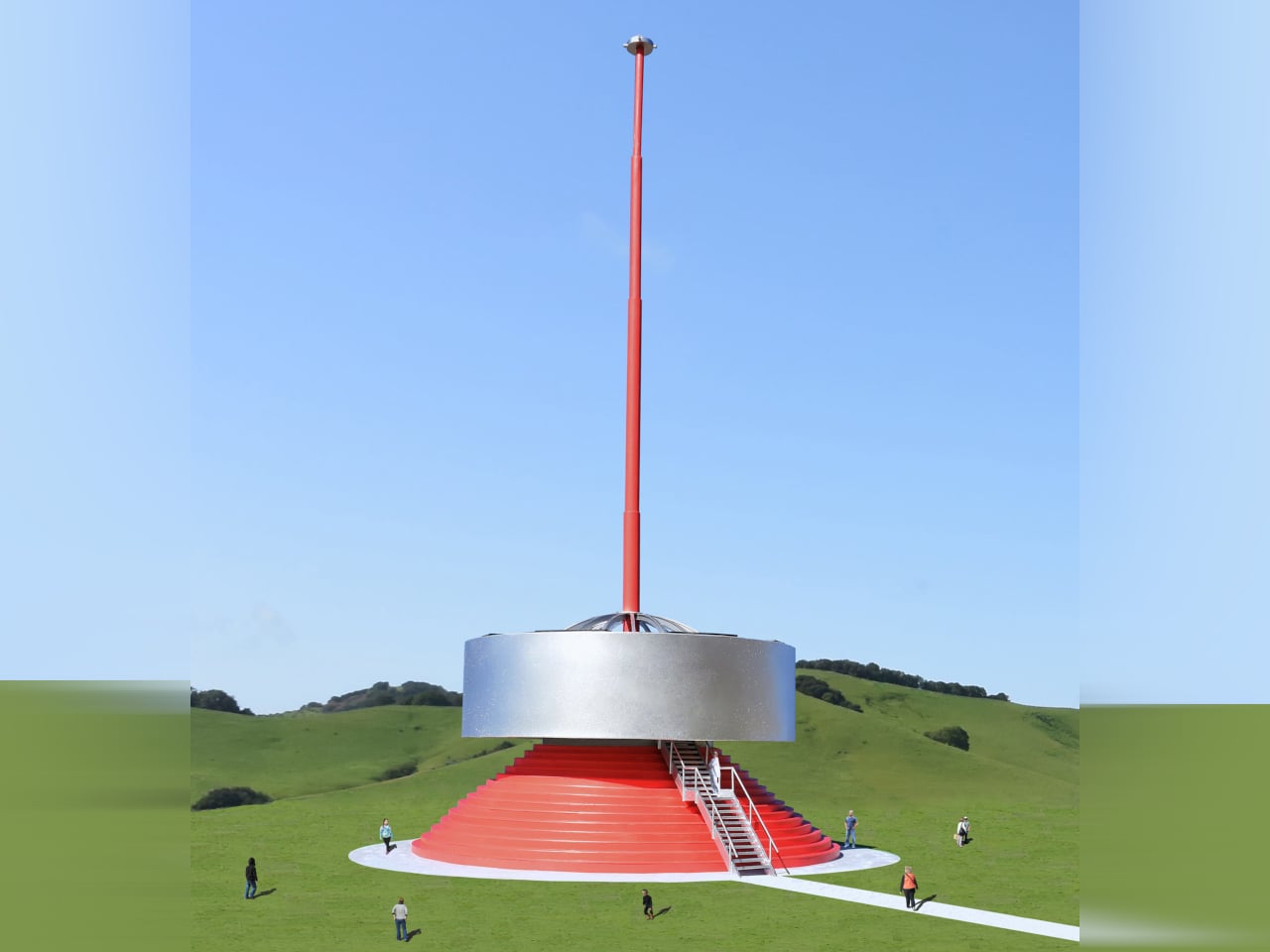
"Instead of lifting people into the air, the pavilion lifts a 360-degree camera on a tall telescoping mast, then brings the view down to ground level. Inside a circular room, a ring of high-definition screens shows a live panoramic feed from the camera, synced with sound, so visitors see and hear exactly what they would if they were standing at the top of a traditional tower, without leaving the ground or climbing a long staircase."
"A circular bench sits around the central mast, the floor stays open, and a guardrail keeps you a step back from the screens, so you are aware you are in a room, but your eyes are convinced you are somewhere higher and more exposed. The camera sits on top of a tall series of telescoping pipes anchored to the pavilion floor, rising far above the roof. The module captures real-time sights and sounds in every direction, then sends that data down to the screens."
The pavilion replaces a full observation tower by lifting a 360-degree camera on a tall telescoping mast and bringing the live view to ground level. A circular interior presents a continuous panoramic horizon on a ring of high-definition screens synchronized with sound so visitors see and hear exactly what they would at a tower summit. A central open floor, circular bench, and guardrail maintain room awareness while creating the perception of height. The slender mast greatly reduces material and engineering demands compared with structures built to carry people. Eight roof-mounted solar panels power the camera, screens, and lighting to minimize environmental impact and substitute information technology for heavy construction.
Read at Yanko Design - Modern Industrial Design News
Unable to calculate read time
Collection
[
|
...
]