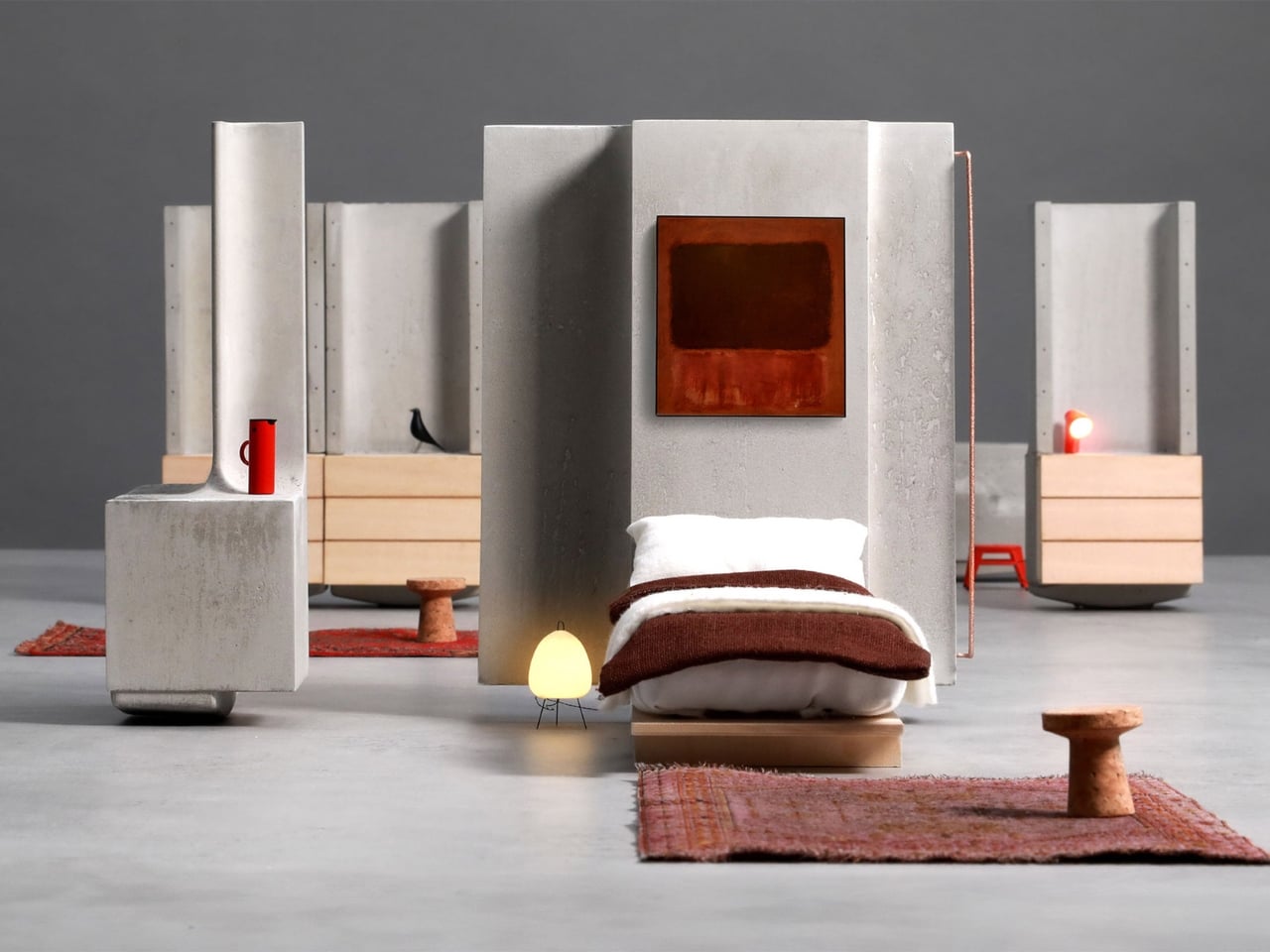
"The nine components function like a sophisticated construction kit: columns, beams, floor slabs, wall panels, and connection elements that can be assembled, disassembled, and reassembled without permanent fasteners. Each piece is precision-engineered to work with the others through carefully calculated geometry and weight distribution."
"The research team leaned into kinetics and physics to design the modular elements so the whole system holds together not through bolts or adhesives, but through gravity, balance, and friction. It's a fundamentally different way of thinking about structure: one where the intelligence is baked into the shape and mass of the material itself."
"These components aren't static. They're designed to be manually rearranged, which means the same set of pieces could theoretically be configured and reconfigured by generation after generation."
Modern consumer products are designed with planned obsolescence, typically lasting only years before requiring replacement. MIT's Matter Design studio, partnering with Cemex, has developed the Heirloom House—a radical departure featuring nine structural-concrete components engineered to endure for 1,000 years. The system functions as a sophisticated construction kit with columns, beams, floor slabs, wall panels, and connection elements that can be assembled and reassembled without permanent fasteners. The design relies on precision engineering, geometry, and weight distribution, where structural integrity comes from gravity, balance, and friction rather than bolts or adhesives. The modular components can be manually rearranged across generations, allowing the same pieces to be reconfigured into different configurations over centuries.
#sustainable-design #modular-architecture #longevity-engineering #structural-innovation #planned-permanence
Read at Yanko Design - Modern Industrial Design News
Unable to calculate read time
Collection
[
|
...
]