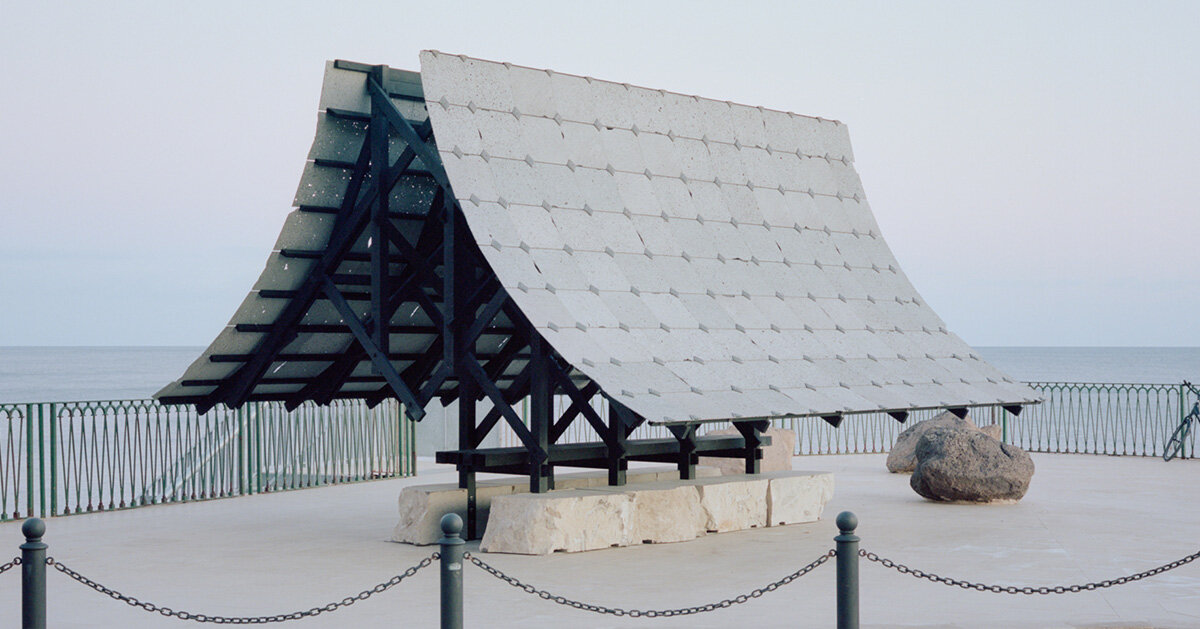
"In the valley of Pantalica, Italy, where more than 4,000 rock-cut tombs line the cliffs above the Anapo River, architect Leopold Banchini introduces Asympta, a temporary micro-architecture that shifts attention away from the necropolis and toward the unknown architecture of the living. Installed in Ortigia in 2025 and traveling to Pantalica in 2026 for the COSMO festival, the structure reflects on the prehistoric civilization embedded within the Syracusa-Pantalica UNESCO World Heritage landscape, proposing a speculative shelter rooted in place rather than in archaeological reconstruction."
"The structure is assembled from materials sourced within the region, including lava stone from Mount Etna, local wood sealed by fire, Pietra Pece limestone, bronze, and sheep wool felt. These elements are treated as tectonic components that situate the installation within eastern Sicily's geological and craft traditions and define a shaded space intended for gathering, pause, and reflection. The choice of fire-sealed wood and volcanic stone reinforces the project's dialogue with elemental forces, combustion, sedimentation, and extraction,"
Asympta is a temporary micro-architecture installed in Ortigia in 2025 and scheduled to travel to Pantalica for the 2026 COSMO festival. The structure shifts focus from the valley's rock-cut necropolis toward the unknown domestic architectures of past inhabitants, proposing a speculative shelter rooted in place rather than archaeological reconstruction. The installation is assembled from regional materials — lava stone from Mount Etna, fire-sealed local wood, Pietra Pece limestone, bronze, and sheep wool felt — treated as tectonic components that connect to eastern Sicily's geological and craft traditions. The shaded space is intended for gathering, pause, and reflection and evokes elemental processes of combustion, sedimentation, and extraction.
Read at designboom | architecture & design magazine
Unable to calculate read time
Collection
[
|
...
]