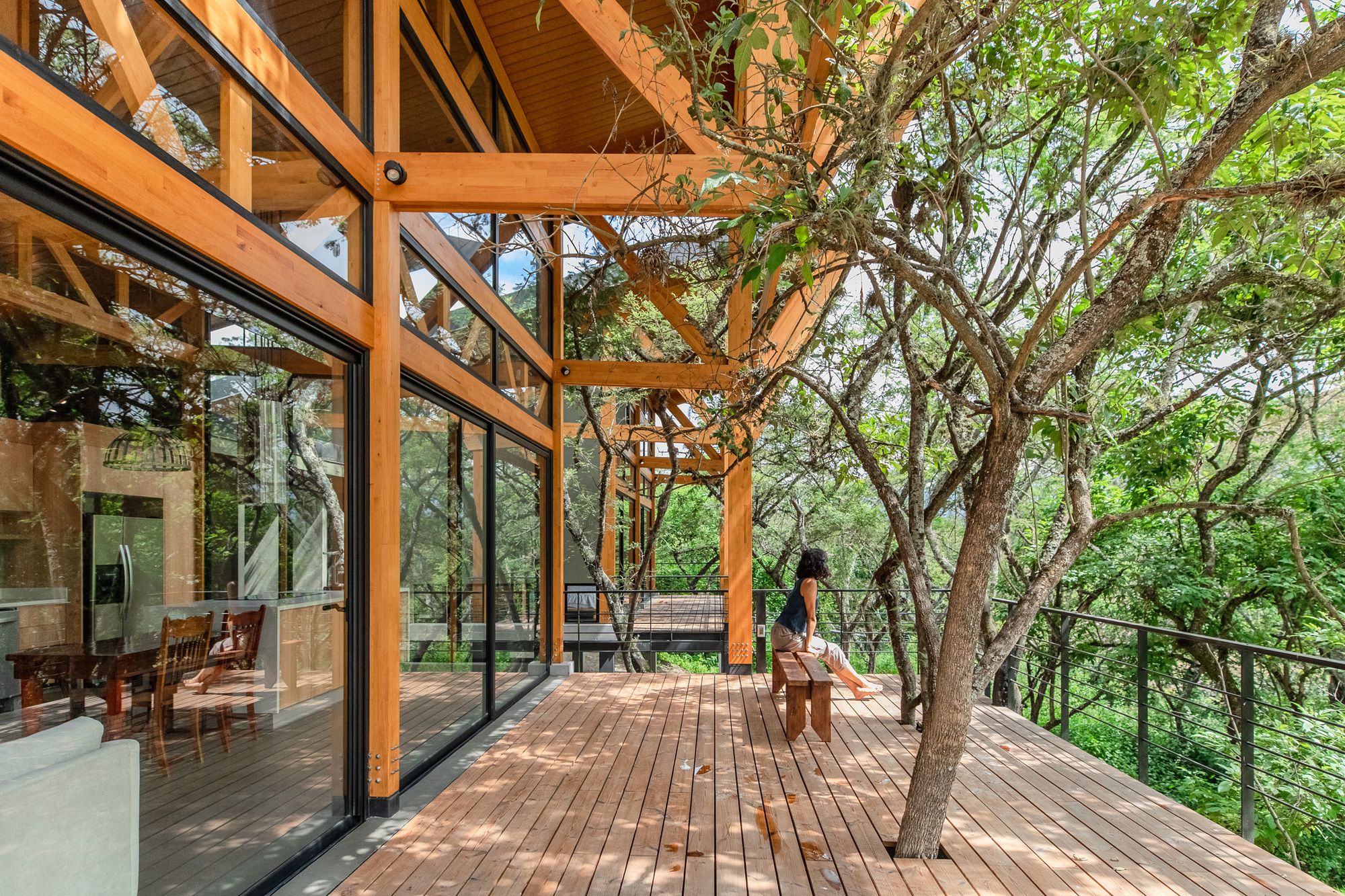
"Leaving behind the urban fervor of Quito requires a slow decantation, a change of pace where asphalt finally yields to the vegetation of the dry steppe. In the Guayllabamba valley, architecture does not seek to conquer the land but to coexist with it; the House in the Forest arises from this premise, not as an imposed structure, but as a device for inhabiting time."
"The project is best understood under the logic of the "nest": a structure that weaves intergenerational memories and, instead of settling heavily, decides to levitate over a landscape that it barely disturbs."
Leaving the urban fervor of Quito requires a gradual decantation and a slower pace as asphalt gives way to the dry steppe vegetation. In the Guayllabamba valley, architecture privileges coexistence with the land rather than conquest. The House in the Forest emerges as a device for inhabiting time, conceived to respect and minimally disturb the terrain. The project adopts a "nest" logic: an assemblage that weaves and preserves intergenerational memories while avoiding heavy settlement. The building elevates above the landscape, choosing levitation to maintain ecological continuity, reinforce memory, and allow the landscape to remain the dominant presence.
Read at ArchDaily
Unable to calculate read time
Collection
[
|
...
]