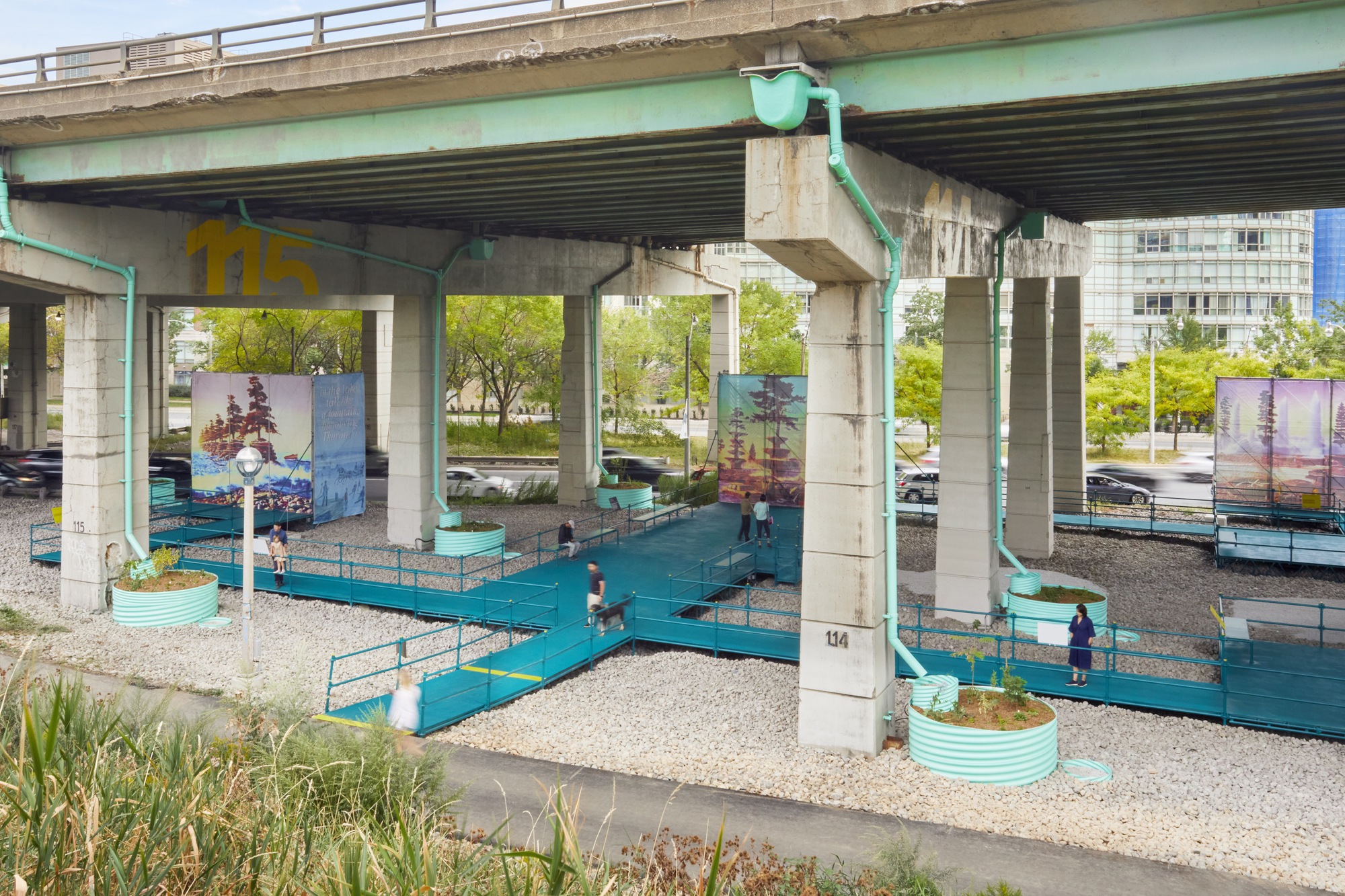
"Every act of lifting produces a secondary condition in its wake. Beneath flyovers, metro lines, and railway viaducts, a second ground emerges as shaded, ambiguous, and rarely planned with the same intent as what moves above."
"Studies on elevated highways consistently describe these undercroft zones as residual spaces, formed when transport systems are conceived independently of the ground they pass through."
"Where design withdraws, use takes over. Across cities in South Asia, Southeast Asia, and beyond, undercroft spaces become sites of informal economies and improvised habitation."
"These occupations are not random. They respond directly to the spatial qualities infrastructure produces: shade from harsh climates, proximity to high footfall, and a relative absence of regulation."
Elevated structures in urban environments create secondary spaces beneath them that are often overlooked in planning. These undercroft areas are not empty; they are shaped by infrastructure but lack clear roles. Studies show these spaces disrupt pedestrian flow and are rarely included in urban design. However, they become occupied by informal economies and improvised living arrangements, particularly in South and Southeast Asia. The use of these spaces is influenced by their physical characteristics, such as shade and foot traffic, leading to informal activities that respond to the urban context.
Read at ArchDaily
Unable to calculate read time
Collection
[
|
...
]