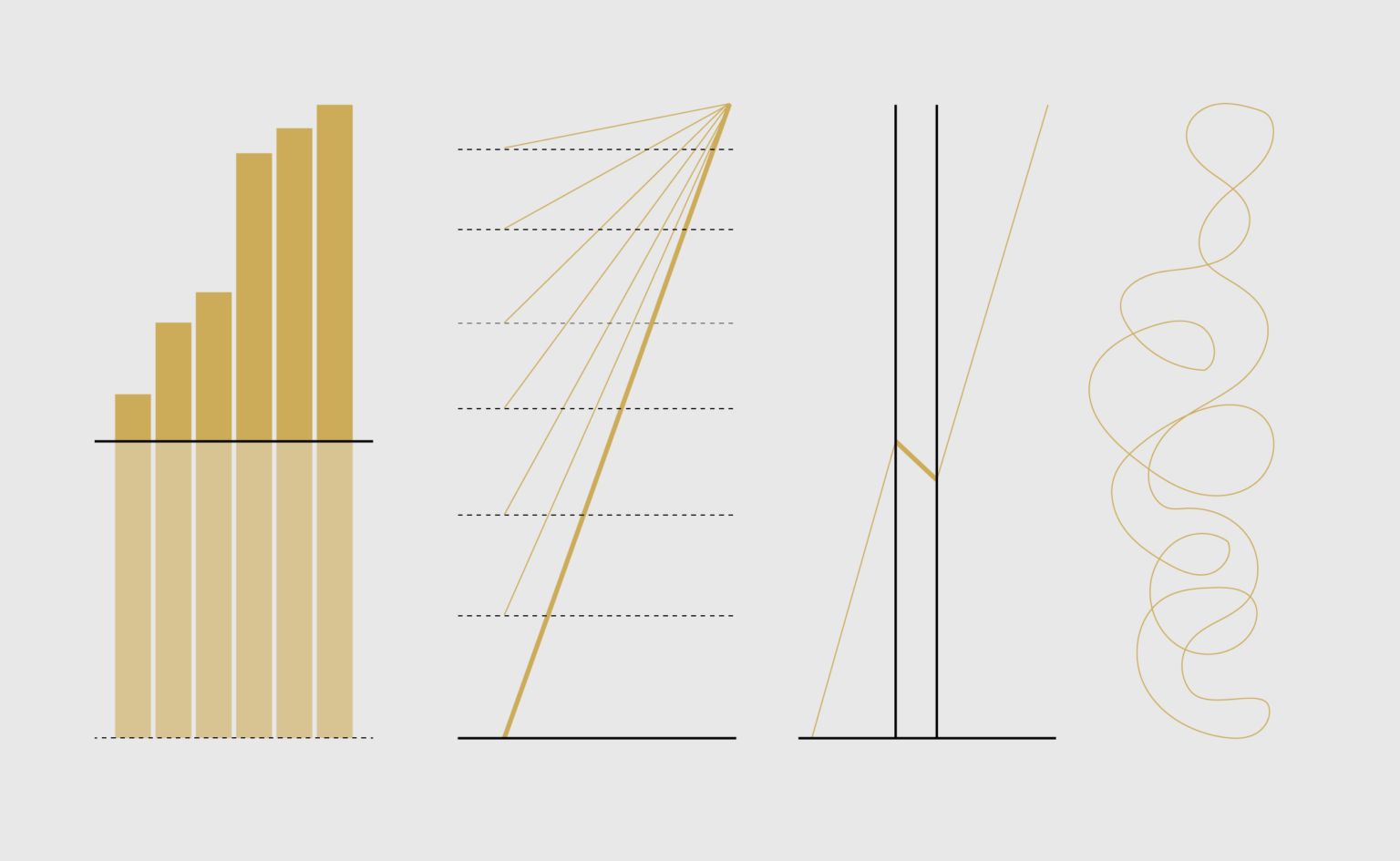
Visualization enables faster comprehension than spreadsheets, but dishonest chartmakers exploit readers who do not examine context. A single dataset can support many narratives depending on visual encoding and scale choices, including changes that hide significance or invert perceived trends. Reading requires checking scales, ranges, and units, since prominent colors and titles are meaningless without background. Interpretation depends on understanding collection, analysis, visualization, and communication choices. Skepticism is needed when results seem unbelievable or too good to be true, with questions about why. Conclusions also depend on external factors, so the who, what, when, where, why, and how behind the chart must be scrutinized. Careful thinking helps defend against misleading charts.
"Stay skeptical. Strengthen your defenses when findings seem unbelievable or too good to be true. Surprising insights do not automatically mean dishonest motivations but sometimes they do. Ask why. Look outside the data. The chart, the data, and the conclusions stem from factors away from the screen. Just like you learned in elementary school, scrutinize the who, what, when, where, why, and how that led to the chart you see."
Read at FlowingData
Unable to calculate read time
Collection
[
|
...
]