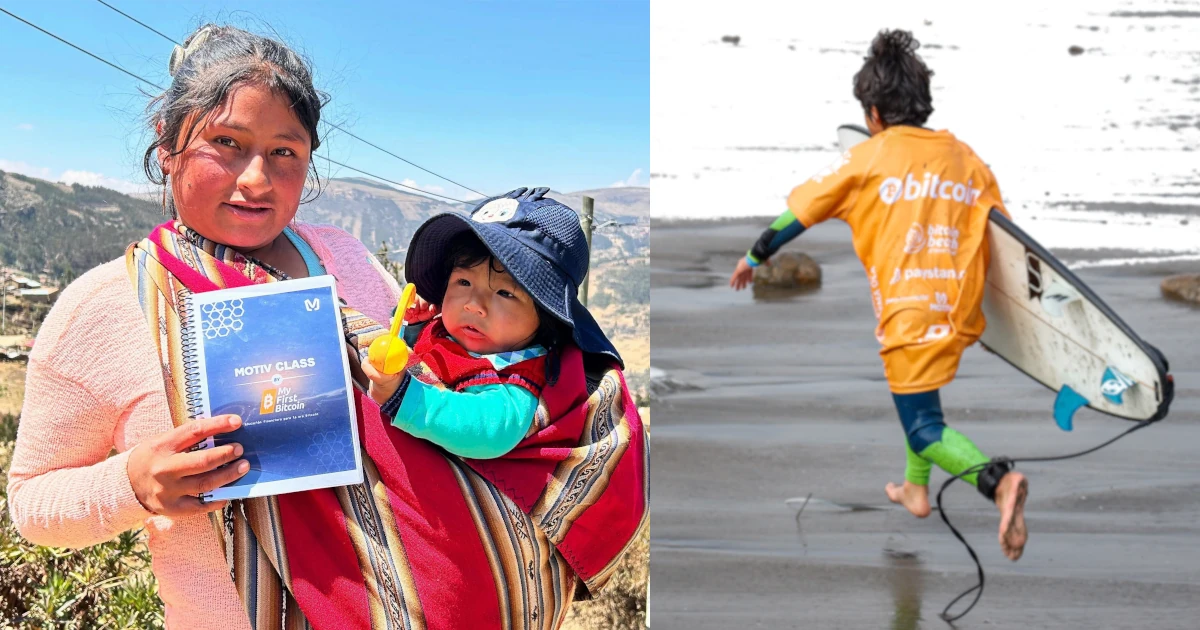
"At the forefront is Motiv Peru, a non-profit co-founded by Rich Swisher and Valentin Popescu, which has spent years equipping underserved and unbanked communities to use Bitcoin for everyday needs, education, and local trade. What began as a simple shoe donation program in 2019 has evolved into a network of about 10 active zones with hubs in Lima, Cusco, and Huanchaco and satellite programs in Tarapoto and Iquitos, among others, serving over 750 families weekly."
"The Motiv team is 50 strong, plus volunteers, and is actively demonstrating Bitcoin's potential as a tool for long-term empowerment in the developing nations rather than short-term foreign aid relief. Most profound of all, Motiv has developed a non-profit strategy that is having deep and lasting social impact, while bootstrapping Bitcoin circular economies, fulfilling an early Bitcoin vision, 'banking the unbanked'.What did Motiv figure out that other fiat NGO's have not, and what does Bitcoin have to do with it?"
"Peru has an old and curious history with Bitcoin. One of the first documented real-world uses of Bitcoin involved Peruvian alpaca socks. In early 2011, merchants like Grass Hill Alpacas accepted Bitcoin for wool socks and other goods, exported them from the South American country to the U.S., as noted in Bitcoin Wiki entries and contemporary forum discussions on Bitcointalk. This paralleled legendary moments in Bitcoin history like the famous Laszlo Hanyecz pizza purchase in May 2010."
Motiv Peru, co-founded by Rich Swisher and Valentin Popescu, evolved from a 2019 shoe donation program into a nonprofit network operating ten active zones with hubs in Lima, Cusco, and Huanchaco and satellite programs in Tarapoto and Iquitos. The organization serves over 750 families weekly with a team of about 50 staff plus volunteers. Motiv equips underserved and unbanked communities to use Bitcoin for everyday needs, education, and local trade and emphasizes long-term empowerment rather than short-term foreign aid. The nonprofit strategy bootstraps Bitcoin circular economies, aims to bank the unbanked, and reflects Peru's history of grassroots Bitcoin use dating back to alpaca sock purchases.
Read at Bitcoin Magazine
Unable to calculate read time
Collection
[
|
...
]