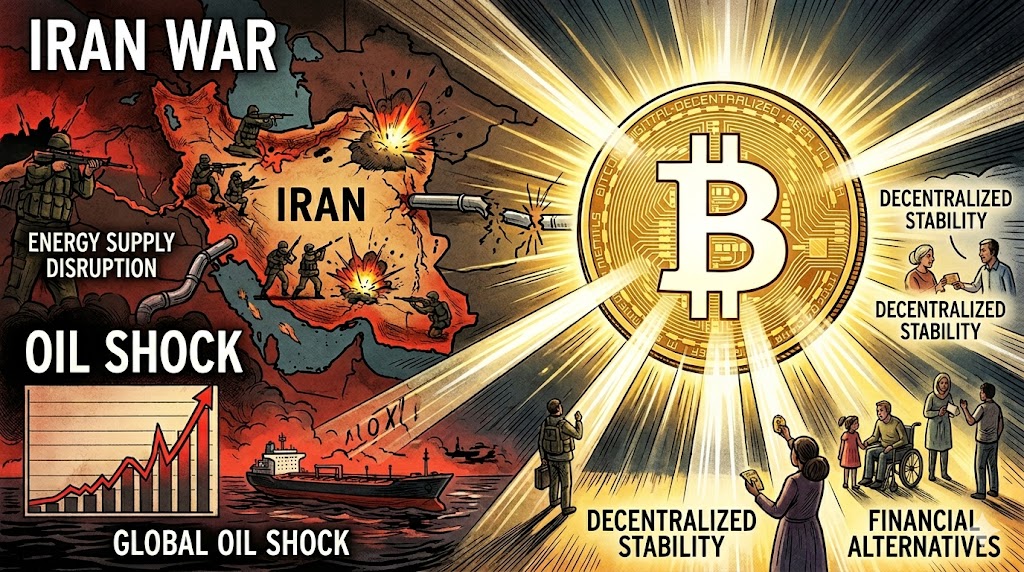
"The IEA described the disruption through Hormuz as the largest supply shock in the history of the global oil market, affecting about a quarter of maritime oil trade."
"When the chain of correspondent banks is stressed, settlement risk rises alongside freight and energy risk, forcing markets to confront these vulnerabilities."
"Ship traffic through Hormuz was running at well below 10% of normal volumes, with just seven ships crossing in the prior 24 hours against roughly 140 normally."
"U.S. Treasury sanctions on Iranian banks complicate cross-border payments, making it practically inevitable that U.S. dollar rails will be used to force a resolution."
Since February 28, 2026, U.S. and Israeli strikes on Iran have led to the largest supply shock in the global oil market, particularly affecting the Strait of Hormuz. This strait is crucial for maritime oil trade, carrying a significant portion of global petroleum consumption. The war has highlighted vulnerabilities in monetary infrastructure, as correspondent banking systems face increased settlement risks. Ship traffic through Hormuz has drastically decreased, and U.S. sanctions on Iranian banks complicate cross-border transactions, forcing reliance on U.S. dollar systems to seek resolutions.
Read at Bitcoin Magazine
Unable to calculate read time
Collection
[
|
...
]