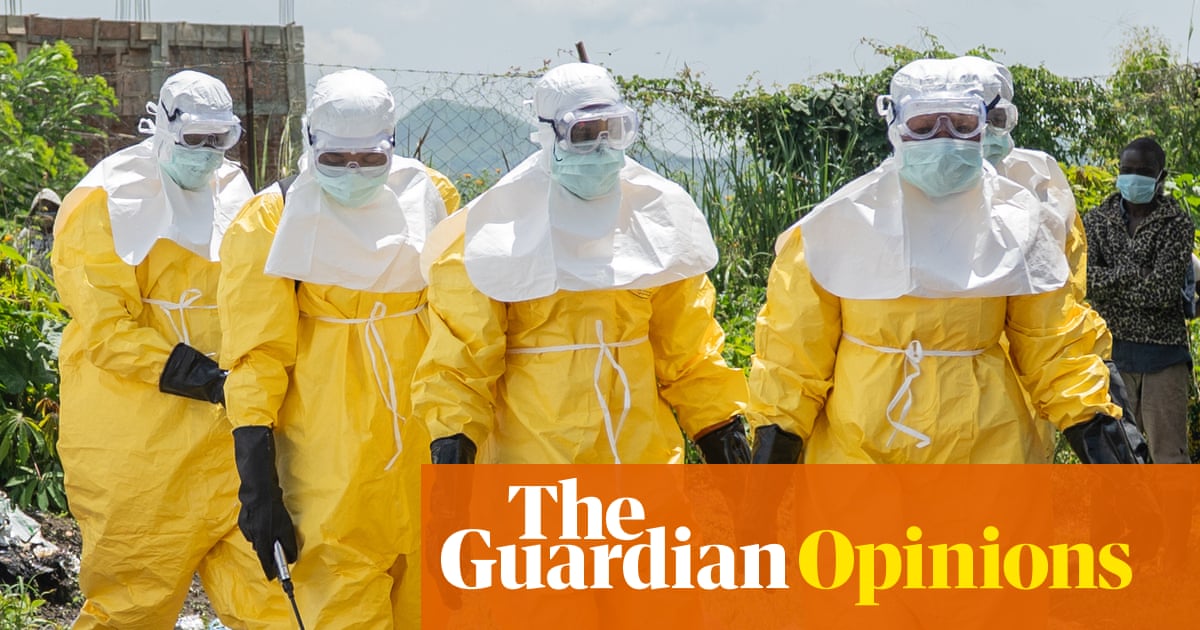
The Democratic Republic of the Congo has experienced 17 Ebola outbreaks since 1976, including a 2018–2020 outbreak that killed nearly 2,300 people. The World Health Organization declared the current outbreak a public health emergency of international concern. Nearly all suspected cases and deaths are in the north-eastern provinces of Ituri and North Kivu, with two suspected cases in Uganda linked to travel from the DRC. The WHO warns the disease may have been spreading for months and that control could take additional months because of a highly mobile population. The risk of global spread is judged low, while regional risk is high. The Bundibugyo virus is thought to be less deadly than some Ebola strains, but it may still kill about a third of infected people, and no licensed vaccines or approved treatments exist, though some are in development. Armed conflict in eastern DRC disrupts access to communities and healthcare, increases displacement and unsafe living conditions, and includes attacks on health facilities, fueling distrust and complicating response efforts.
"The Democratic Republic of the Congo has faced the deadly threat of Ebola 16 times since the virus was discovered there in 1976, with a 2018-20 outbreak killing almost 2,300 people. On Sunday, the World Health Organization declared the 17th outbreak to be a public health emergency of international concern. So far, 139 suspected deaths and almost 600 suspected cases of the haemorrhagic fever virus have been identified, nearly all in the DRC's north-eastern provinces of Ituri and North Kivu, with two cases in Uganda of people who had travelled from the DRC."
"The WHO fears the disease has been spreading for a couple of months and, given the highly mobile population, warns that it could take months more to bring it under control. While it judges the risk of global spread to be low, it thinks the regional risk is high. There is also anxiety about neighbouring South Sudan. The Bundibugyo virus responsible for the DRC cases is believed to be less deadly than more common Ebola strains such as the one that killed 11,000 people in the 2014-16 west African outbreak."
"But one study suggested that it still kills around a third of those infected, and there are no licensed vaccines or approved treatments, though some are in the pipeline. Its rarity may also have contributed to how long it took to be detected, with authorities initially testing for other strains. Yet human choices shape disease outbreaks as much as the characteristics of the pathogens themselves. The eastern DRC has endured years of armed conflict, with a surge over the last year."
"War makes it harder to reach communities, forces displaced people into often crowded and insanitary conditions, and reduces access to healthcare. Too often including in Ituri combatants attack health facilities. Beleaguered communities receiving minimal support distrust the authorities and those sent by them, including health workers. Overcoming that requires not only sensitivity to local beliefs, customs and concerns, but also a surge in"
Read at www.theguardian.com
Unable to calculate read time
Collection
[
|
...
]