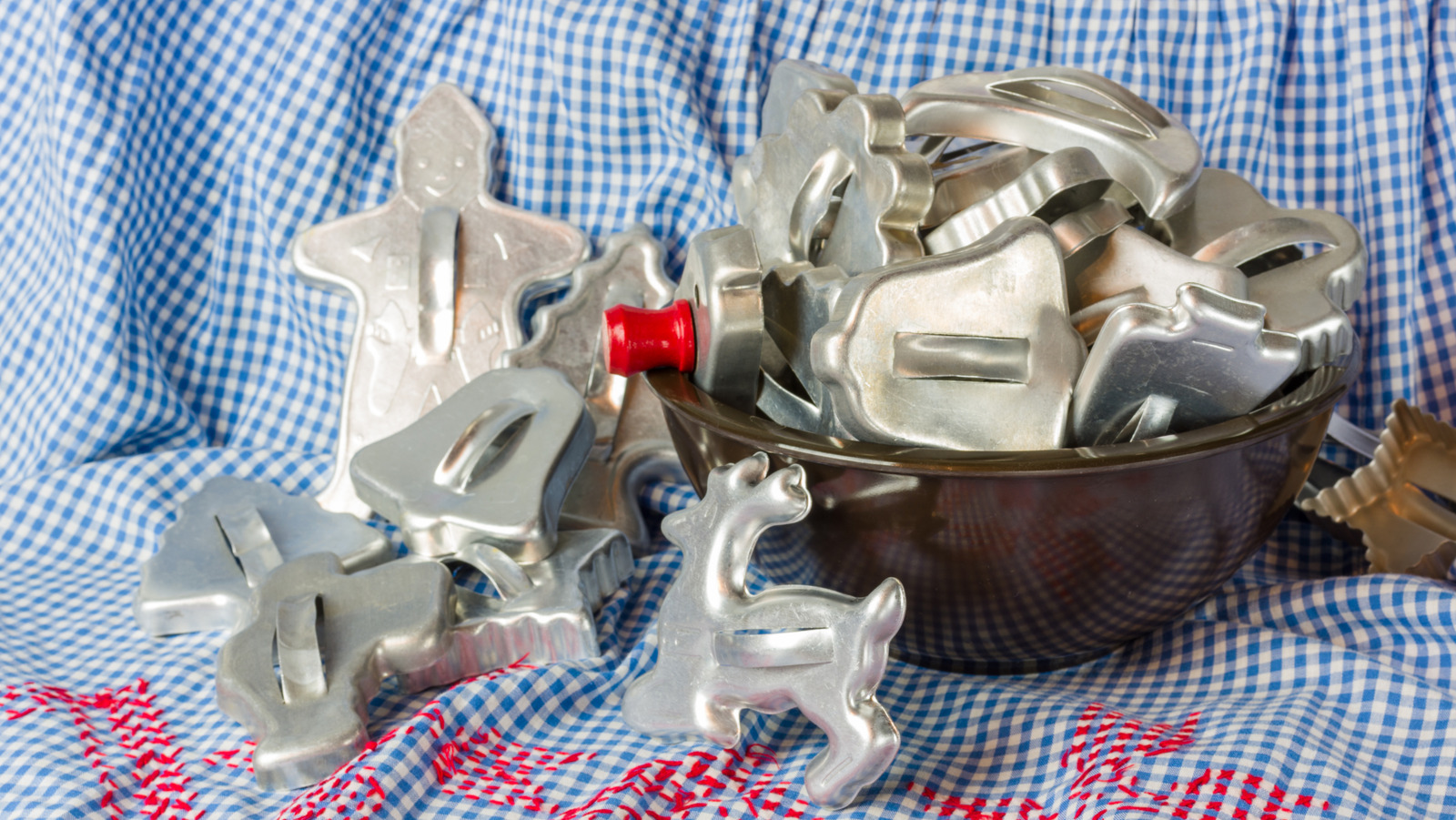
"The main thing to check for with vintage cookie cutters is rust. Cookie cutters can be made from a variety of materials, and while modern ones are often plastic, others might be aluminum, tin, or stainless steel. Neither one of those rusts easily, but aluminum can tarnish and stainless steel can rust if it has not been cleaned and stored properly."
"Because of the way the metal is bent in many vintage cookie cutters with their tiny corners and angles, these tools can be more vulnerable to rust than other kitchen utensils. If they weren't cleaned and dried carefully the last time they were used, some residue could have been left behind and allowed the metal to tarnish. Since you usually only use these once a year, they might have had a long time to develop rust."
"If your cookie cutters have substantial rust on them, particles can come loose in the dough. A bigger risk is that all those little crags and crevices can hold on to bacteria. They make it difficult to clean and sanitize properly, which could put your health at risk. Small amounts of rust can be scrubbed and cleaned away if you're careful. You can even clean rust with a potato."
Vintage metal cookie cutters should be inspected for rust and contamination before use. Modern cutters are often plastic, but older ones may be aluminum, tin, or stainless steel, each with different corrosion risks. Bent edges, tiny corners, and tight crevices make vintage cutters prone to trapped residue and rust development, especially when used infrequently. Rust particles can flake into dough, and crevices can harbor bacteria that resist cleaning and sanitizing. Small rust spots can be scrubbed away, even with a potato, but cutters that cannot be fully cleaned should be discarded to protect health.
Read at Tasting Table
Unable to calculate read time
Collection
[
|
...
]