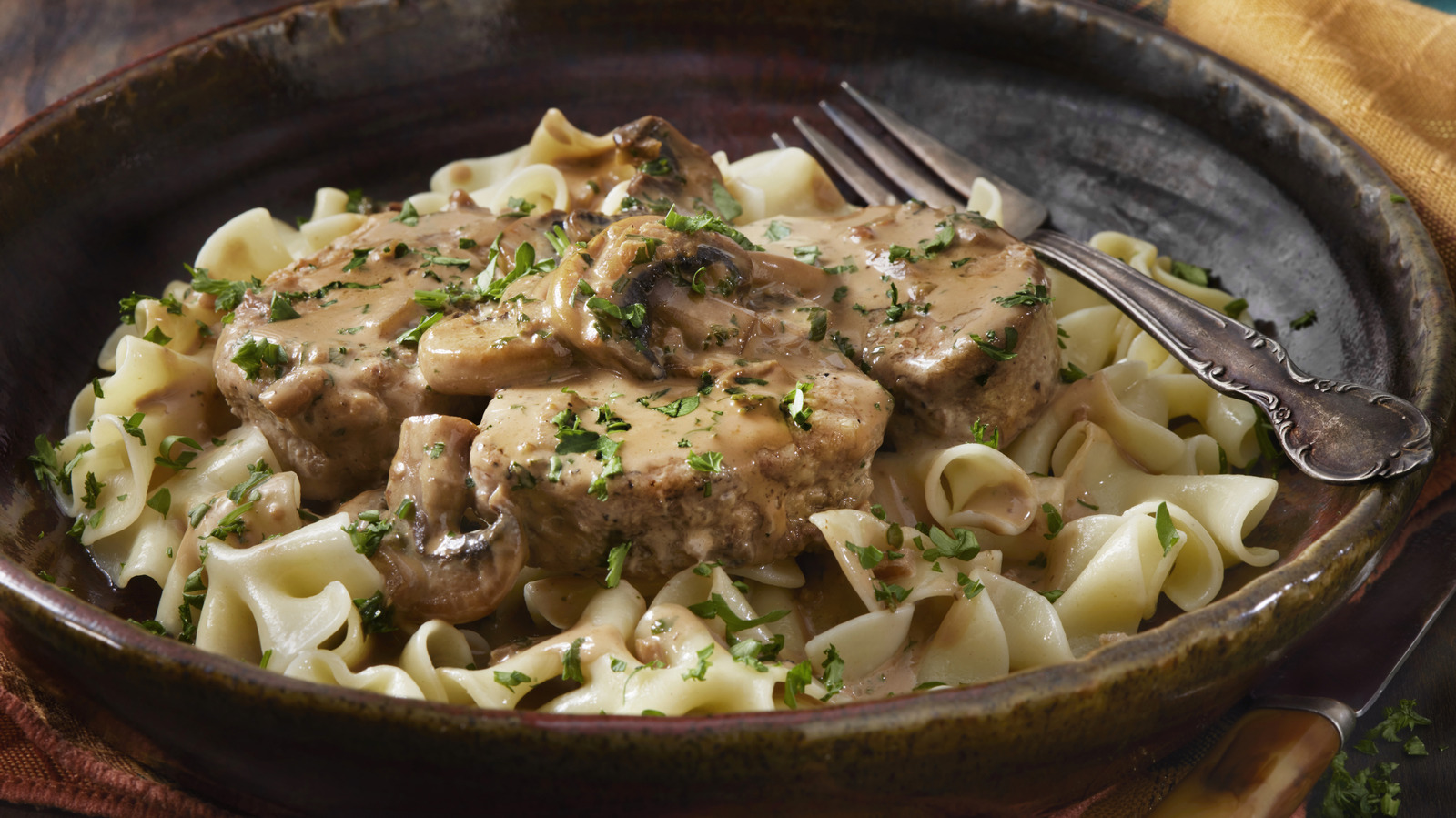
Beef stroganoff is a rich, meat-and-mushroom comfort dish that rose to Boomer-era popularity while retaining older Russian roots. The dish elevates unglamorous stew meat into a creamy, stick-to-your-ribs preparation akin to pot roast. The name derives from the Stroganov family, Russian nobility tracing to 15th-century Imperial Russia who served as Siberian viceroys alongside the Romanovs. Competing origin stories credit Count Grigory Stroganov, whose dental problems required tender shaved beef, or the culinary staff of Alexander Grigorievich Stroganov, who prepared the dish for last-minute guests. The beef-in-cream concept predates the specific "stroganoff" name, and a similar recipe appears in an 1871 Russian cookbook. During wartime the dish could be adapted to use tough meat rations.
"Not unlike pot roast, another Boomer generation classic, beef stroganoff transforms an unglamorous combination of stew meat and mushrooms into an elevated, rich, stick-to-your-ribs, Russian culinary institution. In fact, beef stroganoff's old-school, vintage feel was already centuries old by the time it became a Boomer favorite. The dish is named for the eponymous Stroganov family, nobility tracing back to 15th-century Imperial Russia who served as the viceroys of Siberia as contemporaries of the heralded Romanov family ("Anastasia" Broadway musical fans, rise up)."
"One story posits that the shaved-beef dish was created for Count Grigory Stroganov (1770-1857), a fellow with very few teeth, who was better able to chew the tender morsels. Other theories maintain that the dish was created by the culinary staff of Alexander Grigorievich Stroganov (1795-1891) as easy-to-make fare for serving last-minute dinner guests at the family estate."
Read at Tasting Table
Unable to calculate read time
Collection
[
|
...
]