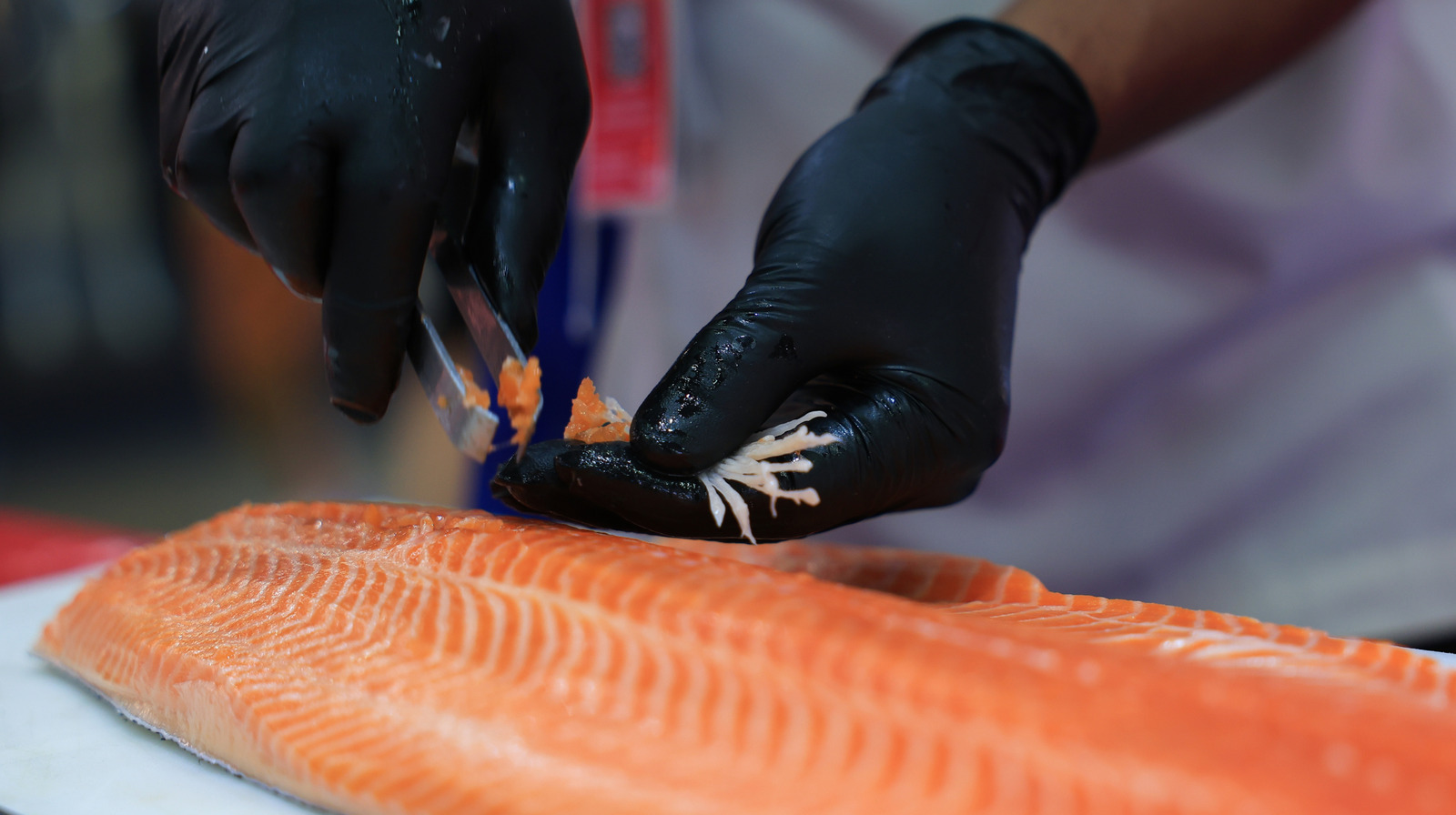
"Commonly canned fish, like salmon, sardines, anchovies, and mackerel all contain little bones that are safe, even enjoyable, to eat. During the canning process, the fish is pressure-cooked at high temperatures, which softens the bones to the point that they become tender and brittle. In canned salmon, the pale vertebrae often flake apart easily and are rich in calcium. Sardine and anchovy bones are even smaller and usually go unnoticed, disintegrating with mastication."
"Other than canned fish, some fresh fish are traditionally eaten with their bones intact. Small whole fish, like whitebait, smelt, and some varieties of anchovies, are often fried or grilled until crisp, where the heat renders the already-thin bones manageable. In Japanese cuisine, grilled yellowtail collars and fried snapper backbones are also commonly eaten as a salty snack, like peanuts at a bar."
Many common canned fish—salmon, sardines, anchovies, and mackerel—contain small bones that are safe and often pleasant to eat because pressure-canning cooks fish at high temperatures that soften bones until tender and brittle. Canned salmon vertebrae flake apart and provide calcium, while sardine and anchovy bones are tiny and often disintegrate while chewing. Some fresh small whole fish, like whitebait or smelt, are fried or grilled until bones are crisp and edible. Large dense bones in big fillets do not soften sufficiently and can splinter or lodge in the throat, so size and texture determine safety.
Read at Tasting Table
Unable to calculate read time
Collection
[
|
...
]