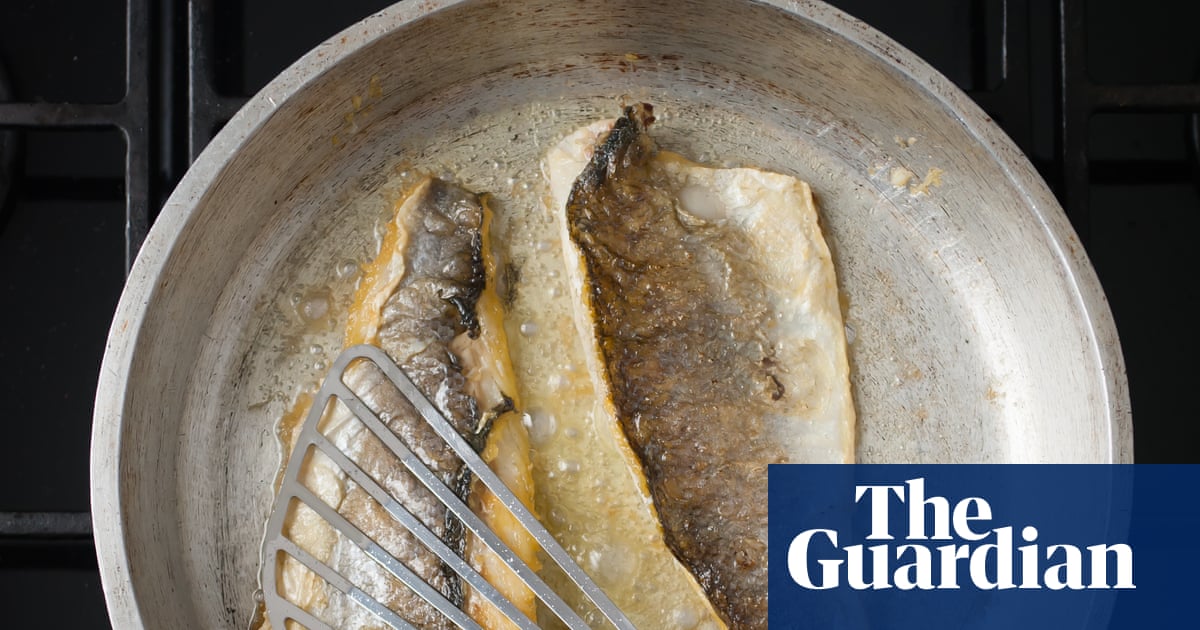
"Fish are, of course, moist things, and moisture is the enemy in the quest for that golden-brown crust, so the first thing Emily is going to need to do is dry that skin out. If the fish has any moisture on it, it will create steam while it's being cooked, which, in turn, will make the skin go soggy and inedible, rather than crisp and delicious."
"Take a second piece of kitchen paper [or another clean tea towel], wrap up the fish in it and leave for a couple of minutes. This allows any remaining moisture to be absorbed. Tonks then gives his fillet(s) a good sprinkling of salt and grabs a pan."
"Whatever you use, you want that fat to get nice and hot, Outlaw says, otherwise the fish will stick, and you will end up with a horrible mess in the bottom and a very scrappy piece of fish."
Achieving crisp fish skin depends on three critical factors: moisture removal, heat, and oil temperature. Fish must be thoroughly dried using kitchen paper or tea towels, with wrapping recommended to absorb remaining moisture. Salt should be applied to the dried skin. A nonstick pan or greaseproof paper prevents sticking. The pan must be heated adequately before adding oil, which should reach a shimmer before cooking. High-quality oil such as sunflower oil, optionally combined with butter, ensures proper crisping. Steam from moisture creates soggy skin, while insufficient heat causes sticking and tearing. Proper preparation and technique transform fish skin from problematic to golden-brown and delicious.
Read at www.theguardian.com
Unable to calculate read time
Collection
[
|
...
]