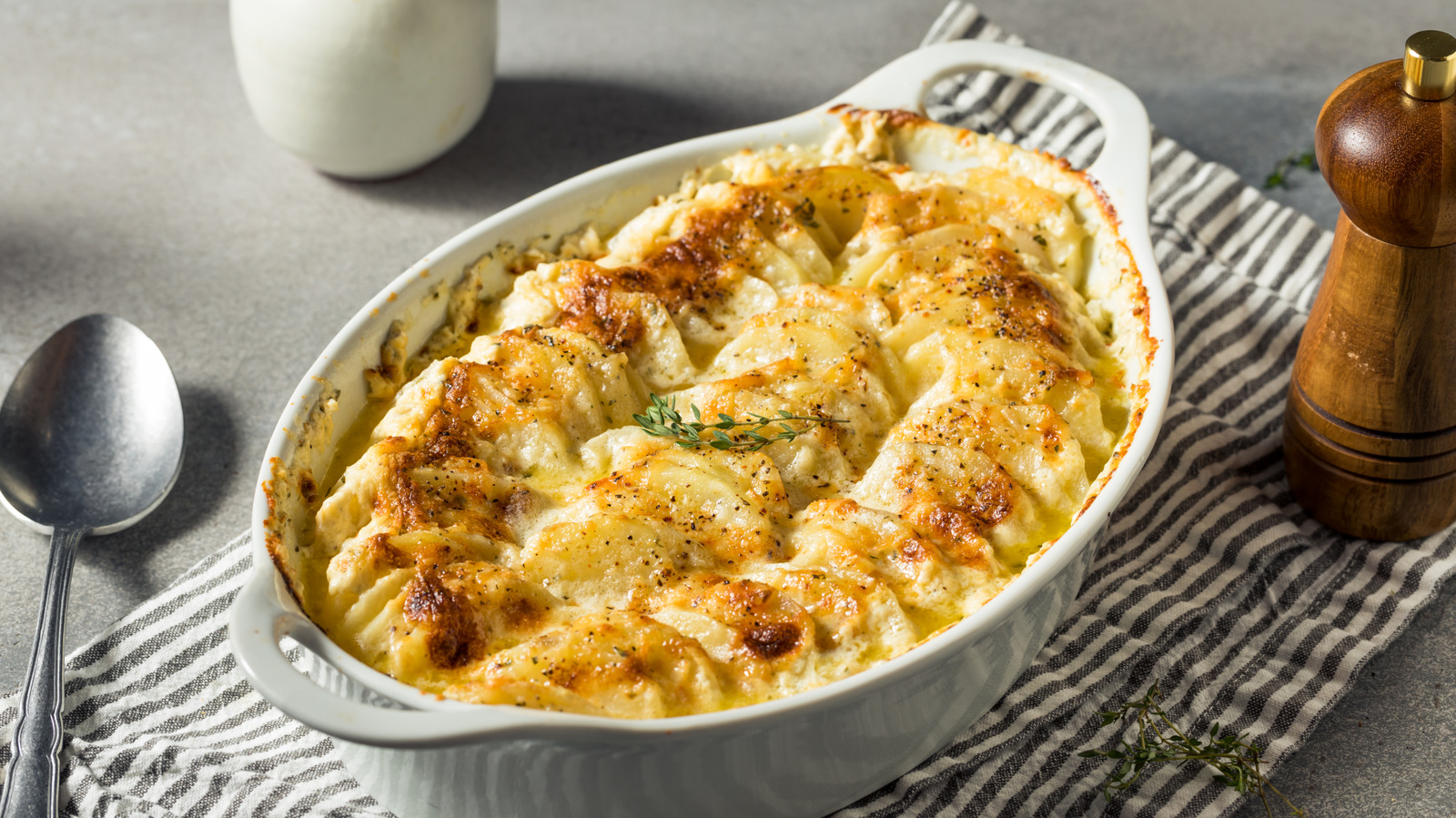
"To "scallop" something - usually potatoes - is to slice it thinly and bake it in layers with milk or cream until bubbling. The sauce is often infused with herbs, onion, or garlic, but that's the extent of the ingredients. Some people like to make a more indulgent recipe using cheese, but this ingredient is considered what separates scalloped potatoes and au gratin potatoes, along with the use of breadcrumbs on gratin."
"The most persistent is that it evolved from a popular way to cook seafood, in which scallops, oysters, or minced fish were baked in a creamy sauce and served in actual scallop shells for elegant presentation. The second theory is that it comes from the French word "escalope" or old English collops, which meant a thin slice of something, usually meat."
"At different times, the term has been applied to dishes that demonstrate elements of either, both, or neither of these origins. A dish of scalloped chicken might have meant thin pieces of fried meat served in sauce in the early 1800s, but a century later, you would expect a baked dish with layers of pre-cooked chicken in a creamy sauce topped with breadcrumbs or crushed crackers."
Scalloped dishes feature thinly sliced ingredients, typically potatoes, baked in layers with creamy sauce infused with herbs, onion, or garlic. The key distinction between scalloped and au gratin potatoes is that gratin includes cheese and breadcrumbs, while scalloped does not. The term's origin has two competing theories: one traces it to elegant seafood presentations baked in scallop shells with creamy sauce, while the other attributes it to French "escalope" or old English "collops," both meaning thin slices. Throughout culinary history, the term has been applied inconsistently to various dishes, with meanings and preparations evolving significantly over time.
#cooking-techniques #culinary-etymology #potato-dishes #historical-food-preparation #sauce-based-dishes
Read at Tasting Table
Unable to calculate read time
Collection
[
|
...
]