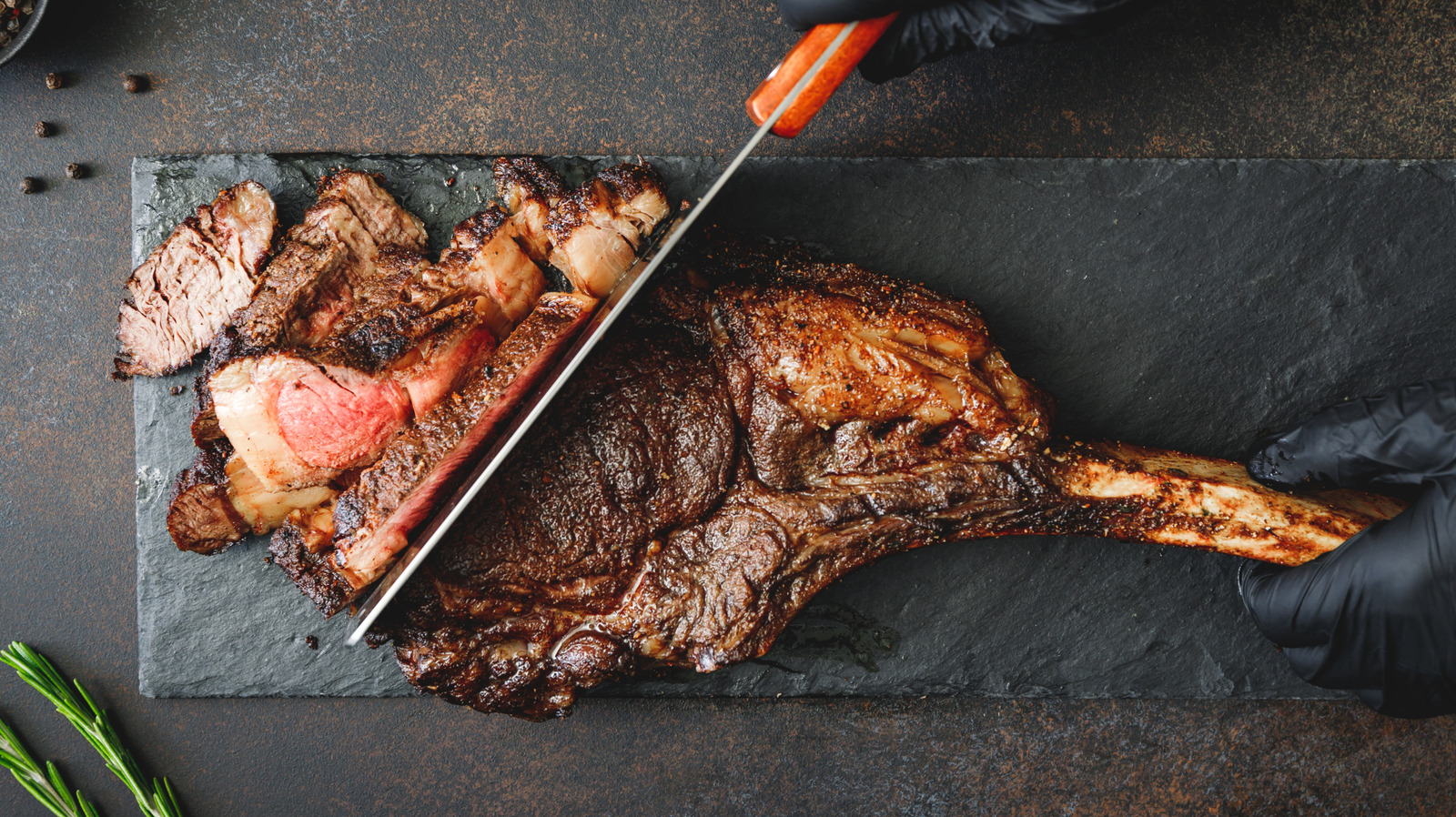
""Dry-aged steaks have less moisture due to evaporation during aging," Andrews explains, "which means they can cook a bit faster and brown more readily." What dry aging does to beef, beyond evaporating moisture, is promote enzymes to begin gently breaking down the meat. This results in a deep, rich flavor, but the change in composition also means it needs to be treated slightly differently in the pan. "There's less internal moisture to act as a heat buffer," Andrews says, "so timing becomes more critical.""
""Typically, a steak has a lot of moisture in it, which evaporates as it cooks. This process happens at the boiling point of water - much lower than common pan and grill temperatures - and slows the cooking process since evaporation requires a significant amount of heat. For dry-aged steaks with less available moisture to turn to steam, everything cooks a bit faster. "The biggest adjustment is attention," Andrews says. "Dry-aged steak benefits from slightly lower heat or shorter cooking times to prevent overcooking.""
Dry aging reduces moisture in beef through evaporation and activates enzymes that gently break down muscle, concentrating deep, rich, and funky flavors. The lower internal moisture means steaks have less of a heat buffer, so they brown more readily and reach target temperatures faster than non–dry-aged cuts. Cooking dry-aged steaks therefore requires closer attention to timing and temperature control; slightly lower heat or shorter cooking times help prevent overcooking. Accurate temperature monitoring and careful heat management are the most important adjustments when preparing dry-aged steaks to preserve tenderness and flavor.
Read at Tasting Table
Unable to calculate read time
Collection
[
|
...
]