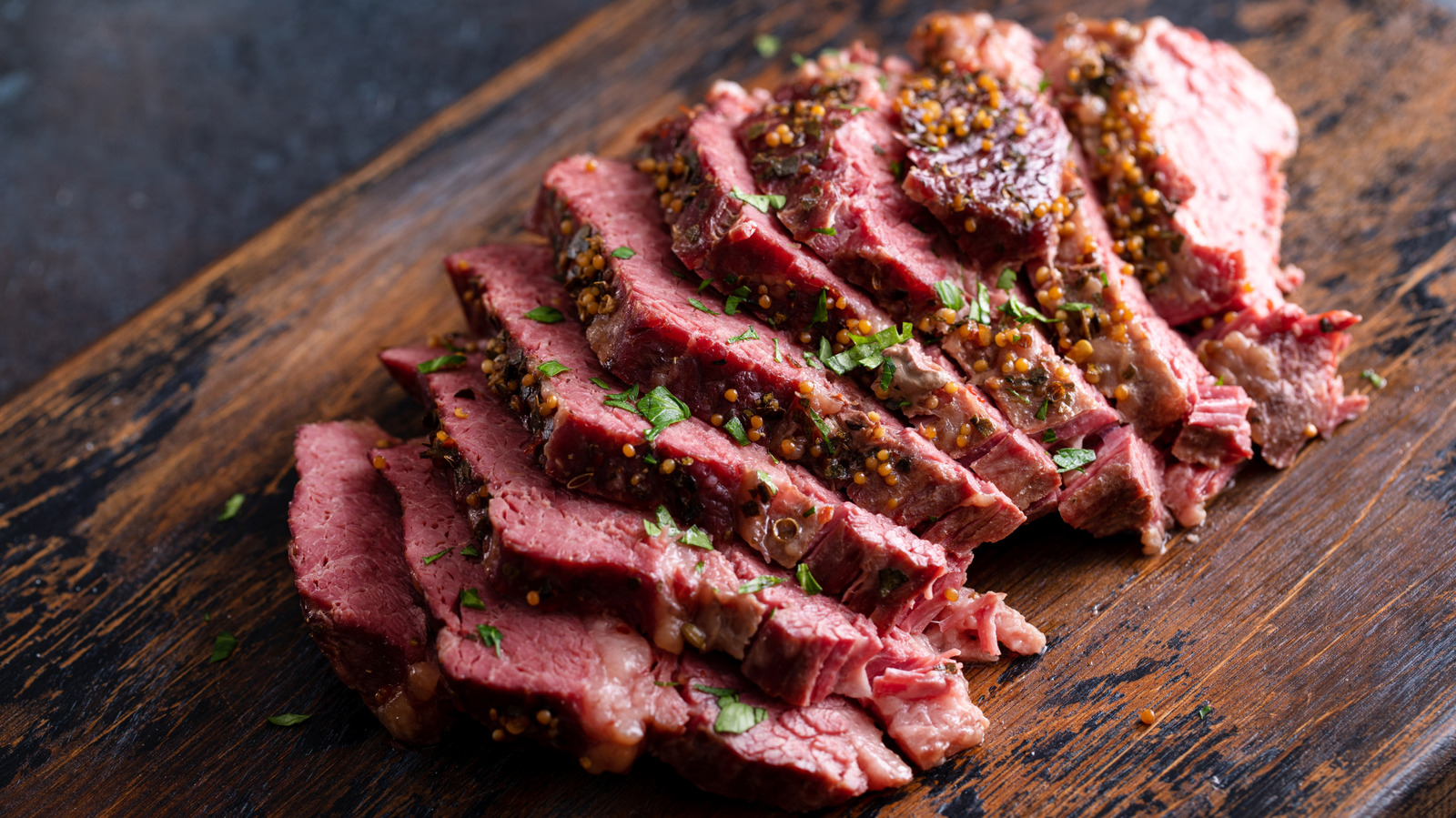
Corned beef and salt beef, though often used interchangeably, have technical differences in their preparation methods. Corned beef derives its name from large salt kernels called "corn" and involves brining meat for about a week in salt combined with complex spices including bay leaves, peppercorn, garlic, and mustard seed. Salt beef uses a simpler brining process with straight salt or saltpeter. Additional distinctions include slicing thickness, with corned beef sliced thin for sandwiches while salt beef is not. Regional differences exist: America treats both terms synonymously, while Britain distinguishes between tinned corned beef and fresh deli salt beef. Both are traditionally made from beef brisket and derive their characteristic pink color from nitrates added to the brine, originally used for bacterial prevention and meat curing.
"Corned beef, which gets its name from the larger kernels of salt called "corn" (which were once used to make the dish), is made by leaving meat to brine for about a week in a vat of salt and complex spices. These include everything from bay leaves and peppercorn to garlic, mustard seed, and more - all of which go into making corned beef from scratch."
"Salt beef, on the other hand, focuses more simply on brining the meat in straight salt or saltpeter. Some also say that the biggest difference between the two comes down to slicing, as corned beef is sliced thin enough for sandwiches, while salt beef is not."
"In America, salt beef and corned beef have become synonymous with the same thing, but in Britain, "corned beef" refers to the version that comes out of a tin, while "salt beef" is what they'd call the meat that comes fresh from the deli counter."
Read at Tasting Table
Unable to calculate read time
Collection
[
|
...
]