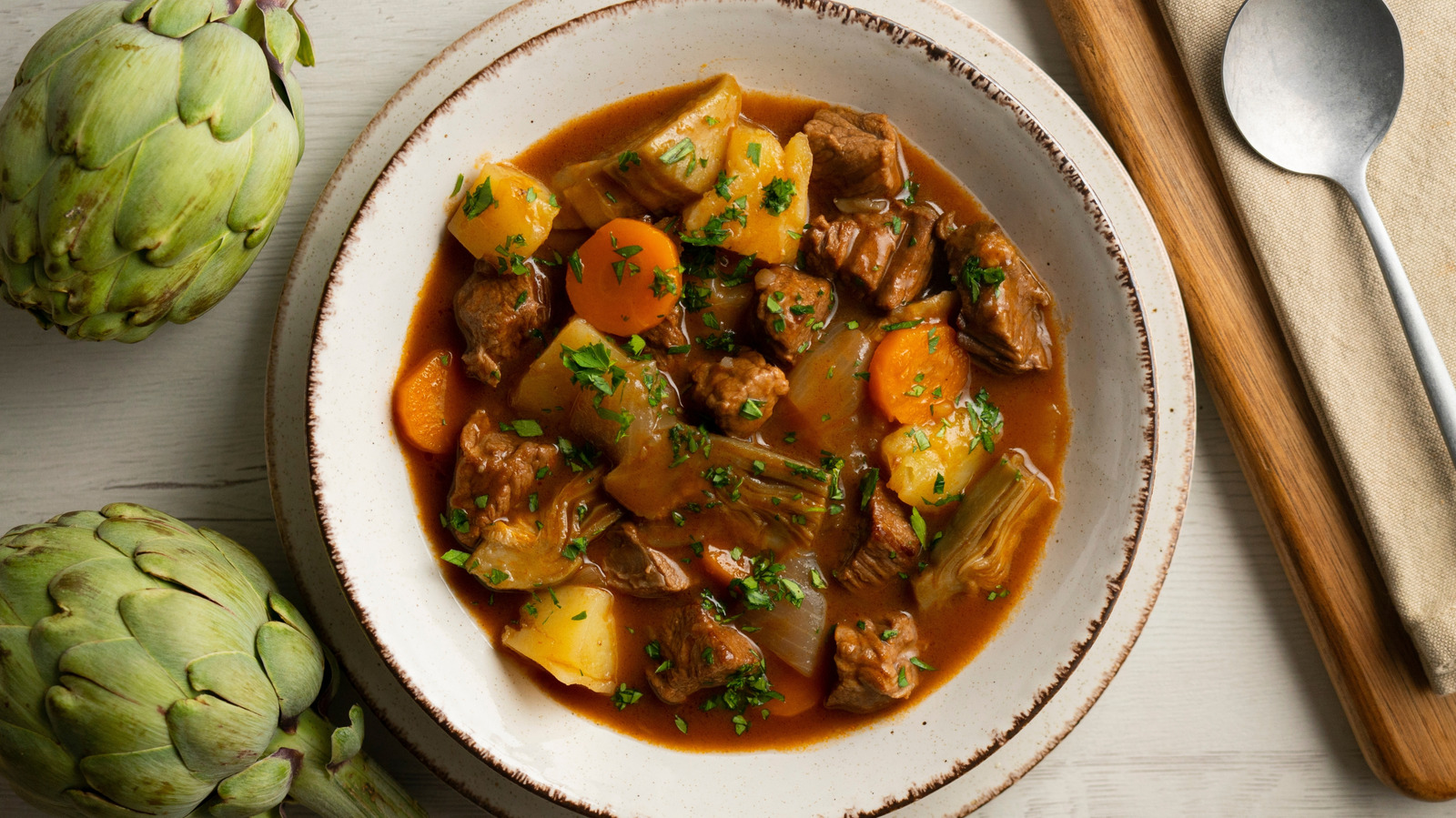
"Fat adds flavor and helps contribute to the luxurious sheen and rich texture. However the best cuts of beef to use in stew - including beef chuck, short rib, and brisket - are often very fatty, as they are full of collagen that will turn to gelatin as the meat slow cooks. This imparts that body that you want in stew"
"While a nice, rustic beef stew isn't going to be perfectly uniform, you also want to cut your beef chunks into roughly similar sizes so that they cook at the same rate. Getting tough cuts like chuck and brisket to be meltingly tender means having enough time to break down all that collagen, which can take hours, and larger chunks may still be tough when the rest of the stew is done."
"Beef stew may seem like the ultimate "throw it in a pot" meal, but even the most homey dish still requires some careful preparation. Good stew of any kind isn't just about the flavor of the ingredients you use, but also the balance with which they're added, and the timing of when you add them. Carrots and other veggies cut too small, or added too early, will end up unpleasantly mushy."
Beef stew requires careful preparation, balancing ingredient flavors, timing, and addition sizes. Cut vegetables appropriately and add them at the right time to avoid mushiness. Brown beef before stewing to develop deeper flavor. Choose collagen-rich cuts like chuck, short rib, or brisket; their fat and collagen convert to gelatin during slow cooking, lending body and sheen. Trim large exterior or internal fat chunks to prevent an overly heavy stew while preserving enough fat for flavor. Shape and cut beef into roughly equal-sized chunks so they cook evenly; overly large or small pieces can remain tough or become dry.
Read at Tasting Table
Unable to calculate read time
Collection
[
|
...
]