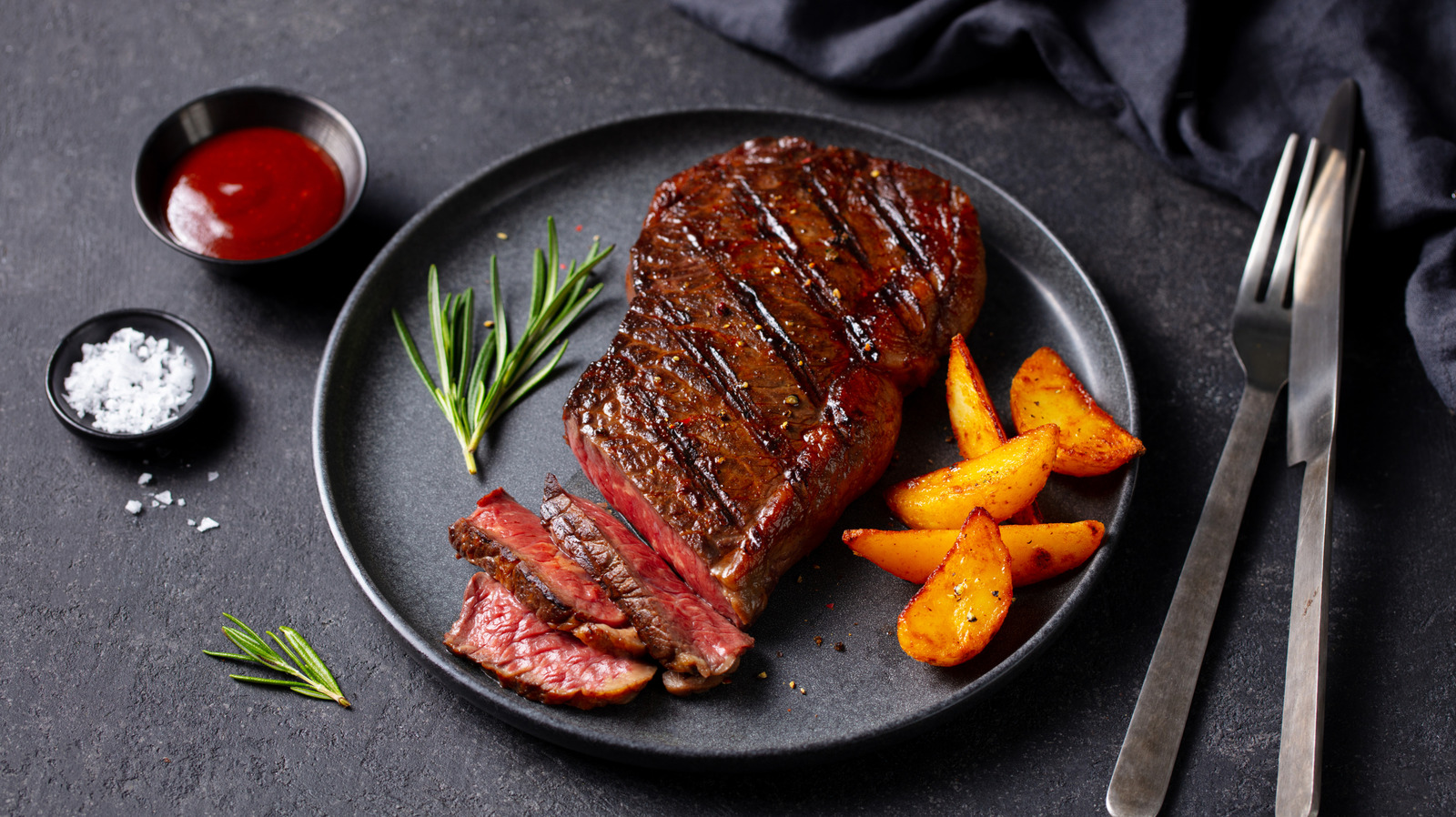
"When people talk about beef, juicy is a commonly used adjective - but juicy doesn't mean messy. If you get a steak and it's swimming in its own juices on your plate, that means the meat was not allowed to rest properly before it was served. It may not have even been cut at all. A fork or a meat thermometer could have been poked into it, resulting in a less flavorful steak. Be wary of any steakhouse making this basic mistake."
"The juices that are in your steak are meant to stay there, at least if you want to enjoy the full flavor. Cooking steak causes the muscle fibers to contract and force moisture out. The hotter the temperature, the more those fibers contract and the more moisture your steak loses. If you cut into a steak right off the heat, the muscle fibers are still tight. The liquid, which isn't blood but water and myoglobin, just oozes out and goes all over your plate."
"Even though it is only a small amount of liquid, you'll still end up with a drier steak than intended. If the steak has a chance to rest for about 10 minutes, long enough for the internal temperature to drop by a few degrees, the muscle fibers relax and draw the moisture back in to redistribute it so very little will leak out."
Cooking steak forces muscle fibers to contract and push moisture out, and higher temperatures increase that moisture loss. Cutting or piercing a steak immediately after cooking keeps fibers tight and lets water and myoglobin ooze onto the plate, producing a drier, less flavorful steak. Allowing a steak to rest for roughly 10 minutes lets internal temperature fall slightly so fibers relax and draw moisture back in to redistribute. Steakhouses should serve steaks already rested. At home, handle steaks with tongs, follow proper cook times and temperatures, and use doneness cues rather than cutting into the meat.
Read at Tasting Table
Unable to calculate read time
Collection
[
|
...
]