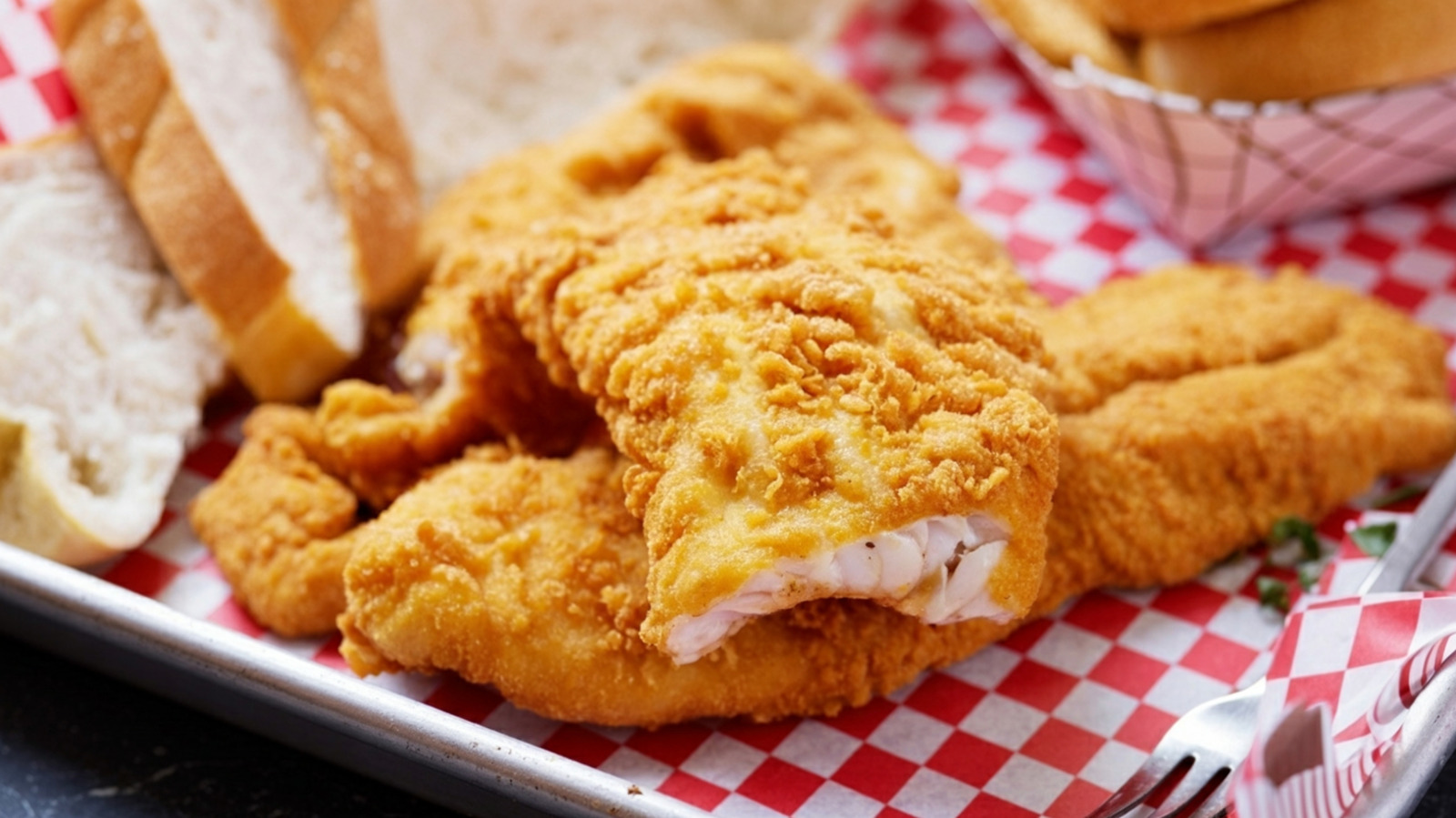
"Fish tends to be very wet, and not just because it lives in the water. Often it's frozen or, if it's fresh, it may still be packed on ice to keep it cold. Both of those methods add a lot of excess water to the fish that you'll need to deal with before cooking. Frozen fish especially will release a lot of water as it thaws, and it needs to be properly dried before it's breaded."
"You don't want dried out fried fish any more than you want dried out fried chicken. But if the exterior is wet, not only will it make it more difficult for your breading to adhere, but it also causes the water to react in the hot oil and create steam. As the moisture boils off, it causes the breading to pull away from the fish and increases your chances of getting burned."
Excess surface moisture prevents a crunchy coating on fried fish and often causes a soggy, soft texture. Fish accumulates water from living environment, ice packing, or freezing and thawing; frozen fillets release substantial water as they thaw. Thoroughly thawed catfish should be patted mostly dry with paper towels so breading or batter can adhere. The interior should remain moist to avoid dried-out meat. Surface water reacts with hot oil to create steam, which pulls breading away, increases burn risk, and creates a messy stovetop. Proper drying of the exterior before breading ensures a crisp fried crust.
Read at Tasting Table
Unable to calculate read time
Collection
[
|
...
]