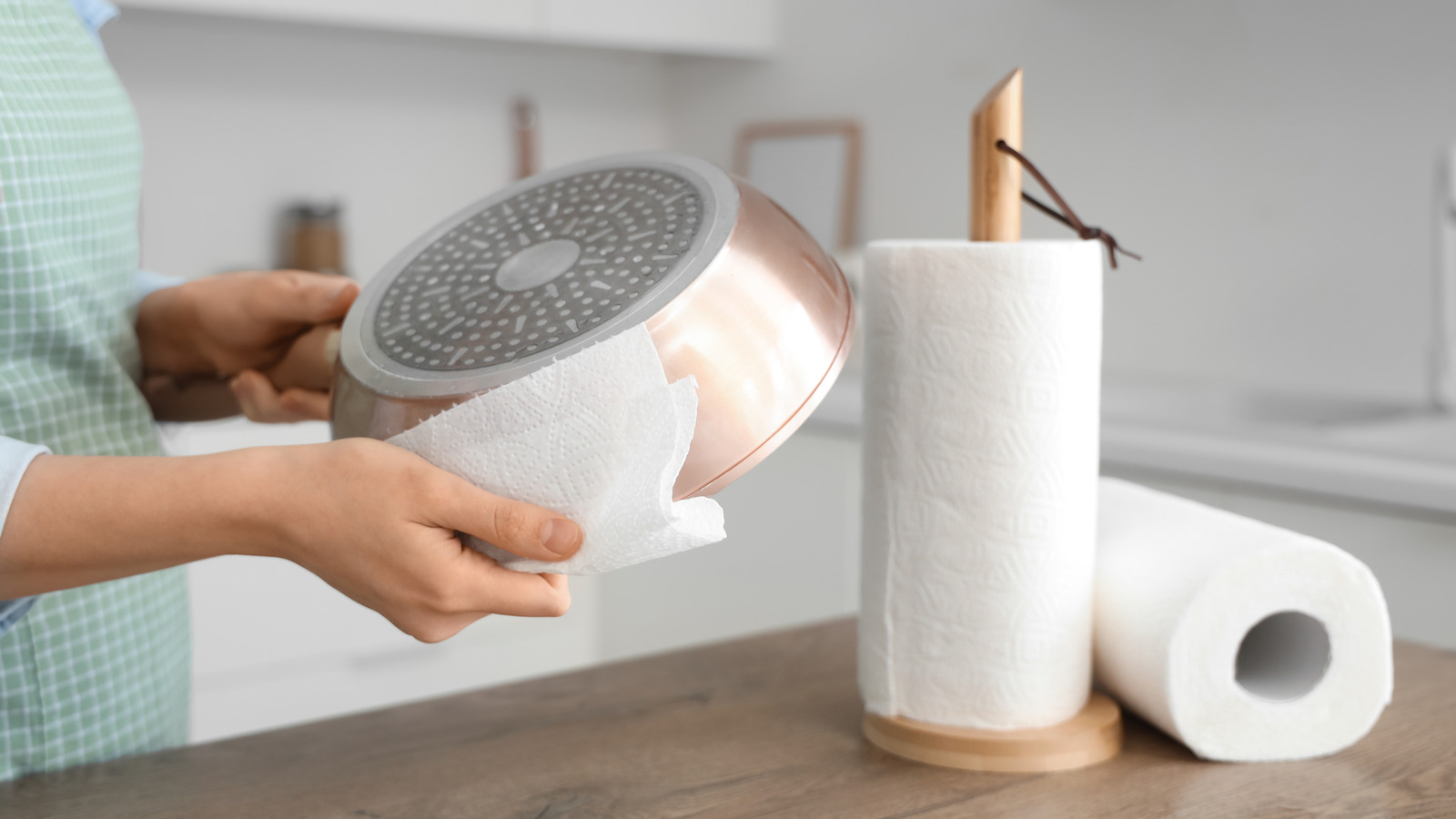
"As careful as you might be with cooking, you've likely ended up with crusty, burnt residue at the bottom of a pan at least once. This stuff can be an absolute nightmare to clean; no amount of soaking will loosen it. Often, you're reduced to scrubbing with soap and a sponge until your arm gives out. Some cleaning solutions work better than others, including one that may already be in your pantry - cream of tartar."
"Because cream of tartar is acidic and is actually a byproduct of wine production, you need to let it sit for about 15 or 20 minutes to work its magic. After that, you can start scrubbing with your sponge. By this point, the acid should have broken down the residue. The grit of the powder itself helps scrub away the rest in a way that is gentle enough not to ruin the surface of your pan."
"You shouldn't have to give yourself a serious workout when using cream of tartar to clean. If you find yourself needing to scrub harder, reapply the paste and let it sit for a little longer. Another option is to fill your pan with a cup of water and add a tablespoon of cream of tartar. Bring the mixture to a boil, then allow it to cool to room temperature before scrubbing."
Cream of tartar combines acidic action and mild abrasive texture to break down burnt-on residue and scrub it away without damaging many pan surfaces. For heavy buildup, remove loose debris and create a thick paste from about a spoonful of cream of tartar mixed with warm water, apply, and let sit 15–20 minutes before scrubbing. Alternatively, boil a cup of water with a tablespoon of cream of tartar in the pan, cool, then scrub. The method is safe for stainless steel, enamel, and aluminum, but the abrasive powder can harm nonstick coatings.
Read at Tasting Table
Unable to calculate read time
Collection
[
|
...
]