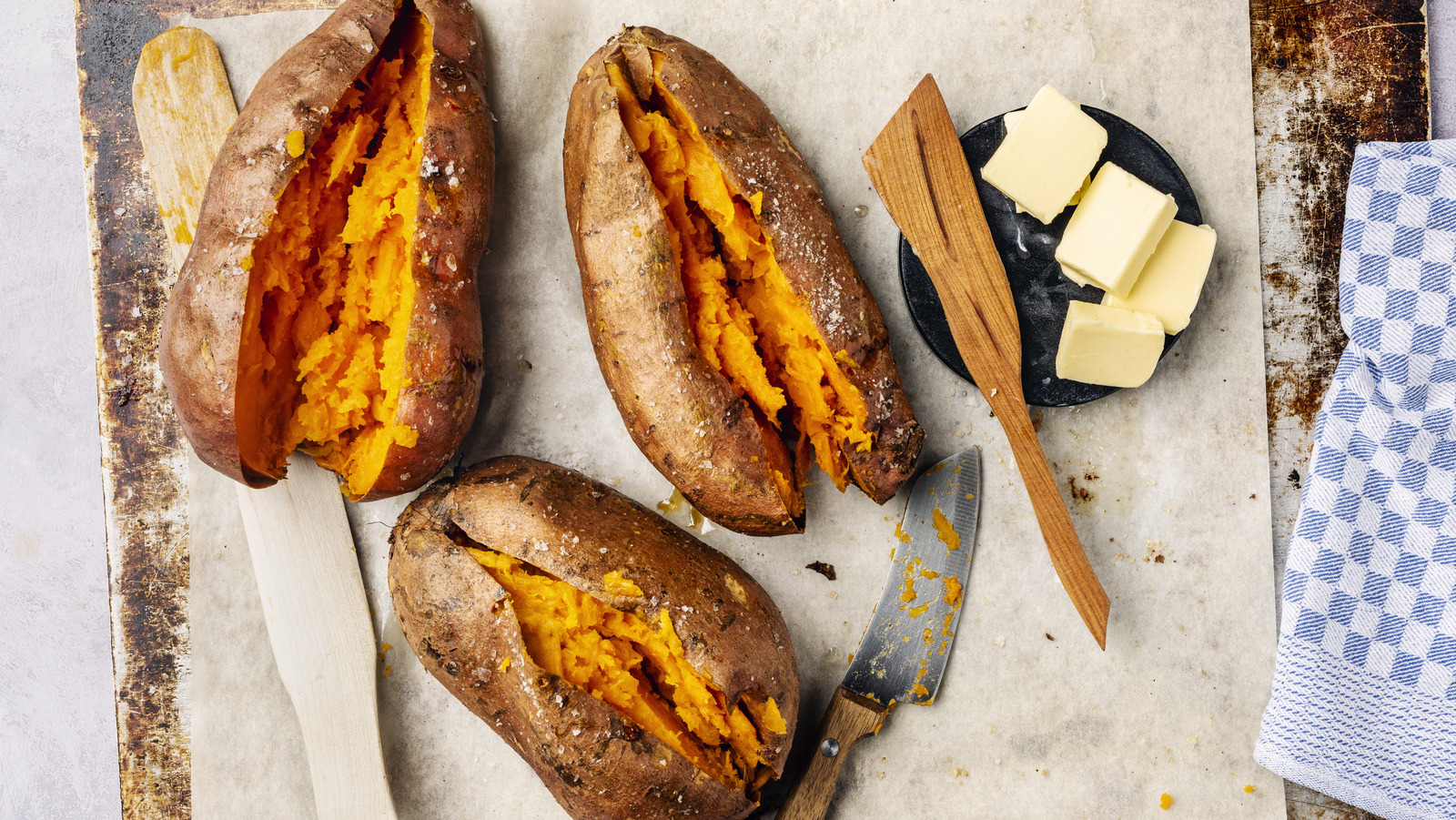
"Sweet potatoes don't need much help in tasting wonderful, but double-roasting gives them a yummy glow-up, helping to develop crispy, candied edges and an interior that turns super soft and custardy. The technique sounds fancy, but it's really just strategic sequencing. You roast the potato once until completely tender, let it cool, then roast it again at a higher heat - easy peasy."
"Despite looking rather dense and dusty, sweet potatoes contain a lot of water, and the first slow bake evaporates that moisture while the starches gelatinize. Those starches set as the potato cools, forming a slightly tackier surface and resistant starch, which is actually gentler on blood sugar spikes than a once-cooked starch. Once the steam has escaped and the interior has settled, the potato becomes structurally ready for browning, something that's harder to accomplish when moisture is still escaping in puffs."
"Sugar is the other piece of the puzzle. Sweet potatoes have natural sugars, about 4.2 grams per 100 grams, which is high for a vegetable, but those sugars are what caramelize beautifully with different techniques. But they definitely can't do that under steam. With double-roasting, the first roast paves the way; the second invites sugars to the surface, where they darken and blister into deliciousness."
"With this technique, you can use any type of knife cut your dinner needs. Go for thick wedges, halves, coins, or fermière, aka rustic chunks. It's best to coat raw potatoes in oil or butter (or both) at this point. If you also toss them in salt at this stage, it'll season them and can help pull water out through the magic of osmosis. Roast sweet potatoes at 350 degrees Fahrenheit until they're fork-tender."
Sweet potatoes contain substantial water; a slow first roast evaporates moisture while starches gelatinize and then set during cooling, creating a tackier surface and resistant starch that moderates blood-sugar spikes. Cooling allows steam to escape and the interior to settle, making surface browning easier during a second, hotter roast. Natural sugars (about 4.2 grams per 100 grams) caramelize when exposed at the surface once moisture is gone, producing darkened, blistered edges. For best results, cut to the desired shape, coat raw pieces in oil or butter, season with salt, roast at 350°F until fork-tender, then add more fat and finish at higher heat.
Read at Tasting Table
Unable to calculate read time
Collection
[
|
...
]